





The wisdom of spices
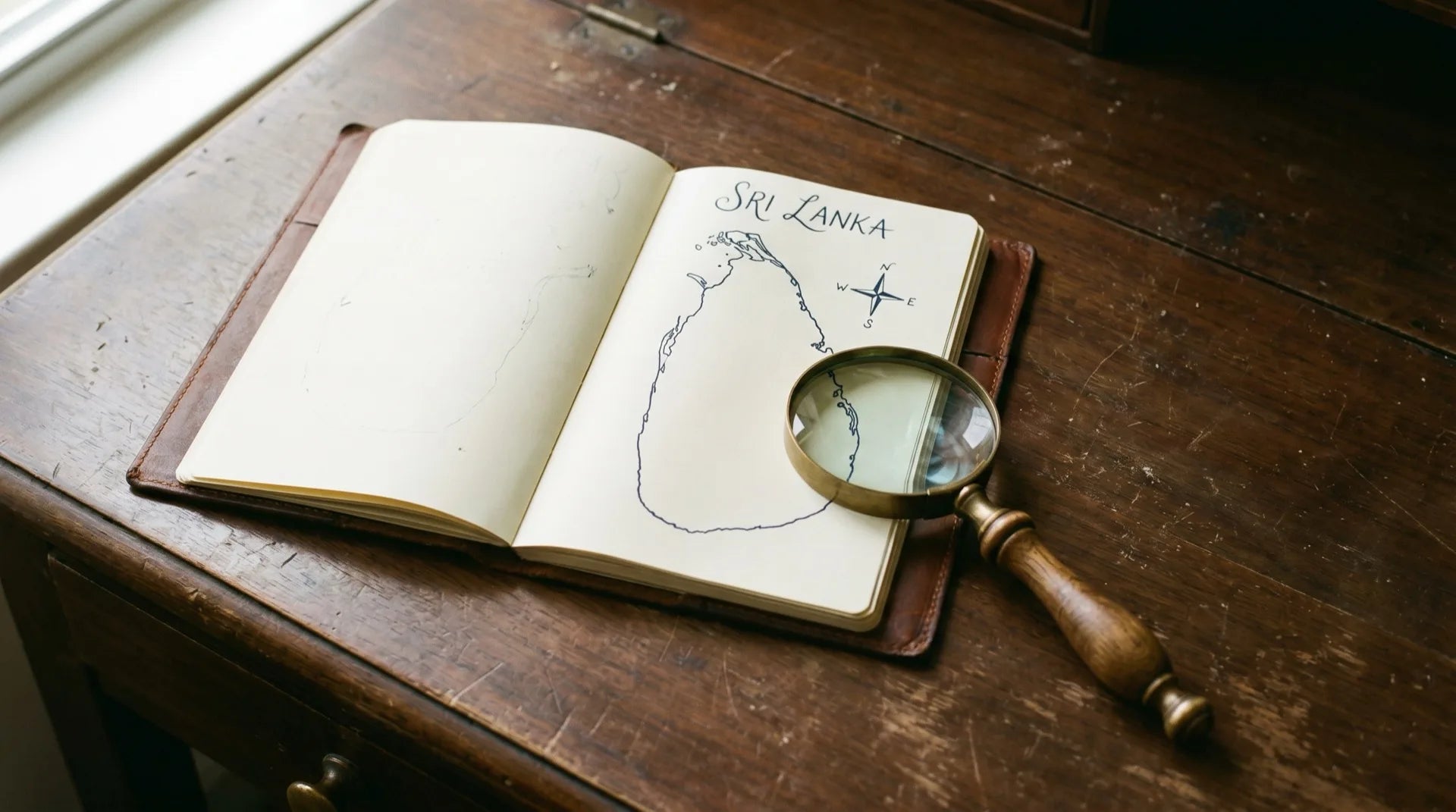
My grandma would have said: chilli is a journey that begins in the soul, not on the supermarket shelf. She would have run her fingers over the red flakes and smiled, because she knew what we so often forget: behind every spice there is a story, a person, a piece of earth. In Sri Lanka, spices don't simply grow - they tell stories older than our cookbooks. They carry the sun, the wind and the red soil of the island within them. When you bring genuine Sri Lankan spices into your kitchen, you bring not just flavour but a piece of life philosophy to your plate.
The hidden world of Ceylon chillies
Your first encounter with a genuine Ceylon chilli is a surprise for your palate. You think you know chilli? Perhaps you only know its pale copy. The chillies from Sri Lanka are no standardised industrial goods. They are characters - some fiery and direct, others subtle, with a depth that only tells its story once it's on your tongue.
"In my village we say: a good chilli burns twice - once in the mouth and once in the memory", a farmer from the hills of Matale told me. And that is exactly what sets the red chilli flakes from Sri Lanka apart - they leave behind not just heat, but memory.
Why a chilli from Sri Lanka changes your kitchen
What makes Sri Lankan spices so special? It is a combination of climate, soil and tradition. The island lies like a jewel in the Indian Ocean, blessed with a wealth of microclimates. The chillies grow in an environment where monsoon rain and tropical sun dance in perfect rhythm.
The difference lies in the detail: while industrially produced chilli powders are often standardised and stripped of their soul, the red chilli powder (roasted) from Sri Lanka keeps its complexity. It isn't simply "hot" - it is multi-layered. A hint of sweetness, an undertone of smoke, a depth that doesn't overwhelm your dishes but elevates them.
My grandma would have said: "A good spice is like a good friend - it doesn't impose itself, but it's there when you need it." Sri Lankan spices understand this balance perfectly. They can whisper or shout, depending on how you use them.
From the village square to your plate
A spice's journey begins long before it lands in your kitchen. In the small villages of Sri Lanka, spice production is not an industry but a community effort. Families who have passed on their knowledge for generations tend their plants like members of the family.
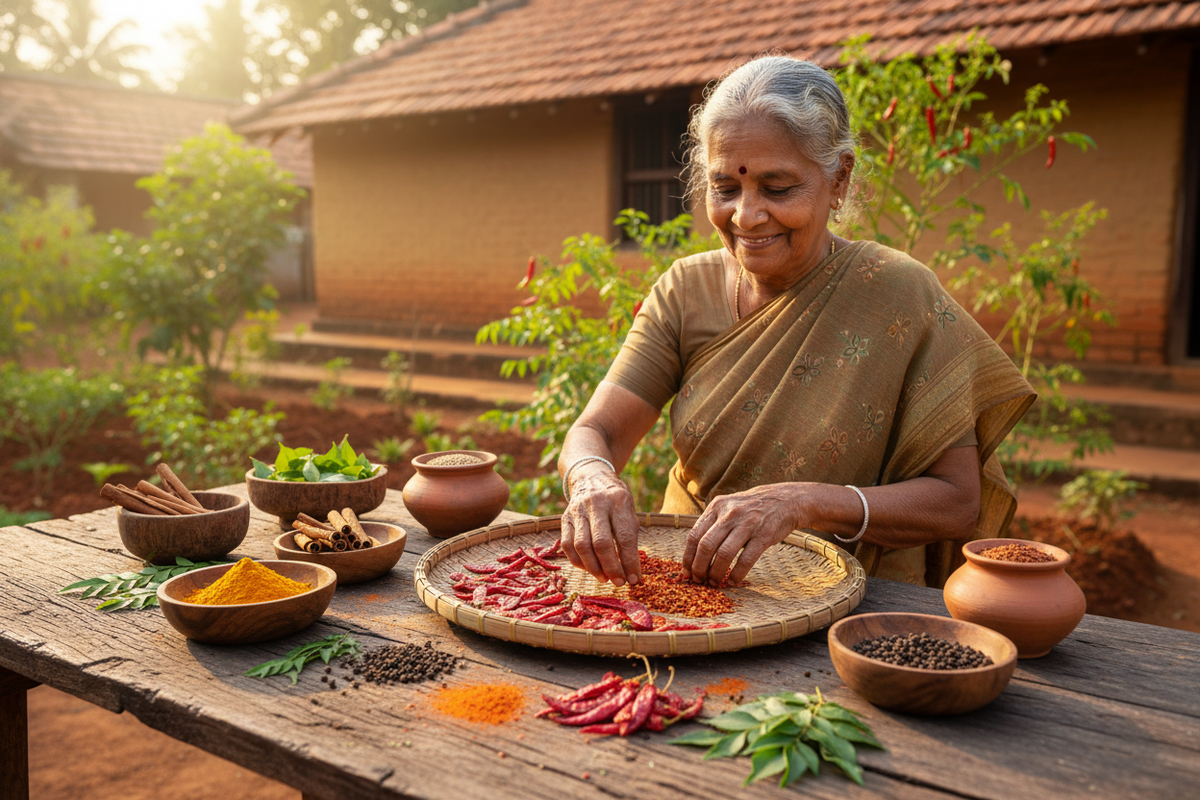
"Every chilli has its own character", explains Kumari as she carefully lays out the red fruits for drying. "Some are temperamental, others gentler. You have to get to know them to understand how to cook with them."
The hands behind our spices
The sun blazes down from the sky as I visit Pradeep. His hands are rough from work, but his movements are gentle as he shows me how he selects the chillies for the unroasted red chilli powder. "Do you see the colour?", he asks, holding a bright red pod up to the light. "That is the soul of the chilli. When we dry it, we preserve that soul."
In Sri Lanka, growing spices is not a job but a way of life. The farmers know every inch of their land and know exactly which corner of their field yields the sweetest or the hottest chillies. You can feel this connection to the earth in every crumb of Sri Lankan spices.
The harvest is only the beginning. The traditional drying under the tropical sun, the careful sorting, the gentle grinding - every step is carried out with a mindfulness that has long since been lost in industrial production. You can taste this care. It is the difference between a spice that merely seasons and one that transforms your dish.
Understanding the language of spices
My grandma would have said: "Spices are like words. Those who don't understand their language cannot tell stories with them." The spice language of Sri Lanka is rich and nuanced. Learning it means multiplying your culinary possibilities.
The chillies from Sri Lanka offer you a whole vocabulary. The red chilli flakes bring texture and pinpoint heat, perfect for dishes that need visual and flavour contrast. The roasted chilli powder adds a smoky depth, ideal for braises and robust sauces. The unroasted chilli powder retains the fresh, lively heat that brings light dishes to life.
What Sri Lankan spices reveal about your food
When you start cooking with genuine Sri Lankan spices, you will notice how they change your perception. Suddenly you taste nuances that were hidden before. You begin to experience the heat not as one-dimensional spiciness, but as a complex spectrum of aromas and degrees of heat.
A simple rice dish with a pinch of Ceylon chilli gains a new depth of flavour. The heat doesn't arrive at once; it builds, dances with the other aromas, retreats and returns. It is alive, not static.
"Spices are like people", an old spice merchant at the market in Colombo told me. "The most interesting ones are those that don't reveal everything at once." This philosophy is reflected in Sri Lankan cuisine, where spices are meant to harmonise rather than dominate.
The soul in your kitchen
When I cook today, I often hear my grandma's voice: "A dish without soul is just food." The soul doesn't come from complicated techniques or expensive ingredients. It comes from connection - to the origin of what we eat, to the people who grew it, to the traditions that shaped it.
The spices of Sri Lanka are not an ingredient but a connection to a world full of flavour and tradition. They bring not only colour and aroma to your plate, but also the stories of the people who grew them, the warmth of the tropical sun in which they ripened, and the wisdom of the generations who have cooked with them.
Don't just taste - experience how genuine Sri Lankan spices transform your dishes. Start with a small amount of red chilli flakes in your morning eggs at breakfast. Add a teaspoon of roasted chilli powder to your tomato soup and watch how the depth of flavour changes. Experiment with the unroasted chilli powder in a fresh vinaigrette.
My grandma would have said: a good spice needs no advertising slogan, only someone who knows how to listen. Sri Lankan spices whisper their stories. You only have to be quiet enough to hear them. And once you hear them, your kitchen will never be the same again.