




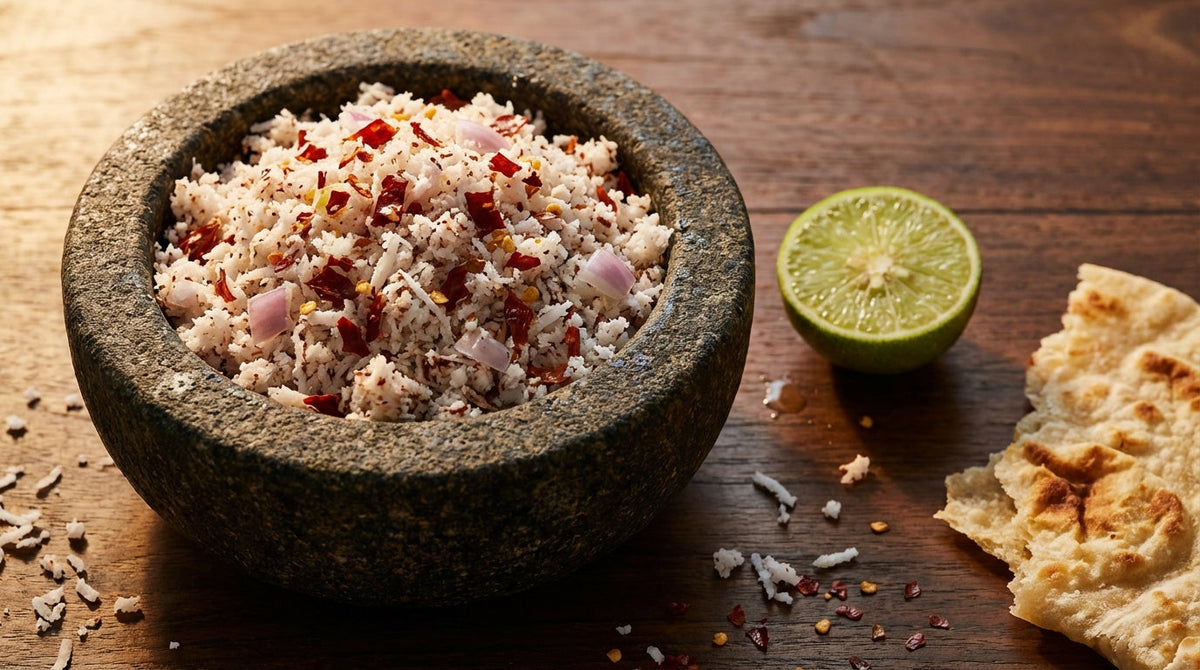
P ol sambol is Sri Lanka's national condiment - an aromatic mixture of freshly grated coconut, red chilli powder, shallots and lime juice that is ready in under ten minutes and lifts any curry to a new level. Sri Lanka produces around 2,800 to 3,000 million coconuts a year on more than 409,000 hectares of cultivated land (Coconut Development Authority Sri Lanka, 2024), and pol sambol belongs on the table there as naturally as bread and butter do for us. In the country's traditional rice-and-curry cooking, this coconut sambal accompanies literally every meal - from breakfast with crispy egg hoppers to the evening plate of rice with five different curry dishes.
In 2023 Germany imported around 15,400 tonnes of coconuts, making it the second-largest importer in the EU (Eurostat, 2024). Europe as a whole sourced 121,000 tonnes of desiccated coconut worth 325 million euros, with Sri Lanka holding a market share of 12.8 per cent (CBI, 2023). Even so, most Germans know coconut only as milk from a tin or as flakes in their muesli. This recipe brings the authentic Sri Lankan preparation into your kitchen - with all the variations, tips for German supermarkets and the knowledge of what really matters when it comes to quality.
At a glance
What is pol sambol and where does this coconut sambal come from?
Pol sambol (Sinhala: පොල් සම්බෝල) is a traditional Sri Lankan condiment made from freshly grated coconut, red chilli powder, finely chopped shallots, fresh lime juice and salt. The term "sambol" reached Sri Lanka in the 17th and 18th centuries via Dutch colonial trade routes from the Malay-Indonesian language area, where it derives from the Javanese "sambel". While Indonesian sambals are typically based on chilli paste, Sri Lankan pol sambol puts fresh coconut centre stage. In the country's traditional rice-and-curry culture, pol sambol is considered an indispensable side dish that many Sri Lankans eat literally three times a day. Sri Lanka is the fourth-largest coconut exporter in the world, and the coconut industry accounts for around 12 per cent of the country's entire agricultural output (EDB Sri Lanka, 2023).
The heart of Sri Lankan coconut production lies in the so-called coconut triangle - the districts of Kurunegala, Puttalam and Gampaha. This region accounts for around 50.94 per cent of the country's total cultivated area (CDA Sri Lanka, 2024). Traditionally, pol sambol is prepared on a miris gala, a rectangular granite slab with a cylindrical rolling stone. This slow grinding releases the essential oils from the chilli and spices particularly gently - an effect that no electric blender can fully replicate. In Sri Lankan cities the miris gala has admittedly become rare, but experienced cooks still swear by stone grinding for the best possible aroma. Anyone interested in the spice culture of Sri Lanka will find the varied sambol tradition an ideal starting point.

What ingredients do I need for an authentic coconut sambal?
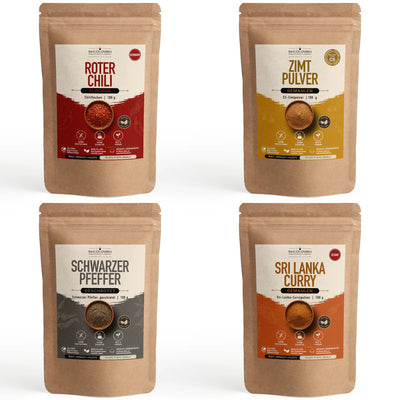
For four portions of pol sambol you will need: 200 grams of freshly grated coconut (or 150 grams of desiccated coconut, soaked in warm water for 60 minutes and drained), 2 to 3 teaspoons of red chilli powder (depending on how hot you want it), 2 small shallots (finely diced), the juice of one lime, half a teaspoon of salt and, optionally, one fresh green chilli (cut into fine rings). The red chilli powder gives the sambol its characteristic orange-red colour and, together with the lime juice, creates the typical balance of flavours between heat, acidity and the natural sweetness of the coconut. If you value tested quality, you will find organic chilli powder from Sri Lanka at MrCOLOMBO, imported directly.
Fresh coconut or desiccated coconut?
In Sri Lanka, only freshly grated coconut taken straight from the nut is used. In German supermarkets, however, fresh coconut is rare and often of variable quality. The best alternative is frozen grated coconut from an Asian grocery, which comes closest to the original. Desiccated coconut also works well, provided you soak it in warm water for at least 60 minutes before preparation and then drain it thoroughly. Stiftung Warentest (2018) tested 15 coconut products and found mineral oil residues (MOSH/MOAH) in some conventional products - organic products performed considerably better here. When shopping, therefore, look for organic quality and check that the coconut content is at least 90 per cent.
What is Maldive fish (umbalakada)?
Maldive fish is dried and smoked skipjack tuna, which plays a central role as a flavour enhancer in authentic Sri Lankan cooking. For pol sambol it is finely crumbled and mixed into the coconut mass, providing an intense umami note that makes the sambol noticeably more complex. If you prefer a vegan pol sambol, simply leave out the Maldive fish - the basic recipe works superbly without this ingredient too. In Germany you will find Maldive fish (also labelled as "Maldive Fish" or "Dried Tuna Chips") in well-stocked Asian food shops. Around 15 to 20 grams per portion is enough to give the sambol its typical depth.
How do I prepare coconut sambal step by step?
Put the grated coconut into a large bowl and add the red chilli powder, the finely diced shallots and the lime juice. Now comes the decisive technique that sets pol sambol apart from all other coconut side dishes: the hand-massage method. Reach into the mixture with both hands and press, turn and knead the ingredients together until the chilli powder has combined evenly with the coconut and the mixture takes on an orange-red colour. This process takes around three to five minutes. The kneading breaks open the cell structures of the coconut and releases natural coconut oil - around 65 per cent of which is medium-chain triglycerides (Examine.com, 2024), which as a carrier fat bind the fat-soluble aroma compounds of the chilli powder particularly effectively. Finally, season with salt and, if needed, with extra lime juice.
Practical tip
Use a pestle and mortar (or the traditional miris gala) if you prefer a finer, more paste-like consistency. The restaurant chef's method: first work the shallots, chilli and lime juice into a fine paste in the mortar, then fold in the coconut and combine only lightly. This produces a more intense aroma with a looser texture at the same time.

The three preparation methods compared
| Method | Time | Result |
|---|---|---|
| Hand massage | 3-5 min | Coarse, traditional, ideal for beginners |
| Pestle and mortar (miris gala) | 8-10 min | Fine, aromatic, best release of oil |
| Food processor (pulse) | 1-2 min | Even, quick, slightly less aroma |
What variations of coconut sambal are there?
Kalu pol - the roasted coconut sambal
Kalu pol (literally "black coconut") is the roasted variation that no German-language competitor has described so far. To make it, toast the grated coconut without oil in a pan over a medium heat until it turns golden brown and smells intensely nutty. This process takes around five to seven minutes and requires constant stirring, as coconut burns quickly. The Maillard reaction during roasting produces more than 600 new aroma compounds and gives the finished sambol a noticeably deeper, caramelised flavour note. Then proceed as in the basic recipe: combine the roasted coconut with chilli powder, shallots and lime juice by hand.
Badapu pol sambol - the sautéed version
Badapu pol sambol is the warm-prepared variation in which the finished coconut sambol is briefly fried in coconut oil. To do this, heat a teaspoon of coconut oil in a pan and add mustard seeds and a few curry leaves until the mustard seeds begin to crackle. Then fold in the finished sambol and toss it over a medium heat for two minutes. This tempering technique, which is also found in South Indian and Malaysian cooking (SBS Food, 2024), unlocks the fat-soluble aromas of capsaicin and the essential oils. The result is a warm, intensely fragrant sambol that goes particularly well with freshly cooked rice and is also suitable as a spice paste for Sri Lankan curry dishes.
The vegan variation
Pol sambol is already vegan in its basic form, as long as no Maldive fish is used. The combination of coconut, chilli, shallots and lime juice forms a complete flavour profile that needs no animal ingredients. For extra umami depth without Maldive fish, you can mix in a teaspoon of toasted sesame seeds or a little soy sauce. This vegan version is also gluten-free and suitable for most people with allergies.
How healthy is coconut sambal really?
Coconut sambal brings together several ingredients that are the subject of current nutritional research. Per 80 grams, fresh coconut provides around 60 per cent of the daily requirement of manganese and 44 per cent of the daily requirement of copper. Coconut fat consists of roughly 48 to 56 per cent lauric acid, a medium-chain fatty acid that has shown antimicrobial properties in laboratory studies (Ameena et al., 2024). At the same time, coconut fat is around 87 per cent saturated fatty acids, which is why the DGE (2023) recommends keeping consumption within the bounds of a balanced diet. A randomised study of 91 healthy adults showed that daily consumption of coconut oil over four weeks raised HDL cholesterol significantly more than butter did (Khaw et al., 2018) - however, coconut oil should not be a substitute for plant oils with a higher proportion of unsaturated fatty acids.
The capsaicin in chilli powder is also of interest to researchers. A review summarised epidemiological studies that showed a statistical association between regular chilli consumption and an 18 per cent lower hazard ratio for cardiovascular mortality (Szallasi, 2022). The shallots contribute to the nutrient profile too: their main flavonoid, quercetin, has been described in cell studies as anti-inflammatory, inhibiting the COX, LOX and NF-kappaB signalling pathways (Marefati et al., 2021) - however, clinical human studies in larger numbers are still lacking. The EFSA (2011) has moreover rejected health claims for medium-chain triglycerides relating to weight reduction, as the body of evidence did not provide sufficient causal proof. A sober assessment is therefore important: pol sambol is a delicious condiment within a balanced diet - no more and no less. If you would like to learn more about the role of Ayurveda spices in the kitchen, you will find further background on their traditional use there.
Important
This article is for information purposes and is no substitute for medical advice. If you have health questions, please consult your doctor or pharmacist. People with allergies to coconut or shellfish (in the variation with Maldive fish) should leave out the ingredients concerned.

Which dishes does pol sambol go with best?
In Sri Lanka, pol sambol accompanies practically every meal of the day. At breakfast it is classically served with egg hoppers, the crispy, thin rice-flour pancakes with a soft fried egg in the middle, or with string hoppers (idiyappam), delicate nests of rice noodles. At lunch and dinner, pol sambol forms the traditional rice-and-curry ensemble together with dhal, a vegetable curry and a meat or fish curry. Sri Lanka's three most popular sambols - pol sambol, lunu miris (an onion-and-chilli sambol without coconut) and seeni sambol (caramelised onions) - are often on the table at the same time (History of Ceylon Tea, 2024). The combination of the creamy coconut note of pol sambol and the heat of the chilli balances out rich curries and makes every forkful of rice more interesting.
Pol sambol can be used in many ways in German cooking too. It works as a spicy side to any curry recipe, as a topping on grilled vegetables or as a dip for naan bread and poppadoms. The adventurous can also try pol sambol as a spread on toasted bread - a popular snack in Sri Lanka. For a complete Sri Lankan breakfast experience, combine pol sambol with a simple dhal made from red lentils and serve flat rotis made from rice flour alongside. In under 30 minutes you have an authentic dish that offers far more depth of flavour than any bread roll with jam.
Making coconut sambal yourself - a piece of Sri Lanka for your kitchen
Pol sambol shows how few ingredients are needed to create a dish with real character. Fresh coconut, good chilli powder, shallots and lime juice - that is all it takes for Sri Lanka's most popular side dish. Whether you choose the classic hand-massage method, try the roasted kalu pol or test the sautéed badapu variation with curry leaves: each version brings a different aroma profile to the plate and shows a different facet of Sri Lankan cooking. What matters most for the result is the quality of the coconut and the chilli powder.
If you would like to delve deeper into Sri Lankan cooking, we recommend our article on the most important spices from Sri Lanka and the basics for an authentic Sri Lanka curry. Pol sambol is the perfect introduction to a culinary tradition that is winning more and more fans worldwide - and one that you can bring home with just a few simple steps.