





Sri Lankan street food, known locally as "short eats", consists of small, hand-held dishes from the street kitchen, served between teatime and late at night. At home, the three classics Kottu Roti, Hoppers and Isso Wade succeed once three techniques are mastered: the rhythmic chopping of Kottu Roti over high heat, the 18 to 20 hour fermentation of the Hoppers batter and the deep-frying of Isso Wade at around 170 degrees Celsius. All three dishes come from the same street kitchen, which has fused Portuguese, Dutch, British, Chinese and Indian influences into something of its own.
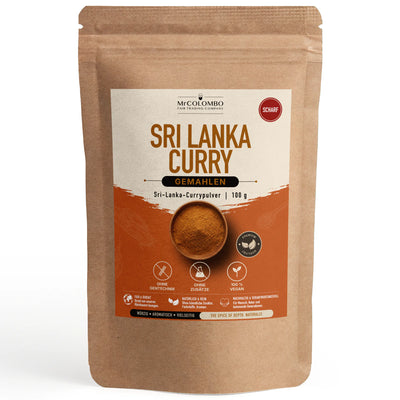
None of the three recipes needs imported specialist equipment: for Kottu Roti a heavy frying pan and two spatulas are enough, for Hoppers a small wok pan with a lid. What matters is the spice base of roasted Sri Lanka curry powder, chilli, turmeric and curry leaves. We at MrCOLOMBO import them directly from smallholder farmers in Sri Lanka, from the chilli fields around Jaffna to the pepper vines in the highlands around Matale and Kandy.
Short answer
Which three Sri Lankan street food classics can you cook authentically at home? Kottu Roti (a chopped flatbread stir-fry from Batticaloa that emerged in the 1970s), Hoppers or Appa (fermented rice-flour and coconut bowls) and Isso Wade (deep-fried chickpea fritters topped with prawn). The decisive factors are the fermentation time of 18 to 20 hours for the Hoppers batter, during which the Lactobacillus count in the batter rises from 2.30 to 5.36 log10 CFU/g within the first five hours alone (Manickavasagan et al., 2014), and a constant frying temperature of around 170 degrees Celsius.
At a glance
What is Sri Lankan street food and where does it come from?
Sri Lankan street food is a food culture in its own right with its own vocabulary. The umbrella term for it is "short eats": small, hand-held dishes sold between teatime and late at night, from fish cutlets and filled pastries to the three classics Kottu Roti, Hoppers and Isso Wade. How strongly this category has been shaped by colonial history, with Portuguese, Dutch, British, Chinese and Indian traces, was described by the food magazine New Lines Magazine (Rathnayake, 2024); it also documents how short eats have shifted since the 2022 economic crisis from an indulgence to affordable basic provision. The country's official tourism authority also lists Hoppers and Kottu Roti as a street food category of their own, explicitly describes Hoppers as a teatime bake and names the characteristic rhythmic tapping sound of the spatulas as the hallmark of Kottu (Sri Lanka Tourism Promotion Bureau). Anyone who cooks these dishes at home takes on a piece of everyday culture from Colombo.
Chopping, fermenting, deep-frying: Kottu Roti, Hoppers and Isso Wade cover three completely different techniques and together give a good cross-section of Sri Lankan street cooking. Kottu Roti is a chopped dish made on the griddle, which according to the historian D. B. S. Jeyaraj emerged in Batticaloa in the 1970s with Tamil-Muslim origins and migrated to Colombo during the civil war in the early 1980s. Hoppers go back considerably further: the word origin of Appam probably lies in the Sanskrit term "apupa" for rice cake, and the food historian K. T. Achaya traces early mentions of the dish back to Tamil Sangam texts from around the turn of the era. Isso Wade, finally, dates from the plantation era of British colonial rule between 1796 and 1948 and is still sold from baskets in the evening at Galle Face Green in Colombo. Anyone who cooks all three in succession learns chopping over high heat, fermentation and deep-frying as the three basic techniques of this cuisine.
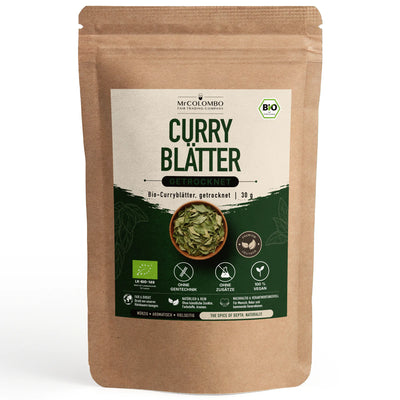
Kottu Roti, Hoppers and Isso Wade share the same spice base. Without curry leaves, roasted curry powder, chilli and turmeric, the dishes taste interchangeable. Sri Lankan curry powder is based on coriander, cumin and fennel, which are dark-roasted individually and only then ground together. Curry leaves (Murraya koenigii) are more than decoration here: depending on where they are grown, they contain up to 0.703 mg/g myricetin, 0.678 mg/g epicatechin and 0.350 mg/g quercetin by dry weight as the dominant flavonoids (Ghasemzadeh et al., 2014). In Sri Lanka they are called karapincha and go into practically every savoury dish there, from the breakfast curry to the late-night Kottu. From working with our partner farms we know the moment they release their aroma: the leaf has to go into hot fat, it curls, bursts audibly and then smells resinous and citrussy. If it is only sprinkled over the finished dish, exactly this aroma stays locked inside the leaf.
How do you make Kottu Roti in a home frying pan?
Kottu Roti consists of Godamba Roti torn into strips, vegetables, egg and curry sauce, all chopped up over high heat with two blunt metal spatulas. It is exactly this chopping that gives the dish its name and the sound by which you can recognise a Kottu stall in Colombo two streets away. At home, a large, heavy frying pan replaces the griddle and two spatulas replace the metal blades. Portion size matters: the Sri Lankan recipe author Farwin Simaak (Love and Other Spices) recommends cooking for only two to three people at a time, because otherwise the texture contrast between the soft interior and the crispy edges is lost. If you cannot get Godamba Roti, use paratha from the freezer section or thicker wheat tortillas. Nutritionally, the roti base is the calmer option: flatbread with dhal curry has a glycaemic index of 69, which puts it below white rice, which reaches values between 76 and 100 depending on variety and preparation (Henry et al., 2021).
The core of the flavour is the roasted curry powder. The Sri Lankan version is dark-roasted before grinding, which gives it its brownish colour and the typical roasted notes; Indian blends stay lighter and milder in tone. Around 5 g, that is roughly one heaped teaspoon, is enough for four portions, plus chilli flakes to taste. We explain the composition of this blend step by step in the Sri Lankan curry recipe. At the stalls on Galle Face Green in Colombo it is exactly this blend that defines the evening: curry leaves bursting in hot coconut oil, the dark roasted note of freshly ground curry powder and a heat with a fruity note, as only whole dried chilli pods can deliver. One detail that many recipes online leave out: at authentic stalls the curry sauce often goes onto the plate separately so that the roti stays crispy. Only then does the guest decide how moist their Kottu will be.
Kottu Roti for 4 people
Prepare the base? Tear 4 Godamba Roti or paratha into finger-wide strips, finely chop 1 onion, 3 garlic cloves and 1 thumb-sized piece of ginger, cut 1 carrot, 1 leek and 150 g white cabbage into fine strips.
Fry the aromatic base? Heat 3 tbsp oil until very hot, add around 20 curry leaves until they burst, then fry the onion, garlic and ginger for 2 minutes.
Add vegetables and egg? Fry the carrot, leek and cabbage for 3 minutes, pour 2 beaten eggs onto the edge of the pan and let them set, then break up roughly.
Season and chop? Sprinkle in 1 tsp roasted Sri Lanka curry powder, 1 tsp chilli flakes and salt, add the roti strips and chop everything with two spatulas for 2 to 3 minutes. For four portions, work in two batches, otherwise the mixture steams instead of frying.
Serve the sauce separately? Briefly bring 200 ml coconut milk to the boil with 1 tsp curry powder and a few curry leaves and serve it on the side.

How do you ferment Hoppers batter properly?
Hoppers, Appa in Sinhala, are bowl-shaped pancakes made from fermented rice flour and coconut milk, crispy on the outside and soft in the middle. The texture contrast is a consequence of the shape: when the pan is swirled, the batter runs up the side of the pan and becomes paper-thin there, while a thicker base collects in the hollow and stays soft. The fermentation carries the entire flavour, because the batter is not seasoned. A study of Appam batter shows how quickly this gets going: in the control batter, the Lactobacillus count rose from 2.30 to 5.36 log10 CFU/g in just five hours of fermentation (Manickavasagan et al., 2014). Lactic acid bacteria are responsible for the souring and aroma formation: a 16S rRNA analysis of fermented idli batter found a homology of 99 to 100 per cent to Lactobacillus plantarum in eight isolates (Agaliya and Jeevaratnam, 2013). The same microorganisms are at work in kimchi and pickled vegetables, as we described in the article on fermenting with spices.
Because the lactic acid bacteria in Hoppers batter need time, the home kitchen works in two stages: a pinch of dried yeast starts the fermentation, and the aroma then develops over the long resting time. The Sri Lankan recipe author Roshani Wickramasinghe (Hungry Lankan) lets 200 g rice flour with 175 ml water and a pinch of dried yeast rise for 18 to 20 hours, expressly without sugar and salt, because both slow down the fermentation. Only then are 200 ml coconut milk and 1 tsp sugar added, the batter rests for a further 30 minutes, and salt goes in right at the end. At room temperatures below 20 degrees the time increases noticeably; in the German winter, a slightly warmed oven with the light switched on helps. A bowl that is at most half full makes a suitable container, because the batter rises considerably during fermentation. A batter that does not smell distinctly and shows no bubbles after 20 hours was kept too cold and simply needs more time, not extra yeast.
Important
In a test of 13 products, canned coconut milk was significantly more contaminated with bisphenol A than coconut milk from cartons, and one product was recalled for exceeding the EU limit (VKI, 2023). If you bake Hoppers regularly, the carton version is the better choice. This article is for information purposes and does not replace medical advice. During pregnancy and for people with a weakened immune system, raw prawns and long-fermented batters are only recommended when fully cooked through or freshly prepared, respectively.
For cooking, a small, semi-circular wok pan with a lid takes on the role of the traditional appa chatti. Pour in a ladle of batter, swirl the pan with both hands so that the batter runs up the side, then cook over low heat with the lid on for three to four minutes. For egg hoppers, crack an egg into the middle before putting the lid on. They are classically served with coconut sambol, whose preparation is described step by step in the coconut sambal recipe. 200 g rice flour makes about eight Hoppers, that is two portions for breakfast or four as a side dish.
Hoppers, about 8 pieces
Mix the basic batter? Stir 200 g rice flour with 175 ml lukewarm water and a pinch of dried yeast until smooth, cover and leave to stand at room temperature for 18 to 20 hours. Without sugar and salt, both slow down the fermentation.
Check the fermentation? The batter smells distinctly sour and shows bubbles on the surface. Below 20 degrees room temperature this takes longer, in which case the oven with the light switched on helps.
Finish the batter? Stir in 200 ml coconut milk and 1 tsp sugar, leave to rest for 30 minutes, and add salt only right at the end. The consistency should be thin like crêpe batter.
Form the bowls? Pour a ladle of batter into the hot, lightly oiled wok pan and immediately swirl the pan with both hands so that the batter runs up the side.
Cook with the lid on? Cook over low heat for 3 to 4 minutes until the edge is crispy and the middle has set. For egg hoppers, crack an egg into the middle before putting the lid on.
Nutritionally, Hoppers remain a rice dish. Depending on variety and preparation, white rice has a glycaemic index between 76 and 100 (Henry et al., 2021). The German Nutrition Society (DGE) recommends choosing at least one third of cereal products as wholegrain and at the same time points to the comparatively high climate impact of rice, which is why it suggests rather occasional consumption. That is not an argument against Hoppers, but rather for the way they come to the table in Sri Lanka anyway: never alone, but together with coconut sambol and a curry made from lentils or vegetables. If you set the batter the evening before, it is therefore best to plan a vegetable side dish straight away. Whether the long fermentation changes the glycaemic index of the finished Hopper has not been demonstrated, so the classification remains with the rice itself. In this recipe, fermentation is a question of flavour, not of nutritional value.

How do you make Isso Wade at home?
Isso Wade, also spelt Isso Vadai, is a flat fritter made from coarsely ground chickpea dal with a whole prawn on top. The crumbly crust comes from the soaked dal being only coarsely crushed: starch remains in the fragments and binds during frying, whereas a smoothly blended mixture turns out compact and chewy. The classic from Galle Face Green carries three to four small prawns per piece and is deep-fried in coconut oil at around 170 degrees Celsius until the edges are golden brown. Six to eight minutes are enough; after that the inside becomes dry. They are sold in the evening from baskets covered with a cloth; the fritters are then lukewarm, smell of curry leaf and coconut oil and are handed over in newspaper with a dollop of chilli sambol. At home you get closest to this state if you put the wade on the plate straight from the oil.
Deep-frying Isso Wade at home has one advantage that the street stall cannot offer, namely control over water, hygiene and oil temperature. A survey of 65 street food vendors in Ratnapura showed that 60.7 per cent had no access to drinking water for preparation, 75 per cent were exposed to exhaust fumes and dust while working and over 90 per cent were not familiar with the food safety regulations (Liyanage et al., 2015). That is not an argument against street cooking, whose dishes millions of people can afford every day, but a classification of the conditions. At home, by contrast, only three things count: prawns cooked through, clean work surfaces and a stable oil temperature. A kitchen thermometer is the only purchase that is really worthwhile for this, because the 170 degrees can hardly be maintained reliably without measuring. If you work without a thermometer, test with a wooden chopstick: if fine bubbles rise immediately, the temperature is about right. If the oil stays still, it is too cold and the fritters soak up oil.
Isso Wade, about 10 pieces
Soak the dal? Soak 200 g chickpea dal (chana dal) in cold water for at least 6 hours, then drain thoroughly.
Grind coarsely instead of puréeing? Crush the dal without adding water into a moist, crumbly paste. If the mixture becomes smooth, the fritter loses its structure.
Season by hand? Knead in 1 finely chopped red onion, 10 curry leaves, 2 green chillies, 1 tsp ginger-garlic paste, 1/2 tsp each of turmeric and chilli powder, plus salt.
Marinate the prawns? Leave 30 to 40 small prawns to marinate for 15 minutes with turmeric, chilli, salt and lime juice, then press 3 to 4 each into the flattened balls.
Deep-fry at 170 degrees? Fry in coconut oil for 6 to 8 minutes until golden brown, drain on kitchen paper and serve hot with coconut sambol.

Which spices do you need for Sri Lankan street food?
The shopping list is shorter than many expect. Four items completely cover Kottu Roti, Hoppers and Isso Wade: roasted Sri Lanka curry powder, chilli in flake or powder form, turmeric and curry leaves. In terms of quantity it stays manageable, because a complete street food evening with all three dishes uses around 10 g curry powder, 3 g chilli flakes, 2 g turmeric and about 30 curry leaves. Add to that black pepper, which is not essential in any of the three recipes but almost always sits next to the turmeric in Sri Lankan kitchens. Turmeric delivers more than colour: the entire curcuminoid profile, in which curcumin accounts for around 80 per cent, followed by demethoxycurcumin with about 18 per cent and bisdemethoxycurcumin with around 2 per cent (Cozmin et al., 2024). Curcumin is poorly absorbed orally, and the combination with piperine from black pepper or with around 5 per cent essential turmeric oil significantly improves bioavailability; this was measured in studies, not at the kitchen table. Turmeric and pepper nevertheless almost always stand side by side in Sri Lankan recipes.
Heat changes curcumin, capsaicin and piperine measurably. Boiling and especially pressure cooking reduce the curcumin content by 27 to 53 per cent, capsaicin in chilli by 18 to 36 per cent and piperine in pepper by 16 to 34 per cent, with the loss being greatest under pressure cooking (Suresh et al., 2007). For Kottu Roti this hardly matters, because it is fried briefly and hot. For long-simmered curries, on the other hand, it is worth stirring in the curry powder only towards the end. We have gathered the advice on light, air and residual moisture in the spice rack in the article on storing spices properly.
A Sri Lankan curry powder smells of roasting, not of turmeric. If there is only colour and no dark scent when you open the bag, it was roasted for too short a time or at too low a temperature, and that can no longer be fixed in the pan.
MrCOLOMBO, from the 2026 goods-inwards inspection
| Criterion | Kottu Roti | Hoppers | Isso Wade |
|---|---|---|---|
| Active preparation time | 25 minutes | 20 minutes | 30 minutes |
| Lead time required | No | Yes, 18-20 h | Yes, 6 h |
| Special pan recommended | No | Yes | No |
| Vegetarian possible | Yes | Yes | Yes, as Parippu Wade |
| Core technique | Chopping over high heat | Fermentation and swirling | Coarse grinding and deep-frying |
How do you recognise good ingredients for Sri Lankan recipes?
Spice quality determines half the result in Sri Lankan street food, and it is measurable. The Federal Office of Consumer Protection and Food Safety (BVL) reported for 2017 exceedances of the maximum levels for plant protection product residues in 7.5 per cent of black pepper samples, 13 per cent for paprika powder and 26 per cent for chilli powder, with 70 per cent of the chilli samples showing multiple residues; in 2018 the rate of objections for paprika fell to 2.9 per cent of 137 samples (BVL, 2020). On the subject of mould toxins, the Federal Institute for Risk Assessment (BfR) is clear: aflatoxins are among the most potent naturally occurring toxins, are genotoxic, and a safe threshold cannot be determined. Ongoing monitoring in spices was also recommended because of a possible increase due to climate change (EFSA, 2020).
When shopping for Isso Wade, it is worth taking a second look at both main ingredients, dal and prawns. How heavily pulses can be contaminated is shown by an Öko-Test from 2024 of 20 mountain and brown lentils, 14 of them organic products: glyphosate was detected in four conventional and one organic product, and traces of mineral oil (MOSH) were found in 13 organic lentils (Öko-Test, 2024). There is no comparable German test for chana dal, but the basic problem of residues is the same. With prawns the situation is similarly unclear: in the first ten months of 2025, the EU rapid alert system RASFF registered 26 notifications of drug residues in seafood (SGS, 2025); for the whole of 2025, the Southern Shrimp Alliance counted 13 prawn consignments rejected at the EU border, eight from India and five from Vietnam. Three simple consequences for the home kitchen follow from this: buy certified goods, cook prawns through completely and keep the frying batch small so that the oil temperature does not drop below 160 degrees.
Our approach at MrCOLOMBO
We buy directly from smallholder farmers in Sri Lanka, without intermediaries, and know every stage of the supply chain personally. The chilli comes from the north around Jaffna, the pepper from the traditional highland gardens. We describe in detail what this journey from harvest to dispatch looks like in the article on spices from Sri Lanka.
How central Sri Lanka is to this street food cuisine is shown by the export figures for the raw materials that go into Kottu Roti, Hoppers and Isso Wade. In the first ten months of 2025, Sri Lanka's coconut product exports exceeded the one billion US dollar mark for the first time, an increase of 43.8 per cent on the same period of the previous year (Newsfirst, 2025). Coconut milk for the Hoppers batter and coconut oil for frying therefore come from a product group that is industrially well organised in the country of origin. In spice exports the country is similarly strong: the Sri Lanka Export Development Board reports around 27 per cent of global cinnamon demand and over 85 per cent of the world market share in true Ceylon cinnamon (EDB). For home cooks in Germany, what counts here is EU Implementing Regulation 2019/1793, which governs increased official border controls for food of non-animal origin, spices included. Certified imported goods are thus more closely checked than the little bag from the holiday suitcase. For the three recipes this means a welcome simplification: coconut milk, coconut oil, curry powder, chilli and turmeric come from the same country of origin, so the origin check concentrates on a single supply chain.
Shopping checklist
Does the spice smell at all? Curry powder without a roasted scent and chilli without a fruity note are old. Freshly ground goods are fragrant as soon as you open the bag.
Is the region of origin stated? "EU and non-EU" says nothing. A specific region such as Jaffna or the Sri Lankan highlands is a quality signal.
Is the colour realistic? Bright red chilli powder and vivid yellow turmeric without any browning point to additives or heavy re-colouring.
Does the pack size match your consumption? According to this recipe, around 5 g curry powder goes into one batch for four people, so 100 g is enough for about 20 batches. Larger stocks lose a lot of aroma within a year.
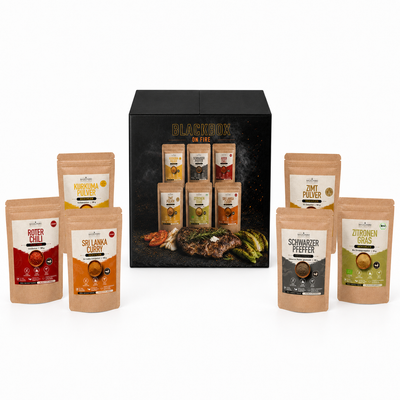
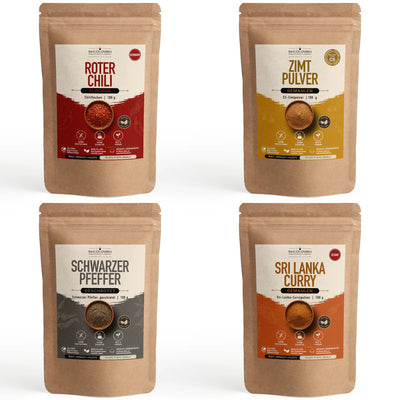
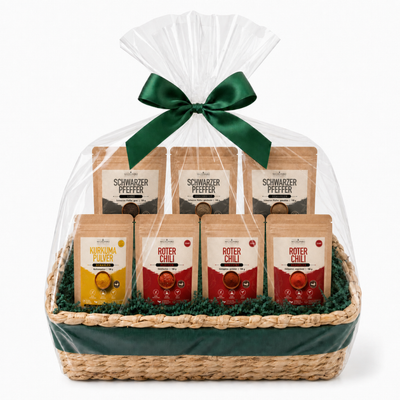
To get started with Sri Lankan street food cooking, a small spice set of four items is enough: roasted Sri Lanka Curry Powder, heat from our chilli range, turmeric for colour and marinade, and curry leaves. If you cook all three recipes in one evening, this basic kit will see you through without buying more. Curry leaves are available frozen from Asian supermarkets; dried, they lose almost all their aroma; they can be added in portions straight from the freezer into the hot fat. For the three ground spices, the small pack is the better choice, because ground goods lose aroma faster under light, air and residual moisture than whole pods and seeds. A 100-g bag of curry powder covers around 20 batches for four people each and is therefore the sensible size for most households. We have broken down why organic certification means more for spices than a seal on the bag in the article on the advantages of organic spices.
Is Sri Lankan street food at home worth the effort?
Yes, if you respect the order. Kottu Roti can be made on a weekday evening in 25 minutes and is the best starting point. Hoppers need planning, because the batter has to be set 18 to 20 hours in advance, but reward you with a texture that no other dish delivers. Isso Wade is worthwhile for guests, but demands clean working with prawns and oil temperature. If you are expecting visitors, set the Hoppers batter the evening before and fry the wade only when everyone is seated at the table. All three stand or fall with the spice base, and that is exactly where it is decided whether the result tastes of Colombo or of compromise. To be honest, one point remains open: a domestic hob does not reach the sustained heat of a gas griddle, so the edges of the Kottu turn out a little less crispy at home. You can largely compensate for that with smaller portions and a properly preheated, really hot pan. How much the heat differs between individual chilli varieties is shown in the comparison of chilli varieties.
The most practical way in remains the order Kottu Roti, Isso Wade, Hoppers. Kottu Roti needs no lead time and is on the table after 25 minutes of active work, Isso Wade requires 6 hours of soaking time for the chana dal, Hoppers 18 to 20 hours of fermentation. If you learn the three in this order, you build up the technique first and add the timing afterwards. Nutritionally, all three remain cereal and pulse dishes: flatbread with dhal curry has a glycaemic index of 69, which puts it below white rice, which reaches 76 to 100 depending on variety and preparation (Henry et al., 2021). For a street food evening with all three dishes, you therefore plan backwards, set the Hoppers batter the evening before and soak the dal in the morning. Everything else is repetition, because the spice base stays the same in all three recipes, and that is exactly where the appeal of this cuisine lies: three very different dishes from a single handful of spices.