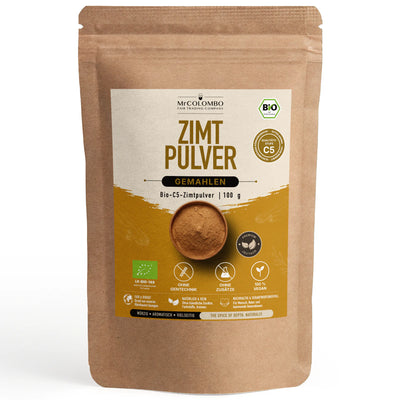
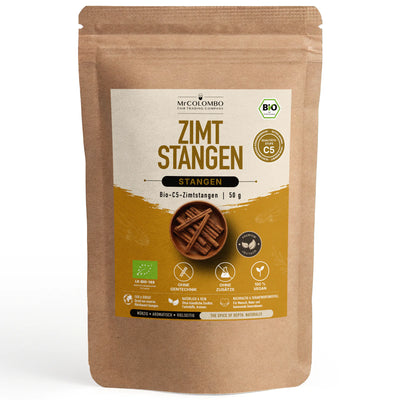
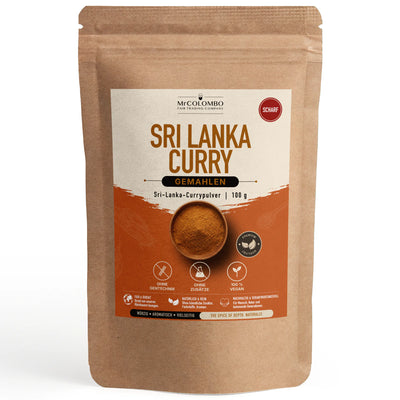





I n 2025, Sri Lanka exported spices worth 449.91 million US dollars - a record figure that makes the small island in the Indian Ocean the ninth-largest spice exporter in the world (Sri Lanka Export Development Board, 2025). Behind these figures stand more than 70,000 smallholder farmers who grow cinnamon, pepper, cardamom, cloves and nutmeg on around 31,000 hectares. What sets these five spices apart from mass-produced goods is not only their aroma, but an interplay of volcanic soils, a tropical monsoon climate and centuries-old craftsmanship. In this portrait we introduce the five most important spices of Sri Lanka - with scientific facts, consumer-protection data and practical tips for buying.
The history of Sri Lankan spices goes back more than 3,000 years. Egyptian traders were already using Ceylon cinnamon for religious rituals, and from the 9th century onwards Arab merchants controlled the sea trade. Portuguese, Dutch and British fought for centuries over the island's cinnamon monopoly - Galle Fort, today a UNESCO World Heritage Site, bears witness to that era. Since 2022, "Ceylon Cinnamon" has been the first Sri Lankan product to carry the EU's protected geographical indication (PGI) (EU Regulation 2022/144). We import our spices directly from smallholder farmers in the Central Province and know every stage of the supply chain personally. You can find out more about cultivation, harvest and the trade grades in our article on Ceylon cinnamon from Sri Lanka.
At a glance
The 5 spices at a glance
| Spice | Botanical name | Main active compound | Content | Growing region |
|---|---|---|---|---|
| Ceylon cinnamon | Cinnamomum verum | Cinnamaldehyde | 50-63 % | Matale, Galle |
| Ceylon pepper | Piper nigrum | Piperine | 5-9 % | Matale, Kandy |
| Cardamom | Elettaria cardamomum | 1,8-Cineole | high | Kandy, Nuwara Eliya |
| Cloves | Syzygium aromaticum | Eugenol | 70-85 % | Kandy, Kegalle |
| Nutmeg | Myristica fragrans | Myristicin | 13.4 % | Sabaragamuwa |
Why are spices from Sri Lanka considered the best in the world?
Sri Lanka lies only a few degrees of latitude north of the equator and combines three different climate zones on an area smaller than Bavaria. The Central Province around Kandy and Matale offers a humid tropical climate with annual rainfall of more than 2,500 millimetres - ideal conditions for cinnamon trees, pepper plants and cardamom shrubs. The island's volcanic soils are rich in minerals and give the spices that complex aroma profile which cannot be reproduced synthetically. The Sri Lanka Export Development Board (2025) puts the area under cinnamon cultivation alone at 31,000 hectares, on which around 400,000 people are directly or indirectly employed.
A key principle of Sri Lankan spice farming is what is known as intercropping: cinnamon trees grow in the shade of jackfruit trees, pepper vines climb up their trunks, and cardamom thrives on the ground in the filtered light. This system safeguards biodiversity and protects the soils from erosion. According to the German Nutrition Society (DGE, 2015), spices from holistic cultivation contain higher concentrations of secondary plant compounds such as monoterpenes and polyphenols - substances that nutritional science is studying for antioxidant properties. More than 70 per cent of Sri Lankan spice farmers cultivate less than one hectare of land (UNIDO, 2023) - these are family farms, not industrial plantations.
What makes Ceylon cinnamon so special?
Ceylon cinnamon (Cinnamomum verum) differs from the cassia cinnamon (Cinnamomum cassia) commonly found in supermarkets in one decisive respect: its coumarin content. The German Federal Institute for Risk Assessment (BfR, 2012) measured that cassia cinnamon contains between 2,300 and 3,500 milligrams of coumarin per kilogram, whereas Ceylon cinnamon is below 20 milligrams per kilogram - a difference by a factor of 250. The EFSA has set the tolerable daily intake (TDI) at 0.1 milligrams per kilogram of body weight, which with cassia cinnamon can already be reached with just a few grams a day. For heavy users who regularly prepare golden milk or porridge with cinnamon, Ceylon cinnamon is therefore the safer choice.
In its cinnamon powder test (November 2024), Stiftung Warentest confirmed that five out of six Ceylon powders were below 20 mg/kg of coumarin, while all cassia samples showed between 2,300 and 3,500 mg/kg. The testers' verdict: "Ceylon cinnamon has the edge" - especially for people who consume a lot of cinnamon. In terms of flavour, Ceylon cinnamon offers a broader polyphenol spectrum with 50 to 63 per cent cinnamaldehyde in the essential oil, compared with 92 to 98 per cent in cassia (PMC, 2025). This means: Ceylon cinnamon tastes finer and more complex, while cassia comes across as one-dimensionally hot and sweet. Since February 2022, "Ceylon Cinnamon" has been registered as a protected geographical indication in the EU - a guarantee of quality that is explained in detail in our comparison of Ceylon cinnamon vs. cassia.
Important
An EU investigation by the Joint Research Centre (September 2025) found that 9 per cent of products labelled as "Ceylon cinnamon" were in fact cassia cinnamon. When buying, look for the EU-protected designation of origin "Ceylon Cinnamon" (PGI) and for transparent supply chains.

Why is Ceylon pepper more than just hot?
Black pepper from Sri Lanka (Piper nigrum) contains between 5 and 9 per cent piperine - the substance responsible for its characteristic heat (MDPI, 2023). Yet piperine is far more than a flavour carrier: in a much-cited study, Shoba et al. (1998, Planta Medica) showed that as little as 20 milligrams of piperine increases the bioavailability of curcumin by 2,000 per cent. The mechanism behind this is now well researched: piperine inhibits the enzyme CYP3A4 as well as the P-glycoprotein efflux transporter in the gut, whereby the intestinal absorption of curcumin, but also of resveratrol, CoQ10 and beta-carotene, increases by 30 to 60 per cent (PubMed, 2025). This principle makes the combination of pepper and turmeric from Sri Lanka particularly sensible in the kitchen.
In March 2025, Öko-Test examined black pepper and found mineral oil residues (MOSH) in five out of twenty conventional products, including, in one case, potentially carcinogenic MOAH. By contrast, fourteen out of sixteen organic peppers received the rating "good" or "very good". Ceylon pepper from certified organic cultivation, as it grows on small mixed-cropping plots in the regions of Matale and Kandy, offers a traceable alternative here. The process of cryogenic grinding preserves the volatile aroma compounds that are lost to frictional heat in conventional milling.
Practical tip
For maximum aroma, always grind pepper fresh from the mill. Whole peppercorns retain their piperine for months, whereas ground pepper loses up to 30 per cent of its heat after just a few weeks.
What is behind cardamom - the "queen of spices"?
Cardamom (Elettaria cardamomum) from Sri Lanka grows on around 2,794 hectares in the highlands of Kandy, Matale and Nuwara Eliya (Sri Lanka Export Development Board, 2025). The plant belongs to the ginger family and has been known in the Arab world for centuries as the "queen of spices". In cultivation, cardamom needs the filtered shade of larger trees - in the Sri Lankan intercropping system it grows on the ground beneath cinnamon trees and jackfruit palms. The green pods are harvested by hand before they fully ripen and gently dried at low temperatures to preserve the essential oils.
Cardamom (Elettaria cardamomum) is one of the most expensive spices in the world - and one of the most versatile. In a meta-analysis of eight clinical studies, cardamom extract showed changes in the inflammation markers CRP, TNF-α and IL-6 as well as in systolic and diastolic blood pressure (Jamshidi et al., 2024, PMC). A narrative review describes the polyphenols of cardamom as substances that research is studying for lipid-modifying and antioxidant properties (Souissi et al., 2022, PMC). Anyone who breaks open a fresh cardamom pod recognises the difference in quality immediately: intensely camphor-like with sweet citrus notes - a scent that no ready-made powder from the supermarket can reproduce. In the kitchen, cardamom unfolds its versatility in Arabic coffee, Scandinavian baking, Indian biryani or a simple chai latte. Tastewise identified cardamom as a core ingredient of the spice trend hawaij - a Yemeni blend that is gaining international popularity in 2025 and 2026.

What role do cloves play in Sri Lanka's spice tradition?
Cloves (Syzygium aromaticum) are among the oldest trade goods of humankind - archaeological finds attest to their use in the Middle East more than 3,500 years ago. In Sri Lanka, cloves are grown on around 7,700 hectares, mainly in the districts of Kandy, Kegalle and Matale, with an annual harvest of 5,301 tonnes (UNIDO, 2023). The main active compound eugenol accounts for 70 to 85 per cent of the essential clove oil (PMC, 2024) and gives the buds their characteristic warm, spicy taste - when you bite into a fresh clove, the eugenol released slightly numbs the tongue, a sign of high oil concentration. In food science, eugenol is being studied for its preservative properties: a recent study in Frontiers in Microbiology (Martínez-Graciá et al., 2025) showed that eugenol can inhibit biofilm formation in certain bacterial strains by up to 90 per cent.
In Sri Lankan cuisine, cloves are an integral part of thuna paha - the traditional roasted curry powder which, alongside cloves, also brings together Ceylon cinnamon, black pepper, cardamom, coriander and cumin. Our authentic Sri Lanka curry recipe uses this curry powder as its base. Cloves also play a key role in European cooking - from gingerbread and red cabbage to mulled wine. The difference between fresh, hand-picked cloves and industrial mass-produced goods shows in the eugenol content: high-quality cloves from smallholder cultivation in Sri Lanka reach peak values, whereas machine-harvested goods from large plantations contain considerably less essential oil.
Practical tip
This is how to check the quality of cloves: press a bud between your fingers - fresh, oil-rich cloves feel slightly greasy and leave an intense, warm, spicy scent on the skin. Drop a clove into a glass of water: high-quality cloves sink vertically or float upright, inferior ones lie flat on the surface.
How is nutmeg grown and used in Sri Lanka?
Botanically speaking, nutmeg (Myristica fragrans) is not a nut but the seed kernel of a tropical fruit. In Sri Lanka it is grown mainly in the humid lowland regions of the Western and Sabaragamuwa Provinces, often as a companion tree in existing spice gardens. The three main constituents of the essential nutmeg oil are sabinene (21.7 %), α-pinene (15.8 %) and myristicin (13.4 %), as documented by an analysis in Taylor & Francis (2023). These terpenes give nutmeg its unmistakable aroma profile - warm, sweetish and slightly woody - which enriches both savoury and sweet dishes in the kitchen.
In traditional Sri Lankan cuisine, nutmeg is used in small quantities in curries, rice dishes and desserts. A comprehensive review (Eltawil et al., 2025, PMC) describes that nutmeg constituents are being studied in pharmacological research for neuroprotective and hepatoprotective properties, with 73 per cent of the myristicin being broken down by the metabolism within one day. For cooking, freshly grated nutmeg is recommended - it quickly loses its aroma after grinding. A hint of freshly grated nutmeg refines béchamel sauces, potato dishes and Christmas baking alike. According to UNIDO (2023), Sri Lanka ranks among the ten largest nutmeg exporters worldwide and, with its organic spices from smallholder cultivation, offers traceable origins.
Important
This article is for information purposes and is no substitute for medical advice. If you have health-related questions, please consult your doctor or pharmacist. Nutmeg is not suitable for consumption in larger quantities (from around 5 grams).

Why is it worth buying spices directly from Sri Lanka?
Sri Lanka's five signature spices - Ceylon cinnamon, pepper, cardamom, cloves and nutmeg - cannot be swapped for industrial mass-produced goods. The combination of volcanic soils, tropical climate, traditional intercropping and artisanal processing results in aroma profiles that are measurably superior in scientific terms. At the same time, consumer-protection tests by Stiftung Warentest and Öko-Test show that organic spices from controlled supply chains carry fewer contaminants and are richer in constituents. Anyone who values quality, transparency and flavour will find in directly imported Sri Lankan spices the best foundation for their own kitchen.
You can find more in-depth information on individual spices in our other articles - for instance on the subject of Ceylon cinnamon vs. cassia or on the authentic Sri Lanka curry recipe with all five spices.