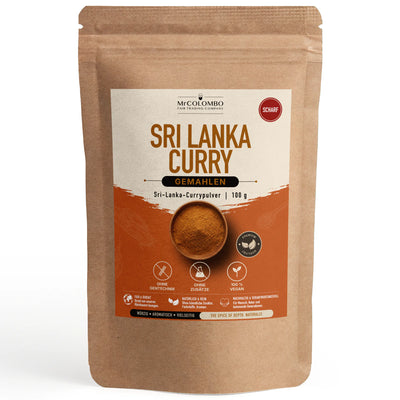


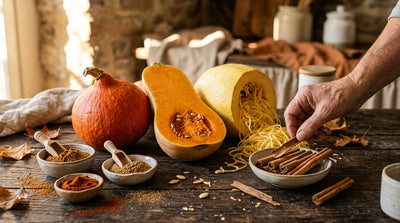



Hokkaido squash goes with Ras el Hanout and cumin, butternut with cinnamon and nutmeg, musk pumpkin with robust curry powder and spaghetti squash with cumin and smoked paprika - the botanical species decides which spice really fits. Cucurbita maxima (Hokkaido), Cucurbita moschata (butternut, musk pumpkin) and Cucurbita pepo (spaghetti squash, garden pumpkin) differ so markedly in sweetness, water content and carotenoid content that a single "pumpkin spice" for all varieties never tastes optimal (Kulczyński & Gramza-Michałowska, 2019).
This botanical variety logic is missing entirely from most recipe blogs - there, "seasoning pumpkin" is equated across the board with cinnamon and nutmeg, regardless of whether a mild Hokkaido skin or a watery spaghetti squash ends up on the plate. MrCOLOMBO imports Ceylon cinnamon, turmeric and curry spices directly from smallholder cooperatives in Sri Lanka's Central Province and knows the flavour profiles of these spices first-hand - here we apply this knowledge specifically to the four most common pumpkin varieties on the German market.
Short answer
Which spice goes with which pumpkin? Sweet, thin-skinned varieties such as Hokkaido and butternut (Cucurbita maxima/moschata) harmonise with cinnamon, nutmeg, ginger and oriental blends such as Ras el Hanout. Savoury, watery varieties such as spaghetti squash (Cucurbita pepo) take more robust seasoning with cumin, smoked paprika or curry powder better than sweet spices (Gewürzmühle Brecht, recipe analysis 2026).
At a glance
Which pumpkin varieties are there and how are they distinguished botanically?
Three botanical species dominate the market; they do not cross with each other and can be clearly told apart by the stem: Cucurbita maxima (Hokkaido) has a cork-like, round stem, Cucurbita moschata (butternut, musk pumpkin) an angular stem widened at the base, and Cucurbita pepo (spaghetti squash, garden pumpkin) a five-sided, bristly stem (Nutzpflanzenvielfalt.de, 2026). This botanical separation also explains the differences in nutritional values: an analysis of 15 pumpkin cultivars showed a beta-carotene content of 46.83 µg/g for Cucurbita pepo compared with 29.19 µg/g for Cucurbita moschata, while moschata varieties provide more folate at 49.05 µg/100g than pepo at 34.52 µg/100g (Kulczyński & Gramza-Michałowska, 2019). These beta-carotene values are nutritionally relevant because the body forms vitamin A from it: just 150 grams of cooked pumpkin together with 12 grams of rapeseed oil cover a noticeable part of the daily intake of 700 µg RAE for women and 850 µg RAE for men recommended by the German Nutrition Society, since the fat-soluble carotenoids are barely absorbed without a little oil (DGE, reference values 2020).
For the choice of spice, the water content is the decisive factor: Hokkaido and butternut are sweeter and creamier, spaghetti squash and many garden pumpkins are more watery and milder in their own flavour. Mild varieties therefore take more robust, savoury seasoning without a spice masking their own flavour, while sweet varieties harmonise with cinnamon and nutmeg rather than becoming cloying. The following matrix summarises the four most common varieties with their matching spice direction, derived from botanical classification and practical recipe research.
| Pumpkin variety | Botanical species | Matching spices | Flavour direction |
|---|---|---|---|
| Hokkaido | Cucurbita maxima | Ras el Hanout, cinnamon, nutmeg | oriental-sweet |
| Butternut | Cucurbita moschata | Cinnamon, nutmeg, ginger | classic-sweet |
| Musk pumpkin | Cucurbita moschata | Curry powder, ginger, lemongrass | spicy-savoury |
| Spaghetti squash | Cucurbita pepo | Cumin, smoked paprika | savoury-smoky |
Which spices go with Hokkaido squash?
Hokkaido has a thin, edible skin and fine, slightly nutty flesh that takes up oriental spice blends such as Ras el Hanout particularly well. A tried-and-tested practical recipe roasts Hokkaido wedges with Ras el Hanout, lemon juice and dill and serves them with chickpeas and feta - the Moroccan spice blend sets an earthy, warm contrast to the natural sweetness of the squash (Gewürzmühle Rosenheim, recipe idea, 2026). If you prefer something more classic, combine Hokkaido with cinnamon, nutmeg and a hint of ginger for a creamy soup that is also suitable for children, as long as attention is paid to the coumarin content of the cinnamon used.
Because Hokkaido cooks quickly thanks to its thin skin, the variety is also well suited to fried or deep-fried preparations in which the spices are roasted directly together with the skin. In Germany, the area under cultivation for edible pumpkins rose to 5,750 hectares in 2025, an increase of 9.5 per cent on the previous year, of which 2,200 hectares are farmed organically (Statistisches Bundesamt, 2026) - an indication that Hokkaido and related varieties are increasingly available as organic produce too and accordingly go well with organically certified spices.

Which spices go with butternut squash?
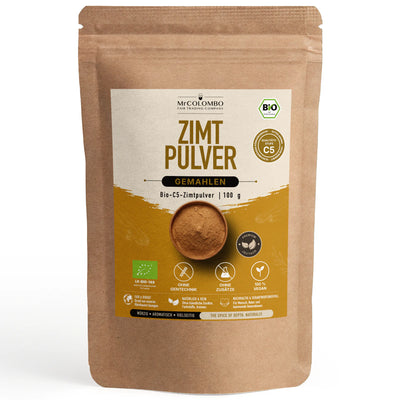
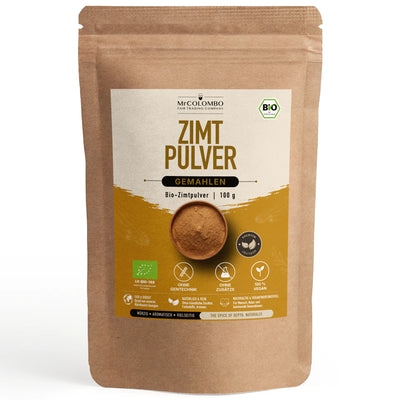
Butternut is the sweetest and creamiest of the four pumpkin varieties covered here (Hokkaido, butternut, musk pumpkin, spaghetti squash) and takes the classic cinnamon-nutmeg-ginger combination best of all. A tried-and-tested recipe idea refines the soup with cream or crème fraîche and tops it with cinnamon croutons and toasted pumpkin seeds - cumin additionally rounds off the sweetness without drowning it out. The type of cinnamon is important here: cassia cinnamon, the most common supermarket cinnamon, contains around 2,300 to 3,500 mg of coumarin per kilogram according to a test of 14 cinnamon powders, while Ceylon cinnamon usually stays below 20 mg/kg (Stiftung Warentest, 2024). Responsible for the characteristic cinnamon aroma is the flavour compound cinnamaldehyde, which is regarded as the main component of essential cinnamon oil and occurs in both Ceylon and cassia cinnamon, though in cassia cinnamon always in combination with considerably more coumarin (Zhang et al., 2024). In practice this means: if you season butternut with cassia cinnamon, you should dose it much more sparingly than with Ceylon cinnamon in order to stay in the safe range both in terms of taste and of coumarin content.
For butternut squash in baked form, for instance as roasted vegetables or a gratin, a somewhat stronger dose of nutmeg relative to cinnamon is recommended, since nutmeg holds its aroma better even during longer roasting times in the oven. The German Federal Centre for Nutrition recommends storing pumpkin in a cool place at 10 to 15 degrees Celsius, which allows butternut to be kept for weeks to months (BZfE, 2026) - so the cinnamon-nutmeg seasoning can be varied anew again and again throughout the entire autumn and winter season.
Which spices go with musk pumpkin?
Musk pumpkin also belongs botanically to Cucurbita moschata, but in practical research it is regarded as the spiciest of the pumpkin varieties and takes considerably more robust curry spices than butternut. Since musk pumpkin, like butternut, belongs to the species Cucurbita moschata, its beta-carotene content of around 29.19 µg/g is in the same range as butternut - considerably lower than Cucurbita pepo, but with more folate (49.05 µg/100g) (Kulczyński & Gramza-Michałowska, 2019). A tried-and-tested curry recipe combines musk pumpkin with curry powder, ginger, coconut milk and lemongrass into a South-East Asian-inspired dish in which the coconut milk buffers the heat of the curry spices. Chicken curries with musk pumpkin also use this combination of curry powder, ginger and a creamy base to balance the firm texture of the variety (LECKER, recipe idea, 2026). The firm, dense structure of musk pumpkin also makes it particularly suitable for longer braising without the flesh falling apart - an advantage over the more watery Hokkaido. A high-quality curry powder from Sri Lanka provides the aromatic base here, without artificial flavourings.
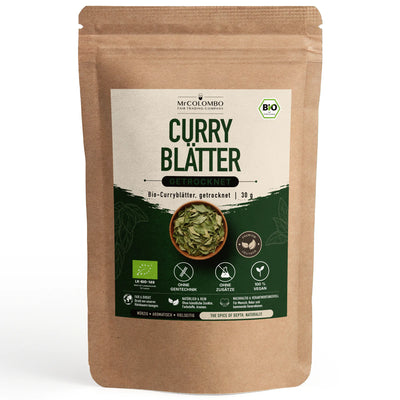
If you prefer a South Indian variant, add curry leaves and fenugreek seeds to musk pumpkin curry for a bitter, spicy depth that suits the firmer consistency of the variety. Since musk pumpkin contains less water than Hokkaido, it absorbs curry spices more slowly but more evenly during braising - a cooking time of 20 to 25 minutes over medium heat has proved itself in practice, so that curry powder and ginger combine fully with the flesh without turning bitter.
Which spices go with spaghetti squash?
Spaghetti squash (Cucurbita pepo) has, at 46.83 µg/g, the highest beta-carotene content of the four pumpkin varieties presented here, but tastes comparatively mild and watery, which is why it takes more robust, smoky spices better than sweet cinnamon-nutmeg combinations (Kulczyński & Gramza-Michałowska, 2019). Instead of the standard Italian version with oregano and basil, a Mexican-inspired seasoning with cumin, smoked paprika, sweetcorn and beans is recommended, which gives the fibrous flesh a smoky, warm note (SONNENTOR, recipe idea, 2026).
Another international variant seasons spaghetti squash soup with cumin, chilli powder, coriander and nutmeg instead of the sweet cinnamon route - a recipe approach originally published in 2000 in Bon Appetit magazine for the Watermark Restaurant and cited to this day as a Southwestern variant (Food.com, 2026). Important with spaghetti squash: since the strands are scraped out with a fork after cooking, spices added dry such as cumin distribute better if they are briefly sweated in a little oil beforehand.
When should pumpkin be seasoned sweet and when savoury?
The decision between sweet and savoury seasoning depends primarily on the water content and the natural sugar content of the variety, not on personal taste alone. Sweet, creamy varieties such as Hokkaido and butternut need little additional sugar and harmonise with warm spices such as cinnamon and nutmeg, while more watery, milder varieties such as spaghetti squash need more robust, savoury seasoning to develop any flavour at all. A current food trend called "swicy", i.e. the combination of sweet and spicy-hot, applies this principle to pumpkin dishes, for instance through chilli-cinnamon combinations in soups or baked goods (BeverageDaily, 2025).
Internationally, the pumpkin spice category is estimated at around 1.1 billion US dollars in 2025, with an expected annual growth rate of 10.4 per cent until 2032 - a trend that increasingly also includes functional and clean-label variants with real rather than artificial spices (BeverageDaily, 2025). For your own kitchen, a simple rule of thumb can be derived from this market growth: if in doubt, start with the sweet cinnamon route for Hokkaido and butternut, and prefer savoury curry spices or cumin for musk pumpkin or spaghetti squash, instead of using a single standard spice for all varieties.
How much cinnamon is really safe in pumpkin dishes?
Since cinnamon appears in almost every sweet pumpkin recipe, the coumarin question is relevant when it comes to dosing. The German Federal Institute for Risk Assessment sets the tolerable daily intake (TDI) for coumarin at 0.1 mg per kilogram of body weight - for an adult weighing 60 kilograms, that corresponds to a maximum of 6 mg per day (BfR, 2012). A current test of 14 cinnamon powders showed: cassia cinnamon contains on average 2,300 to 3,500 mg of coumarin per kilogram, Ceylon cinnamon usually under 20 mg/kg (Stiftung Warentest, 2024). With 25 of 51 cinnamon products tested, a child weighing 15 kilograms already exceeds the tolerable daily amount with a half-teaspoon portion of cassia cinnamon (Stiftung Warentest, 2007). Spice consumption in Germany reached a record of around 69,000 tonnes as early as 2014 (WirtschaftsWoche, 2015) - what share of this is sold as Ceylon or as cassia cinnamon is not clearly declared on many packages, which is why a look at the botanical name when shopping remains important.
Important
This article is for information purposes and does not replace medical advice. For pumpkin baked goods with larger amounts of cinnamon, such as pumpkin pie or muffins, Ceylon cinnamon should preferably be used instead of cassia cinnamon, especially when children are eating too. More on the coumarin issue and the differences between the types of cinnamon is explained in the article Ceylon cinnamon and coumarin.
The EU Flavourings Regulation (EU) No 1334/2008 has set additional limits since January 2011: a maximum of 50 mg of coumarin per kilogram in traditional Christmas baked goods, 5 mg/kg in milk desserts and 15 mg/kg in other baked goods and confectionery (LAVES Niedersachsen). For savoury pumpkin dishes with smaller amounts of cinnamon, such as a pinch in the curry seasoning, the risk of exceeding the limit is low - it becomes problematic above all with sweet pumpkin baked goods, where cassia cinnamon is often used in larger quantities than is usual in soups.
Why is pumpkin regarded as cooling in Ayurvedic cuisine?
In the Ayurvedic tradition, pumpkin is regarded as a cooling, sweet and nourishing food which, according to this teaching, should be deliberately balanced with warming spices to support digestion (Yoga Vidya Blog, 2026). The classic warming spices include turmeric, cumin, mustard seeds, ginger and chilli - a combination found both in Ayurvedic pumpkin dal and in spicy, piquant pumpkin curries (Ayurveda-Lebensmittel.de, 2026). This notion of foods as "cooling" or "warming" is part of the traditional dosha teaching and is not recognised in modern nutritional science as a proven mechanism of action, but is understood as a cultural principle of preparation - a note that reputable Ayurveda guides usually include. Turmeric has traditionally been used in Ayurvedic cuisine for thousands of years and lends pumpkin dishes its characteristic yellow-orange colour. Our turmeric from Sri Lanka comes directly from partner farms in the Jaffna region.
Viewed scientifically, curcumin, the main pigment of the turmeric root, is the subject of extensive research - the European Food Safety Authority sets an ADI of 3 mg per kilogram of body weight per day for curcumin (E 100) and, following a re-evaluation, classifies the substance as not genotoxic (EFSA ANS Panel, 2010). In the case of existing gallstones or an obstruction of the bile ducts, turmeric should only be consumed in larger quantities after consulting a doctor, as the root is traditionally attributed a stimulating effect on bile flow. Anyone combining turmeric with pumpkin dishes should also pay attention to product quality: in a laboratory test, 16 of 19 turmeric products failed because of mineral oil hydrocarbons, some additionally with pesticide residues (Öko-Test, 2022). If you want to be on the safe side, look for organic certification and traceable origin information when buying, since directly imported goods less often come into contact with mineral oil residues from packaging or transport via several intermediate stations. More on turmeric and its traditional use is provided by the article Turmeric in the kitchen, and detailed recipes are offered by Ayurveda spices in the kitchen.

Why does the origin of the spices influence the quality of pumpkin dishes?
Sri Lanka produces around 90 per cent of the world's true cinnamon, and since February 2022 "Ceylon Cinnamon" has even held the official EU status of a protected geographical indication (Sri Lanka Export Development Board, 2025). The ideal growing conditions of 20 to 30 degrees Celsius and 1,250 to 2,500 mm of rainfall per year mean that cinnamon trees can be harvested after around two years at a trunk height of two metres (Sri Lanka Export Development Board, 2025). Our cinnamon is peeled from the bark by hand and air-dried in thin quills before being shipped from the Central Province to Colombo and from there to Germany - a manual process that differs markedly from the mechanised mass processing of many cassia suppliers. In addition, Sri Lanka covers around 5 per cent of global nutmeg demand and 7 per cent of mace demand, with Germany as one of the most important export markets (Sri Lanka Export Development Board, 2025).
Checklist for buying pumpkin spices
Does the packaging say Ceylon cinnamon or cassia cinnamon? Ceylon cinnamon (Cinnamomum verum) contains considerably less coumarin and is the safer choice for children and larger quantities.
Is the origin of the turmeric traceable? According to laboratory tests, organic certification and direct import reduce the risk of mineral oil and pesticide residues.
Does the spice match the botanical pumpkin species? Sweet varieties such as Hokkaido and butternut take cinnamon and nutmeg better, savoury varieties such as spaghetti squash rather cumin and curry powder.
At MrCOLOMBO we import Ceylon cinnamon, turmeric and curry spices directly from smallholder cooperatives in regions such as Matale and Kandy in Sri Lanka's Central Province, without intermediaries in the supply chain. This direct relationship allows us to know personally every stage from harvest to shipping to Germany and to follow the organic certification of the partner farms. Why direct import and short supply chains specifically influence spice quality is explained in the article Benefits of organic spices, and an overview of the most important Sri Lankan spices is provided by Spices from Sri Lanka.

Which spice combination suits your pumpkin?
The botanical species decides the right spice direction: Hokkaido and butternut (Cucurbita maxima/moschata) harmonise with cinnamon, nutmeg and ginger, musk pumpkin takes robust curry powder, and spaghetti squash (Cucurbita pepo) goes better with cumin and smoked paprika than with sweet spices. When it comes to cinnamon, it is always worth reaching for Ceylon cinnamon instead of cassia cinnamon, especially for pumpkin baked goods with larger quantities. A specific recipe with Sri Lankan curry spices is shown in Making Sri Lanka curry yourself, which can just as easily be prepared with musk pumpkin instead of chicken.