




O rganic spices are spices from certified organic farming that are produced in accordance with EU Regulation 2018/848 without synthetic pesticides, genetic engineering or ionising radiation. A meta-analysis of 343 studies shows that organically grown plants contain up to 69 % more polyphenols than conventional comparison samples (Baranski et al., 2014). At the same time, the 2023 EFSA report shows that 91.3 % of all organic samples in the EU are free from detectable pesticide residues - in conventional spices, Öko-Test found up to 23 different pesticides in a single sample. These five scientifically documented facts show why organic spices offer measurable advantages and what you should look out for when buying.
The global market for organic spices is growing rapidly: from 1.6 billion US dollars in 2024 to a forecast 4.3 billion by 2034 - an annual growth rate of 10.6 % (Allied Market Research, 2025). With organic sales of 16.99 billion euros, Germany is already Europe's largest organic market (BMEL, 2025). What is behind this trend - and are organic spices really better than conventional ones? We have evaluated the body of research and give you five facts that are backed up by sources.
At a glance
What really makes organic spices better than conventional ones?
Organic spices are subject to EU Regulation 2018/848, which since 1 January 2022 has prohibited the use of synthetic pesticides, genetic engineering and ionising radiation in organic production. This applies explicitly to spices, herbs and essential oils. Instead of chemical treatment, organic spices may only be decontaminated by steam sterilisation - a process that preserves the essential oils, and with them the aroma, considerably better than the irradiation permitted for conventional spices. Every organic business is inspected at least once a year by an independent control body, supervised in Germany by the Federal Office of Consumer Protection and Food Safety (BVL, 2025).
The difference begins in the field: organic farmers rely on crop rotation, natural pest control and organic fertilisation. In conventional farming, by contrast, synthetic plant protection products are used, which can become concentrated during the drying process of the spices. A 14-year study by the Organic Center identified residues of 37 different pesticides in conventional dried spices. Organic certification therefore means more than just a seal on the packaging - it defines the entire supply chain from cultivation through processing to packaging.
Irradiation vs. steam sterilisation - an underestimated difference
One aspect that is often overlooked in the debate about organic spices: under the German Food Irradiation Ordinance, conventional spices may be treated with ionising radiation. This method kills germs effectively, but can alter essential oils and aroma compounds. Organic spices, on the other hand, are sterilised exclusively with steam. Reddit users in the r/Cooking and r/Spices communities confirm it: even untrained palates can taste the difference between fresh organic spices and irradiated goods. If you would like to learn more about the quality characteristics of spices, you will find further information in our article on cryogenic grinding of spices.

Which pesticides are found in conventional spices?
The level of pesticide residues in conventional spices is alarmingly high. According to the 2023 EFSA report, which analysed 13,246 samples in the EU programme, 91.3 % of organic samples were free from quantifiable residues - with a non-compliance rate of just 0.6 %. By comparison, in its examination of 22,314 samples the Federal Office of Consumer Protection and Food Safety (BVL, 2025) found that 24 % of conventional spice samples exceeded the legal maximum limits. In a single sample of cumin, the inspectors found residues of 19 different pesticides.
German consumer tests confirm this picture. The 2024 Öko-Test of paprika powder found: 14 of 16 organic products received the grade “very good”, while conventional samples contained up to 23 different pesticides (Öko-Test, 2024). Nine organic brands - including Lebensbaum, Sonnentor and Dennree - were completely pesticide-free. In the 2025 Öko-Test of black pepper, only five products received the grade “good” - every single one of them from organic farming: Alnatura, Sonnentor, DM Bio, Rossmann Enerbio and Kaufland K-Bio. In the conventional Hartkorn pepper, MOAH was even detected, a potentially carcinogenic mineral oil component (Öko-Test, 2025).
Important
In 2025, the consumer protection organisation foodwatch detected a total of 140 pesticides banned in the EU in foods. Spice blends, paprika powder and coriander were particularly affected. 5.8 % of the samples contained pesticides that have been banned in the EU for decades - including the carcinogenic ethylene oxide, which continues to be used in India and the USA.
Lead in turmeric - a hidden risk
Alongside pesticides, heavy metal contamination is a serious problem. Forsyth et al. (2017) identified ground turmeric as a significant source of lead and documented more than 12 recalls since 2011 due to lead contamination. The reason: lead chromate is sometimes added to conventional turmeric to enhance its colour - a practice that is ruled out for organic turmeric by the seamless control of the supply chain. If you want to be on the safe side, you should opt for certified organic turmeric with traceable origin.
Do organic spices contain more nutrients and antioxidants?
The most comprehensive meta-analysis on this topic to date comes from Baranski et al. (2014), who evaluated 343 studies and published their findings in the British Journal of Nutrition. The result: organically grown plants contain significantly more polyphenols - specifically 69 % more flavanones, 50 % more flavonols and 51 % more anthocyanins. At the same time, organic produce contained 48 % less cadmium. These data relate to fruit, vegetables and cereals, but are particularly relevant for spices, as the drying process further increases the concentration of the constituents.
Specifically for spices, the study by Joglekar and Jadhav (2025) in the International Journal of Nutrition and Food Sciences provides impressive figures: organic pepper achieved an antioxidant activity of 85.5 % in the DPPH assay, conventional pepper only 60.5 % - a difference of 41 %. For organic cloves, the protein content of 7.98 g per 100 g was almost three times as high as for conventional cloves (2.05 g). The tannin content of organic cloves was even 408 % higher (63.15 vs. 12.43 mg per 100 g). These results are consistent with Golijan and Kostić (2020), who found around 46 % more polyphenols in organic herbs such as basil and oregano than in conventionally grown comparison samples.
Practical tip
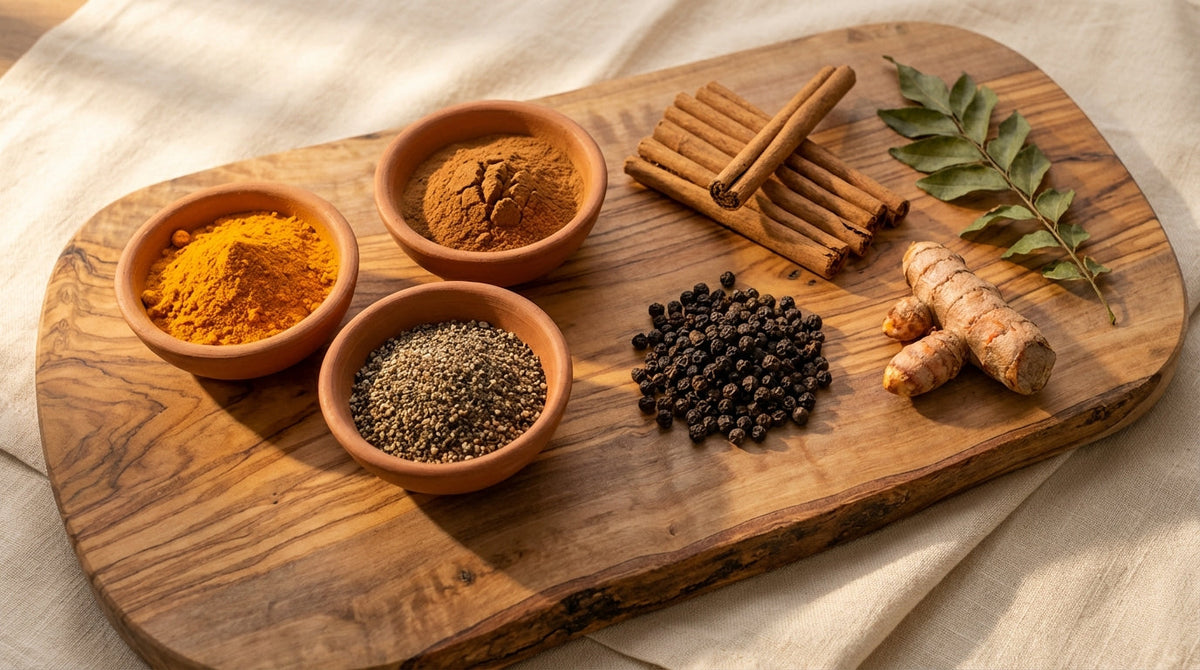
Black pepper complements turmeric in flavour with a warm heat.

An honest assessment: what the research also shows
The Stanford meta-analysis by Smith-Spangler et al. (2012), which evaluated 237 studies, found no strong evidence of generally higher nutrient levels in organic foods - but did find a significant reduction in pesticide exposure of 30 %. Nor is organic a free pass when it comes to heavy metals: Consumer Reports (2021) tested 126 spices and found that organic products did not perform consistently better than conventional ones for arsenic, lead and cadmium. Here, the quality of the supply chain is more decisive than the organic seal alone. That is why we at MrCOLOMBO rely on direct trading relationships with our partner farms in Sri Lanka - we know every stage of the supply chain personally and check the quality on site, from the field in the Central Province to processing in Matale.
Why is origin decisive for organic spices?
Sri Lanka is the country of origin of Ceylon cinnamon and supplies 85 % of the world's cinnamon production. According to the Sri Lanka Export Development Board (2025), the country's spice exports rose by 47 % to 76.92 million US dollars in January and February 2025 alone - pepper even recorded a rise of 144.6 %. More than 70,000 smallholders and 350,000 workers are employed in Sri Lanka's spice sector. The growing regions in the Central Province around Kandy and Matale, with their altitudes of between 500 and 1,500 metres, tropical climate and nutrient-rich soils, offer ideal conditions for spices with a particularly intense aroma profile.
Quality assurance in Sri Lanka has become considerably more professional in recent years. An 8-million-euro project by UNIDO and the EU has trained more than 500 actors in the supply chain and introduced the first GMP certifications in the cinnamon industry (UNIDO, 2019). The National Organic Control Unit (NOCU) under the Export Development Board monitors organic standards, and at BioFach 2025 nine Sri Lankan organic exporters presented themselves in the EDB pavilion. For consumers this means: anyone who buys organic spices from Sri Lanka receives products from a country with a long-established spice tradition and increasingly transparent control systems. Anyone who has ever held freshly peeled Ceylon cinnamon in their hand on a plantation in the Central Province never forgets the warm, sweet, multi-layered scent - an aroma profile that conventional mass-market goods from the supermarket shelf simply cannot offer. You can learn more about the variety of spices from Sri Lanka in our detailed country portrait.
Ceylon cinnamon vs. cassia - why the variety matters
According to the German Federal Institute for Risk Assessment, Ceylon cinnamon (Cinnamomum verum) from Sri Lanka contains only 0.004 % coumarin - around 250 times less than the cassia cinnamon commonly sold in shops (BfR, 2012). This is particularly relevant for daily use, as the EFSA has set a tolerable daily intake of 0.1 mg of coumarin per kilogram of body weight. With conventional cassia cinnamon, this limit is quickly reached with one teaspoon. If you use cinnamon regularly - for example in golden milk or in your muesli - you are considerably safer with organic-quality Ceylon cinnamon.

Are organic spices worth it financially?
In retail, organic spices typically cost 20 to 40 % more than conventional alternatives. But the sums work out differently than expected: since a pinch of turmeric, cinnamon or pepper per dish weighs only a few grams, the extra cost per portion amounts to a few cents. A 50-gram pack of organic turmeric is enough for around 50 to 100 dishes - the price difference compared with the conventional version is around 1 to 3 euros. Calculated per individual dish, that is 1 to 3 cents in additional cost. The German spice and herb market reached a volume of 446.87 million euros in 2025 with rising per capita consumption (Statista, 2025), and the organic segment is growing disproportionately.
Another argument for the added value: organic spices generally contain a higher proportion of essential oils, because the gentler steam sterilisation destroys fewer aroma compounds than irradiation. In practice this means: you need less spice per dish to achieve the same flavour. This partly offsets the higher purchase price. The German Organic Food Industry Association (BÖLW) reports a new record organic turnover of 18.2 billion euros in Germany for 2025 - an increase of 6.7 % on the previous year (BÖLW, 2025). More and more consumers are consciously choosing organic quality because, alongside their own health, they also value the environment and fair working conditions in the producing countries.
Practical tip
Buy whole spices rather than ground: they keep longer (up to 3 years instead of 6 months) and deliver maximum aroma when freshly ground. Briefly toast whole organic peppercorns, coriander seeds or cumin seeds in a pan before crushing them in a mortar - the difference in flavour is clearly noticeable.
Important
This article is for information purposes and is no substitute for medical advice. If you have health-related questions, please consult your doctor or pharmacist.
Organic spices: five facts that make the difference
Organic spices offer several researched differences compared with conventional alternatives: higher levels of polyphenols and antioxidants (up to 69 % more according to Baranski et al.), no ionising radiation, less cadmium and a regulated supply chain under EU 2018/848. At the same time, the organic seal is not a free pass - when it comes to heavy metals and mycotoxins, the quality of the entire supply chain counts at least as much as the certification.
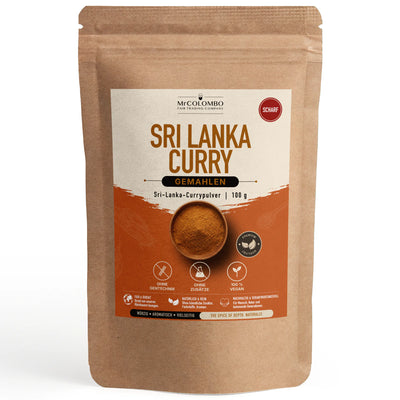
Ultimately, what matters is the combination of organic certification and transparent origin. If you buy organic spices from suppliers with a traceable supply chain and direct trading relationships, you get the best of both worlds: certified organic quality and the assurance that care is taken beyond the seal as well. If you are interested in the origin of our spices, read our article on spices from Sri Lanka - or simply try it yourself with a traditional Sri Lanka curry.