




Cumin (Cuminum cyminum), also sold as jeera, is the seed spice with the warm, earthy, slightly resinous aroma that carries Indian curries, falafel, chilli con carne and Moroccan stews. It is used either whole and briefly toasted in hot fat or finely ground as part of a blend. The rule of thumb in the kitchen is half a teaspoon for two to three portions, and toasting takes one to two minutes at most in a dry pan. With a harvest of around 860,000 tonnes in 2023/24, India is by far the world's largest producer of cumin (CBI, 2026).
Cumin has nothing to do with the caraway found in sauerkraut, and this mix-up is the most common kitchen mistake. Botanically, both belong to the umbellifer family (BZfE, 2020), but to different genera. We at MrCOLOMBO import spices directly from smallholders in Sri Lanka, and in the port of Colombo we see that some of the spices processed there never grew on the island at all: cumin arrives as raw material from India and is only cleaned, sorted, roasted and ground on site. Anyone standing in the sorting room sees the difference in quality between two batches immediately: one runs over the sieve almost dust-free, the other leaves behind a layer of broken stems and weed residues. With this spice, the country of processing and the country of cultivation are therefore regularly two different things. That is where the two questions hang that are missing from most guides: where do the goods really come from, and what got mixed in at harvest?
Short answer
What is cumin used for? Cumin seasons pulses, rice, root vegetables, lamb, minced meat and yoghurt dips, and it is an essential component of garam masala, curry powder, chaat masala, za'atar and dukkah. Whole seeds are bloomed for 30 to 60 seconds in hot oil or ghee (tadka); ground cumin only goes into the dish towards the end. The aroma comes from cuminaldehyde, the main component of the essential oil (Paul et al., Phytochemistry Reviews, 2025). Toasting for too long makes the spice bitter.
At a glance
What is cumin and how does it differ from caraway?
Cumin is the dried fruit of the annual plant Cuminum cyminum, an umbellifer (Apiaceae) that grows about 30 to 50 centimetres tall and needs a dry, warm climate. The elongated, light brown seeds are around five millimetres long and carry five fine longitudinal ridges. Confusion with caraway (Carum carvi) is the classic mistake on the spice shelf. Both plants belong to the botanical family of umbellifers, as the German Federal Centre for Nutrition notes (BZfE, 2020), but they belong to different genera and taste completely different. Caraway brings an aniseed-like, sweetish, cool note to sauerkraut, whereas cumin brings a warm, earthy, almost resinous spiciness with a slight bitterness. Mix the two up and it ruins a dal just as reliably as a coleslaw. We know the same naming trap from the cinnamon shelf, as our comparison of Ceylon cinnamon and cassia cinnamon shows. A third confusion concerns black cumin (Nigella sativa): it belongs to the buttercup family and is not botanically related to cumin at all; the similarity in name comes solely from the small dark seeds. So when a recipe says cumin, it means neither Carum carvi nor Nigella sativa.
| Criterion | Cumin (Cuminum cyminum) | Caraway (Carum carvi) |
|---|---|---|
| Aroma | warm, earthy, resinous, slightly bitter | aniseed-like, sweetish, cool |
| Main growing areas | India, Iran, Syria, Turkey | Central Europe, Finland, Egypt |
| Typical cuisine | India, Middle East, North Africa, Mexico | Central Europe, Scandinavia |
| Commonly toasted whole | Yes | No |
| Part of garam masala | Yes | No |
Historically, cumin is one of the oldest documented trade spices of all. Its home lies in Western Asia, where, according to the McCormick Science Institute, it has been cultivated since biblical times. From there the drought-tolerant plant spread across the entire southern Mediterranean region. The oldest known evidence goes back around 5,000 years: cumin was used in the mummification of Egyptian pharaohs, and the spice is mentioned by name in both the Old and the New Testament, in Isaiah 28.27 and in Matthew 23.23. In Graeco-Roman antiquity, cumin was a trade commodity on the spice route and part of religious ceremonies. That makes it one of the few spices whose use can be traced back over roughly five millennia. In India it remains part of everyday cooking to this day under the name jeera; in Mexico it is a fixed component of chilli powder and adobo marinades. The typical cumin note in chilli con carne therefore comes from a cuisine at the other end of the world.

Why does cumin taste so earthy?
The characteristic aroma of cumin comes from cuminaldehyde, the main component of the essential oil. A review article by Paul et al. in Phytochemistry Reviews (2025) describes cuminaldehyde as the lead substance that gives the spice its warm, earthy character. The same substance is the subject of basic laboratory chemistry research; no conclusions about an effect in humans can be drawn from it. When heated in fat, these volatile compounds are released from the seed and spread through the dish because they are fat-soluble. This is exactly what the Indian tadka technique is based on. If, however, the seeds are toasted too hot or for too long, the aroma compounds break down and the bitter components dominate. The biochemical analysis of the seeds also shows why they are so aromatic: depending on origin, cumin seeds contain 1.6 to 2.9 per cent essential oil, plus 13.4 to 29.1 per cent fatty oil and 20.9 to 24.7 per cent protein, each based on dry matter (Merah et al., Biomolecules, 2020).
The fatty oil content of cumin seeds of up to 29.1 per cent (Merah et al., Biomolecules, 2020) has a practical consequence for storage: this oil turns rancid if the spice is stored too warm, too light or for too long. A tightly closing screw-top jar in a closed cupboard is therefore the minimum requirement, not the open bag on the spice rack next to the window. Whole seeds keep their aroma in a tightly closing jar in a dark, cool place for about two to three years, and thus considerably longer than most ready-made spice blends, whereas ground cumin already loses a good deal of intensity after six to twelve months, because the broken surfaces let oxygen straight at the essential oil. If the jar sits in the cupboard above the cooker, a large part of the aroma is gone before the pack is even used up. We have summarised the complete rules in our article on storing spices properly.
Whole seeds, crushed between the fingers, immediately smell warm and resinous. If, on the other hand, a pack of ground cumin smells only faint and slightly dusty when opened, the essential oil is long gone. That is the quickest freshness test we know.
MrCOLOMBO experience report
How do you use cumin properly in the kitchen?
The most important decision with cumin is made before cooking: whole or ground. Whole seeds go in at the start of the cooking process and are bloomed in hot oil or ghee; ground cumin is added later, because otherwise it burns. The Indian technique for this is called tadka, regionally also baghaar or chhaunk: heat the fat, add the seeds, wait 30 to 60 seconds until they pop and release their fragrance, then immediately pour over the finished dish or add the remaining ingredients. In a dry pan without fat, the toasting time is one to two minutes over medium heat with constant swirling. As a dosage, half a teaspoon for two to three portions has proven itself, more for minced meat and pulses. A level teaspoon of whole seeds weighs about 2.1 grams (USDA FoodData Central). The reason the tadka technique works at all is the fat-soluble aroma compounds in the seed, above all cuminaldehyde (Paul et al., Phytochemistry Reviews, 2025): when heated, they pass into the fat and spread through the whole dish instead of staying locked inside the seed.
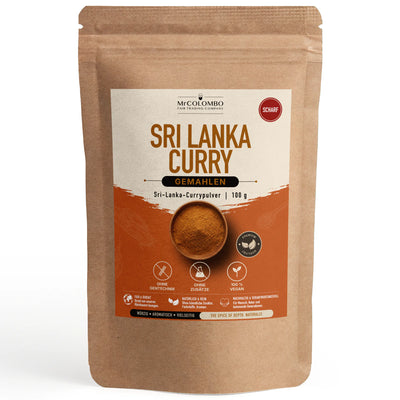
In blends, cumin is almost always the carrier. Garam masala, Indian curry powder, chaat masala, North African ras el hanout, the Levantine za'atar blend and Egyptian dukkah cannot do without it. Roasted Sri Lanka curry powder also contains it alongside coriander, fennel and curry leaves, and this roasting is what distinguishes the Sri Lankan version from the milder Indian curry powder. When making your own blends, you toast the whole seeds separately, because each ingredient has a different toasting time, and only grind them together afterwards. This also gives the answer to the most common emergency question: there is no true substitute for cumin, because no other kitchen spice delivers the same warm, earthy note from cuminaldehyde (Paul et al., Phytochemistry Reviews, 2025). The closest thing is a ready-made curry or garam masala blend, because cumin sets the base note there anyway. Coriander seeds alone do not replace it; they bring a citrus-like note instead of the earthiness. What this roasting tastes like is shown by our Sri Lanka Curry Powder in the shop, which is made using the classic roasted curry method.
How much cumin do you use per portion?
The rule of thumb for cumin is half a teaspoon of whole or ground seeds for two to three portions. A level teaspoon of whole seeds weighs about 2.1 grams (USDA FoodData Central), so half a teaspoon is roughly one gram. With pulses, minced meat and roasted vegetables, the dish easily takes a whole teaspoon. Ground cumin seems more intense than whole seeds at the same quantity, because the aroma compounds are exposed immediately at the broken surfaces and do not first have to be released from the seed in hot fat. The toasting time changes nothing about that: one to two minutes in a dry pan intensify the aroma but are no substitute for a sufficient quantity. Half a teaspoon is therefore the lower limit and not the upper limit, because anyone using the spice for the first time tends, in our experience, to dose too sparingly and ends up tasting only a diffuse warmth instead of the characteristic earthy note.
The five most common kitchen mistakes
Treating whole and ground as interchangeable? Whole seeds at the start, ground cumin at the end of the cooking process.
Toasted for too long? After one to two minutes it is over; otherwise bitterness dominates irreversibly.
Confused with caraway? Carum carvi tastes of aniseed and does not belong in dal, hummus or chilli.
Dosed too sparingly? Half a teaspoon for two to three portions is the lower limit, not the upper limit.
Stored somewhere warm for years? The high oil content in the seed makes the spice rancid and flat over time.

Which dishes turn out particularly well with cumin?
Cumin comes into its own wherever it meets starch, protein or fat. Pulses are its natural partner, because the earthy aroma picks up the somewhat flat base note of lentils and chickpeas. Falafel is the best-known example, usually combined with coriander seeds and fresh parsley. It works just as reliably in root vegetables: roasted carrots and parsnips from the oven get an earthy base note from a spoonful of whole, dry-toasted seeds that salt and oil alone cannot produce. For this dry toasting, the same upper limit of one to two minutes applies as in the pan, and here too half a teaspoon for two to three portions remains the lower limit; with roasted vegetables it may be a whole one. In Moroccan cuisine it carries the classic carrot soup, in Mexico the chilli con carne, in India jeera rice. The McCormick Science Institute names Peruvian pollo a la brasa as well as Mexican achiote blends and adobos as further established uses.
Jeera rice as a starting point
If you want to taste cumin consciously for the first time, cook jeera rice. To do so, heat a tablespoon of ghee or oil, add a level teaspoon of whole cumin seeds, which is about 2.1 grams (USDA FoodData Central), and wait until they pop. The popping is clearly audible and the best moment to carry on; anyone who waits until the seeds are dark brown has already over-toasted them and will taste it in the finished rice. Then briefly swirl in 200 grams of washed basmati rice, pour in 400 millilitres of water, salt and cook covered. That makes two to three portions in about 25 minutes. The dish consists of four ingredients and makes the effect of the tadka technique audible and smellable within a few minutes. In Ayurvedic spice lore, cumin is traditionally toasted in ghee together with fenugreek seeds and poured over rice, a combination that is also described in our article on fenugreek as a spice.
Lentil dal with tadka
A Sri Lankan-style dal is the second good beginner dish for cumin: cook 200 grams of red lentils with 400 millilitres of coconut milk, 300 millilitres of water, curry leaves and half a teaspoon of turmeric until soft in about 20 minutes, and at the end pour over a tadka made from a tablespoon of ghee, half a teaspoon of whole cumin seeds and chilli flakes. For the tadka, allow 30 to 60 seconds in the hot fat until the seeds pop. That makes two to three portions. The interplay of earthy cumin, mild turmeric and the sweetness of the coconut milk is the basic structure of countless South Asian everyday dishes. If you want to try the Sri Lankan version with roasted curry blend, you will find the complete instructions in our Sri Lanka curry recipe. A teaspoon of toasted, ground cumin over yoghurt with salt and a little lemon also makes, in two minutes, a dip that goes with almost any grilled vegetable and with falafel.
Where does cumin come from and why does origin matter?
The world market for cumin is highly concentrated. India harvested around 860,000 tonnes in 2023/24, out of an estimated world production of 900,000 to one million tonnes (CBI, 2026). The other notable growing countries are Turkey, Iran, Syria and China. The largest part of the harvest stays in the country: in the 2025 financial year, India exported around 220,000 tonnes of cumin (IBEF, 2025), a good quarter of its own harvest. It is grown mainly in the dry regions of Rajasthan and Gujarat. The plant is drought-tolerant and ready for harvest after three to four months, as soon as the seeds are dry and brittle (McCormick Science Institute). The same institute lists, besides India and Iran, Argentina, Morocco, Egypt, Turkey and Pakistan among the other growing countries. For consumers, this concentration means: where no region is named, the goods are as a rule Indian bulk commodity from changing sources.
Sri Lanka plays its own role in the cumin trade, even though the spice is not grown on the island. The Sri Lanka Export Development Board officially lists cumin in the country's spice basket, alongside coriander, fennel and fenugreek. In March 2024, the government wanted to permit the import of cumin, pepper, cardamom, ginger, nutmeg and turmeric for processing and re-export, tied to a requirement of at least 35 per cent local value added. After protests from domestic agriculture, the decision was reversed a few days later (Ada Derana, 2024). The port of Colombo is thus a hub where raw material from India is cleaned, sorted, roasted and ground. We know these stages from our own observation and ask there ourselves the three questions that also count at the spice shelf: growing region, analysis certificate, harvest year. This applies all the more because our spices from Sri Lanka take the same route from the field through sorting to the container.
Our approach at MrCOLOMBO
We buy directly from smallholders and cooperatives where we can actually name the growing region, such as turmeric from Jaffna, pepper from the highlands and cinnamon from the central region. For spices that are not grown in Sri Lanka, the same standard applies: traceable origin instead of anonymous bulk commodity. Our entire spice range follows this principle.
How do you recognise good, uncontaminated cumin?
Cumin is one of the spices where residues regularly become an issue. A foodwatch laboratory test from May 2026 found pesticides banned in the EU in 45 of 64 imported foods examined, i.e. around 70 per cent of the samples. No fewer than three cumin products tested were conspicuous, the most heavily contaminated with five residues, three of which are not authorised anywhere in the EU. ÖKO-TEST has been pointing to pesticide findings in spices for years and, in screenings for over 500 active substances, repeatedly found multiple residues. The German Federal Institute for Risk Assessment (BfR) states as a matter of principle that spices and herbs can be contaminated naturally or accidentally with pathogens, foreign substances or illegal dyes. The consequence for shopping is not panic but asking questions: growing region, analysis certificate and harvest year. An analysis certificate is not an advertising document but a laboratory report on the specific batch, which shows the residues tested for and the associated batch number.
A second quality issue with cumin is pyrrolizidine alkaloids (PA). A DNA barcoding study showed that these compounds in cumin seeds do not come from the cumin plant itself but from co-harvested weeds of the genus Heliotropium; the exact species could not be determined (Willocx et al., Food Chemistry: Molecular Sciences, 2022). Since 1 July 2022, Implementing Regulation (EU) 2020/2040 has therefore set a maximum level for cumin seeds of 400 micrograms per kilogram for the sum of 21 pyrrolizidine alkaloids and their N-oxides. The EFSA CONTAM Panel had previously established a reference point of 237 micrograms per kilogram of body weight per day (EFSA Journal, 2017). Unlike the maximum level, this figure refers not to the food but to body weight. How much this matters is shown by a test by Stiftung Warentest (2020) on 34 kitchen herbs: five oregano samples were heavily to very heavily contaminated with pyrrolizidine alkaloids, and for three of them the foundation even advised against consumption. No cumin was examined there, but the cause is the same: co-harvested weeds. Clean harvest management is thus a quality feature and not a detail.
Important
Ground cumin from an unknown source can hardly be checked by the senses. Whole seeds, on the other hand, reveal foreign matter, stem residues and weeds immediately when spread out on a light-coloured plate. If you want to be on the safe side, buy whole seeds and grind them yourself.
You can recognise good cumin by three sensory signs: the seeds are evenly light brown rather than greyish, they smell intensely the moment they are crushed between the fingers, and the proportion of dust, stems and small stones in the pack is minimal. A greyish, dull film on the seeds, by contrast, points to long storage in the light. A price well below the market average is rarely a bargain. A conspicuously low price per kilo usually comes about because uncleaned bulk commodity with a high proportion of dust, stems and weeds goes into the pack, and this co-harvested weed of the genus Heliotropium is at the same time the source of the pyrrolizidine alkaloids (Willocx et al., 2022). It therefore makes sense to compare prices per kilogram and not per pack. A note of transparency on our own behalf belongs here: we sell spices ourselves. The three buying criteria of growing region, analysis certificate and harvest year, however, apply regardless of the supplier, for instance also with black pepper, where the same mechanisms come into play.

What does research say about cumin?
Several randomised controlled trials on cumin exist, almost all of which test extracts and essential oil in capsules. A systematic review with GRADE assessment summarised nine studies from the years 2013 to 2020 with intervention periods of 8 to 24 weeks and observed changes in fasting blood glucose, triglycerides, waist circumference and HDL values (Liu et al., Frontiers in Nutrition, 2026). The authors rate the strength of the evidence as moderate for waist circumference and as low for blood glucose, triglycerides and HDL. A double-blind study with 33 participants per group examined 50 and 100 milligrams of cumin essential oil over eight weeks and documented changes in fasting blood glucose and HbA1c (Jafari et al., Journal of Traditional and Complementary Medicine, 2017). Another randomised study gave cumin extract to patients after abdominal surgery and documented the time to first passing of wind (9.03 versus 11.72 hours) and to first bowel movement (16.97 versus 26 hours) compared with placebo (Esmaeili et al., BMC Complementary Medicine and Therapies, 2024). That is a clinical setting with a standardised extract, not transferable to seasoned food.
What matters for the kitchen is how these studies on cumin are to be classified. All the investigations mentioned work with concentrated extracts or essential oil in capsule form, not with the quantities that end up in the pot when cooking. Between 50 milligrams of cumin essential oil in a capsule and half a teaspoon of whole seeds in the pot lies not only a different quantity but also a completely different form of preparation. Half a teaspoon of cumin in a dal is a spice and not a preparation, and the AOK-Magazin accordingly classifies cumin as a supporting element of a balanced diet, not as a remedy. The viral jeera water trend from social media, in which soaked seeds are drunk in the morning, likewise has no robust body of studies for the heavily diluted water version. If you use cumin for its flavour, you are doing everything right; if you are hoping for a medicinal effect, you should read the state of research soberly.
Important
This article is for information purposes and is no substitute for medical advice. If you have health questions, existing conditions or are pregnant or breastfeeding, consult your doctor or pharmacist before taking concentrated spice extracts.
Why does cumin belong in every kitchen?
Cumin carries pulses, rice, root vegetables and minced meat, it is the base of almost every great spice blend between Marrakesh and Chennai, and it forgives almost everything except toasting for too long. Three rules are enough to begin with. First: bloom whole seeds for 30 to 60 seconds in hot fat, at most one to two minutes in a dry pan, but add ground cumin only towards the end of the dish. Second: half a teaspoon for two to three portions is the lower limit, not the upper limit. Third: buy whole seeds with a named origin and analysis certificate and grind them yourself, because the EU maximum level of 400 micrograms of pyrrolizidine alkaloids per kilogram under Implementing Regulation (EU) 2020/2040 has not existed since 1 July 2022 without reason. Nothing more is needed to fundamentally change lentils, rice and roasted vegetables. Our article on spices from Sri Lanka takes you deeper into the system of blends.