



You're moving into your first flat or finally want to learn to cook properly, and you're standing bewildered in front of the enormous spice shelf. A hundred little jars, dozens of blends, each one promising the perfect dish. The good news: you don't need a hundred spices, you need ten.
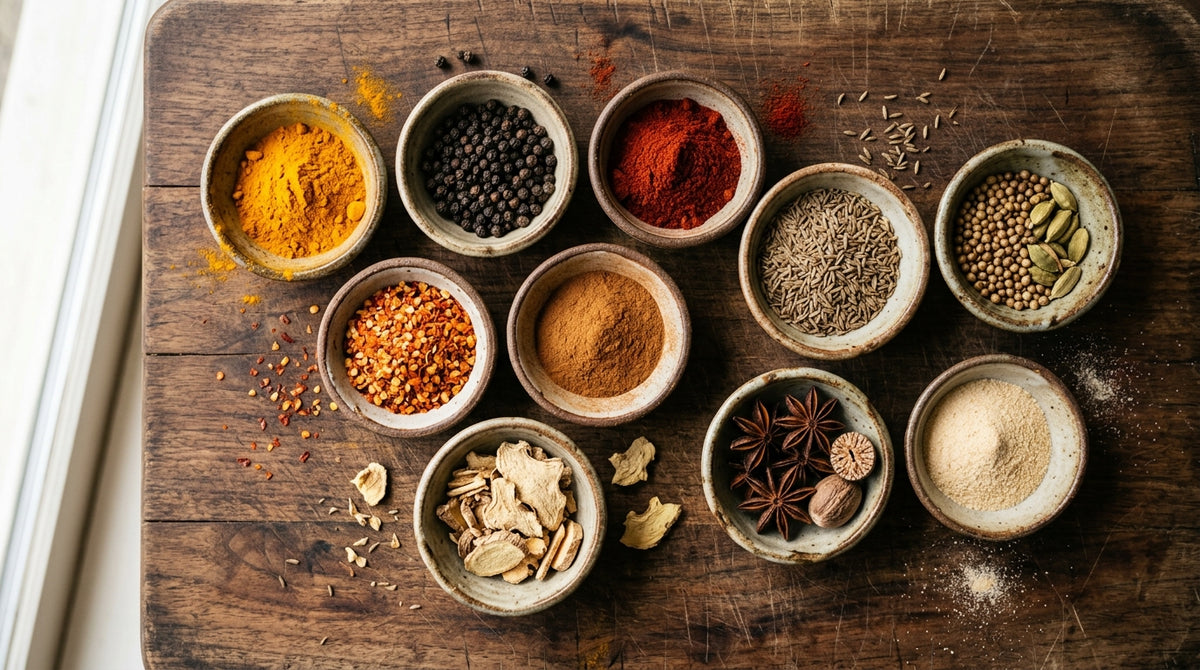
Ten basic spices are enough to get started in the kitchen: black pepper, paprika, cumin, coriander, turmeric, ginger, chilli or cayenne, Ceylon cinnamon, nutmeg and garlic powder. According to the recipe analysis by Nagi Maehashi (RecipeTin Eats, 2024), this selection covers over 800 dishes from German, Indian, Mediterranean and Middle Eastern cuisine. The German spice market turned over around 447 million euros in 2025 (Statista, 2025), and per-capita consumption is about 0.22 kilograms per year. We at MrCOLOMBO import our spices directly from smallholder farmers in Sri Lanka, from the provinces of Matale, Kandy and Galle. This article shows you which ten spices really count, how to use and store them, and what to look out for when buying.
Short answer
Which spices do you need as a beginner? Ten basic spices are enough to start with: black pepper, paprika, cumin, coriander, turmeric, ginger, chilli, Ceylon cinnamon, nutmeg and garlic powder. According to RecipeTin Eats (2024), this selection covers over 800 recipes. It's better to buy a few high-quality spices in small quantities than a full shelf that has lost its aroma after a year (BZfE, 2024).
At a glance
Which 10 spices do you really need as a beginner?
Less is more: instead of filling the shelf with speciality blends you use three times a year, you're better off building a small set of versatile spices. The five essential Indian basic spices are cumin, coriander, chilli, turmeric and black pepper (Home Cooking Collective, 2024), which is exactly half of our list. Add paprika, ginger, Ceylon cinnamon, nutmeg and garlic powder and you have a base that stretches from pumpkin soup to curry. Incidentally, spices were once real money: in 1393, a pound of nutmeg was worth as much as seven oxen (McCormick Science Institute), and Arab traders controlled the spice trade for almost five thousand years (Britannica). Today, a complete starter kit costs you less than a meal out.
| Spice | Typical form | Goes with |
|---|---|---|
| Black pepper | Whole (mill) | Almost everything |
| Sweet paprika | Ground | Goulash, vegetables, stews |
| Cumin | Whole | Curry, falafel, pulses |
| Coriander seeds | Whole | Curries, stews, baked goods |
| Turmeric | Ground | Rice, soups, curries |
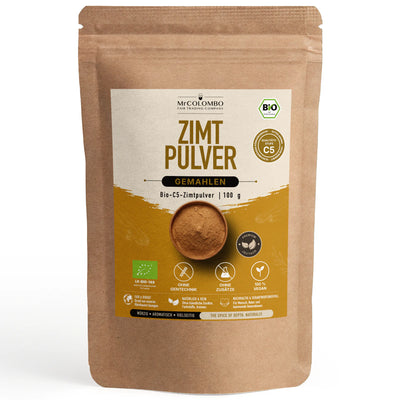
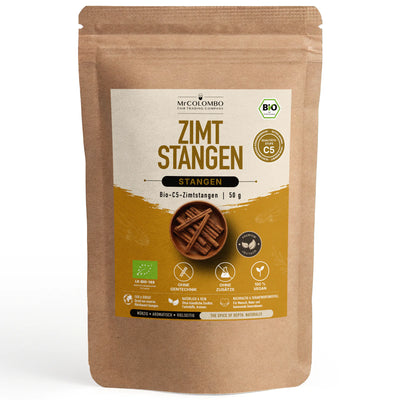
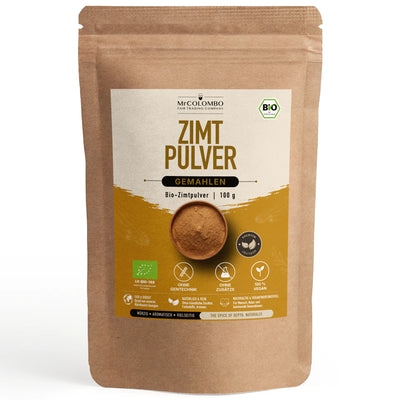
| Ceylon cinnamon | Ground | Desserts, tagine, porridge |
The second principle: buy whole spices wherever you can. Whole peppercorns and cumin seeds keep their essential oil considerably longer than ground products. According to the German Federal Centre for Nutrition (BZfE, 2024), whole spices keep for 24 to 48 months, ground ones for only 6 to 12 months. A small mill and a pestle and mortar are the most sensible investment for beginners.

Why is black pepper the most important spice?
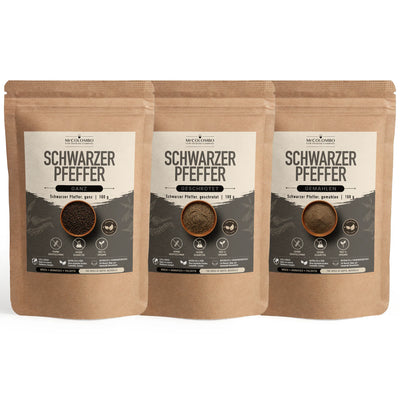
Black pepper is the most traded spice in the world and suits almost every savoury dish. It owes its heat to piperine, and the essential oil makes up 1 to 3 per cent of the peppercorn (Srinivasan, 2007). Crucial for beginners: piperine and aroma remain stable in whole peppercorns, whereas ground pepper loses its aroma within weeks. A pepper mill is therefore not a gimmick but a quality tool. Vietnam produces around 40 per cent of the world's pepper (International Pepper Community, 2024), while Sri Lanka supplies particularly aromatic highland pepper. A price note for bargain hunters: pepper prices nearly doubled in 2024 because of crop failures (German Spice Industry Association), which makes it all the more important to look for quality when buying rather than the lowest price.
The practical tip: for most dishes, pepper goes into the pan only at the end or straight onto the plate, because prolonged heat drives off the delicate aroma. If you want to know more about choosing good corns, in our selection of black pepper from Sri Lanka you'll find aromatic, directly imported options.
How do paprika and chilli bring controlled heat to your food?
Paprika and chilli are the colour and heat providers of your kitchen. Sweet paprika powder has 0 Scoville, meaning no heat at all, and gives goulash, vegetables and sauces their warm red colour. Cayenne pepper, at 30,000 to 50,000 Scoville heat units, is considerably higher (Chile Pepper Institute, NMSU). The heat comes from capsaicin, which is concentrated mainly in the membranes of the fruit. For beginners, the rule is: start with a little, then add more, because heat can't be taken out again. The trend towards sweet-and-spicy combinations, known in English as "swicy", makes chilli interesting for desserts and chocolate too (Pacific Spice, 2025).
With paprika in particular, it's worth looking at quality. Öko-Test examined 30 paprika powders and rated 11 of them "inadequate" because of massive multiple pesticide contamination (Öko-Test, 2023); two own-label brands each contained 23 different pesticides. Organic products and direct import have a clear advantage here. If you like it hot, you'll find roasted chilli from Sri Lanka with a smoky note at our shop.
How do you get the full aroma out of cumin and coriander by toasting?
Cumin and coriander seeds are the aromatic backbone of many curries, stews and Middle Eastern dishes. Their secret is dry toasting. Cuminaldehyde makes up 25 to 35 per cent of the essential oil in cumin (Sowbhagya, 2013), while in coriander linalool dominates at 60 to 70 per cent and provides the citrus-like note (Kumar et al., 2021). These aroma compounds only develop properly through heat. The scientifically based recommendation is: toast for 30 to 60 seconds in a dry pan at 150 to 180 degrees Celsius until fragrant, and only then grind.
In Indian cooking, this technique is called "tadka" or "blooming": the dry spices are first briefly toasted in hot fat or dry-roasted before the remaining ingredients are added (Delishably). It's precisely this order that separates a flat aroma from a deep one. A simple beginner's curry brings together up to seven of the ten must-haves in one pot (Inspired Taste). If you want to cook it for real, you'll find a tried-and-tested step-by-step guide in our Sri Lanka curry recipe.
Anyone who briefly toasts spices before grinding tastes the difference straight away. That's the biggest lever for beginners.
MrCOLOMBO experience report
What makes turmeric and ginger so versatile in the kitchen?
Turmeric is the spice with the golden-yellow colour that gives rice, soups and curries their typical hue. The curcumin content of the powder is 2 to 5 per cent (Liu et al., 2017). Curcumin is the subject of intensive research and is being investigated in over 13,000 studies (NIH Office of Dietary Supplements), but for cooking it's above all the warm, slightly earthy note that counts. A practical fact: curcumin is fat-soluble and is absorbed better together with a pinch of pepper and a little oil. Turmeric has been used for around 4,000 years and is already documented in Sushruta's Ayurvedic compendium from 250 BC (NCBI Bookshelf).
Ginger, dried and ground, complements the duo with a warm heat. Gingerols give ginger its characteristic note; depending on the variety, their content is 1 to 3 per cent of the dry matter (Mao et al., 2019). Dried ginger is more intense and sweeter than fresh and suits savoury curries as well as porridge, baked goods and tea. An important point of context: the EU has not authorised any health claims for turmeric and ginger (EFSA EU Register), so we describe these spices in purely culinary terms. You can find out more about our single-origin turmeric from Jaffna in the shop.
Which cinnamon belongs in the kitchen, Ceylon or cassia?
With cinnamon, choosing the right variety pays off more than with any other spice. Cheap cassia cinnamon contains up to 0.4 per cent coumarin, whereas true Ceylon cinnamon (Cinnamomum verum) contains only about 0.004 per cent, around a hundred times less (BfR). With regular, high consumption, coumarin can put a strain on the liver, which is why the EFSA has set a tolerable daily intake (TDI) of 0.1 milligrams per kilogram of body weight (EFSA, 2008). In a test of 14 cinnamon powders, Stiftung Warentest confirmed the clear advantage of Ceylon cinnamon (Stiftung Warentest, 2024). For everyday cooking, especially when children are eating too, Ceylon cinnamon is therefore the safe choice.
Sri Lanka has been harvesting Ceylon cinnamon since as early as 2800 BC and was already exporting it to Egypt around 2000 BC (Ceylon Spice Garden). Today, over 80 per cent of the world's harvest of true Ceylon cinnamon comes from Sri Lanka (EDB Sri Lanka). In terms of taste, Ceylon cinnamon is milder and finer, ideal for porridge, tagine or baked goods. You can read the full comparison in our article Ceylon cinnamon vs. cassia cinnamon. You can get true Ceylon cinnamon from Sri Lanka directly from us.
What do you need nutmeg and garlic powder for?
Nutmeg and garlic powder are the two spices that round off a dish. Freshly grated nutmeg suits béchamel sauce, mashed potatoes, spinach and baked goods, and a tiny amount is enough. Garlic powder is the pragmatic everyday helper: easy to measure evenly, long-lasting and ideal for spice crusts on baked potatoes, in marinades and sauces. Both spices belong in every basic kit because they add depth without fuss and without masking the main flavours. Garlic powder in particular is practical for beginners because it doesn't burn the way fresh garlic does.
Important
Use nutmeg sparingly: the myristicin it contains can have a toxic effect in higher doses. From around 5 grams of nutmeg, dizziness and nausea can occur (BfR). In the usual kitchen amount of a pinch there is no risk, but never use whole nuts by the spoonful.
This article is for culinary information only and is no substitute for medical or nutritional advice. If you have health questions or intolerances, consult your doctor or pharmacist.
How do you store spices properly so they keep their aroma?
Incorrect storage is the most common beginner's mistake. Spices don't belong above the cooker, because heat, light and moisture destroy the essential oils. The rule of thumb from the German Federal Centre for Nutrition (BZfE, 2024): store in a dark, cool, dry and airtight place. Under these conditions, whole spices keep for 24 to 48 months, ground ones for 6 to 12 months and dried herbs for 12 to 24 months. If you want to protect the essential oil, buy whole corns and grind them fresh in portions.
Storage checklist
Stored in the dark? Light bleaches out colour and aroma.
Away from the cooker? Heat and steam drastically shorten shelf life.
Sealed airtight? Oxygen oxidises the essential oils.
Bought in small quantities? Better fresh more often than open for years.
You'll find more details on shelf life and storage in our detailed guide to storing spices properly.

What should you look for when buying spices?
When shopping, origin determines quality and safety. A foodwatch laboratory test from May 2026 found pesticides banned in the EU in 43 of 64 products tested (67 per cent), and one discount-store cumin even exceeded the limit by 217 times. Organic spices and direct import are therefore not a luxury but consumer protection. Organic spices are growing by over 12 per cent a year in Germany (Pacific Spice, 2025), driven precisely by scandals like these. Look for a specific indication of origin including the region: if it's missing, that's a warning sign. Our article on the benefits of organic spices explains how to tell good products from bad.
Our approach at MrCOLOMBO
We import directly from smallholder farmers in the provinces of Matale, Kandy and Galle in Sri Lanka, with no middlemen. That way we know every stage of the supply chain personally and can verify origin and quality. Our overview of spices from Sri Lanka shows just how diverse the island is.
It's no coincidence that Sri Lanka is our home region: for thousands of years the island was a hub of the maritime spice route. The tropical climate of the Central Province and the Southern Province offers ideal conditions for turmeric, pepper and Ceylon cinnamon. For beginners, it's worth starting with a small, high-quality set that you use regularly and restock fresh. Our complete range of directly imported organic spices helps you build up your basic kit.

Which spices should you start with as a beginner?
You don't need a full shelf, just ten versatile spices: black pepper, paprika, cumin, coriander, turmeric, ginger, chilli, Ceylon cinnamon, nutmeg and garlic powder. Buy them in small quantities, store them in the dark and airtight, and briefly toast whole spices before grinding. Look for traceable origin, because quality and safety begin at the farm. If you start with good basic spices, you'll cook better from day one, without any speciality blends at all. You'll find more inspiration in our curry recipe from Sri Lanka.