



The forgotten wisdom behind Sri Lanka pepper
My grandma would have said: "Sri Lanka pepper is like a good friend - it never lets you down if you treat it properly." These simple words carry a deep truth within them, one that I would only truly understand many years later. Between the gentle hills of Sri Lanka and the bustling kitchens of Europe lies a wisdom that has outlasted generations. A wisdom that is not found in glossy cookbooks, but rests in the hands of those people who understand that true cooking begins with respect.
This black treasure carries the soul of our island and waits patiently to bring your dishes to life. Not as a fleeting note of flavour, but as the heart of a meal that tells stories. Sri Lanka pepper is more than a spice - it is a cultural heritage that carries the sun, the soil and the devotion of its growers in every single corn.
The forgotten power of real pepper
When we talk about pepper today, many people think of the grey powder that sits in plastic shakers on restaurant tables. But real Sri Lanka pepper is a different world. A universe of aromas that we had almost forgotten.
As a child, I watched my grandmother as she ground black peppercorns with a small wooden mill. The scent that was released was so intense that it filled the whole room. "That is the true spirit of food", she often said, as she sparingly sprinkled the freshly ground powder over the finished dishes. Never while cooking, always only at the end - a lesson I have never forgotten.
Real Sri Lanka pepper is not a simple source of heat. It is a complex spice with citrus notes, woody undertones and a warmth that caresses the palate instead of overwhelming it. Its heat is not aggressive; it unfolds slowly and harmoniously.
Why grandmother could taste the difference
My grandmother could tell with her eyes closed where a pepper came from. "The soil speaks through the spice", she explained to me. And indeed: Sri Lanka pepper has an unmistakable character, shaped by the island's mineral-rich soils and the balanced climate between rain and sunshine.
What my grandmother knew intuitively is confirmed by science today: the terroir effects we know from wine apply equally to spices. Sri Lanka's volcanic soils, the constant humidity and the traditional growing methods give the pepper its special character.
"A good pepper needs time", my grandmother always said. "It grows slowly, is harvested carefully and dried with patience." This slowness stands in stark contrast to industrial production, where efficiency triumphs over quality.
The old varieties grown in Sri Lanka have a higher content of essential oils than their industrially bred relatives. It is these oils that give the pepper its complex aromas - from floral to earthy, from fruity to spicy. When my grandmother ground fresh pepper, a whole spectrum of scents unfolded that would long since have been lost in pre-ground pepper.
Harvested by hand, seasoned with heart
"What machines harvest tastes of metal", my grandmother used to say. A wisdom that applies especially to Sri Lanka pepper. Every pepper berry is picked by hand, at exactly the right moment of ripeness. This care is not romantic exuberance, but necessary for the highest quality.
Pepper plants are climbing plants that wind their way up trees or supports. Their fruits grow in clusters, much like grapes, but not all the berries in a cluster ripen at the same time. The pickers therefore have to visit each cluster several times and harvest only the perfectly ripe berries - a job that requires experience and a trained eye.
After the harvest, the pepper berries are dried in the sun, developing their characteristic black colour as they do so. This process takes several days, during which the berries have to be turned regularly. The fermentation that takes place during this time is crucial for the development of the aroma.
"Good pepper smells of sun", my grandmother said. And indeed, Sri Lanka pepper carries the warmth of its homeland within it - not only as metaphorical heat, but as a complex aroma shaped by the tropical sun.
The small farm behind the big flavour
When we talk about Sri Lanka pepper, we are not talking about vast plantations, but about small family farms that often cultivate less than one hectare of land. These smallholders often tend their pepper plants using methods that have been passed down for generations.
My grandmother would have understood these farmers. She shared their philosophy: "Those who work with nature rather than against it harvest the best flavour." In Sri Lanka, this often means doing without chemical fertilisers and pesticides, not for ideological reasons, but out of practical experience and economic necessity.
The pepper plants often grow in mixed agroforestry systems, where they form a symbiotic community with other trees and plants. This biodiversity not only protects against pests and diseases, but also enriches the soil and with it the aroma of the pepper.
"A spice tells the story of its soil", my grandmother said. The soil of Sri Lanka, rich in minerals and organic matter, gives the pepper its special note. The small farms preserve this connection between land and spice, a connection that is lost in industrial monocultures.
Sri Lanka's pepper farmers are not just producers, but guardians of a culinary heritage. Their work preserves not only a spice, but an entire culture of flavour that my grandmother valued so highly.
Three ways to give Sri Lanka pepper its due
My grandmother had clear ideas about how to use pepper properly. "A good spice needs respect", she often said. Here are three pieces of wisdom she passed on to me for getting the best out of Sri Lanka pepper.
The secret of the right grind
"Grind only what you need, and need only what you grind", was one of grandmother's favourite sayings. The wisdom behind it is simple: as soon as pepper is ground, it begins to lose its volatile aromas. After just 15 minutes, freshly ground pepper has already lost part of its complexity. After a week, it is merely a shadow of its former self.
Invest in a good pepper mill with an adjustable grind. My grandmother preferred wooden mills with a ceramic grinding mechanism, but there are excellent modern alternatives today. What matters is that you can control the grind, because different dishes call for differently ground pepper.
For meat dishes, my grandmother recommended a coarser grind, which releases its aromas slowly and offers a pleasant texture. For sauces and soups, on the other hand, she preferred finely ground pepper, which spreads evenly and unfolds its full aroma immediately.
"The mill belongs on the table, not on the shelf", she used to say. Let your guests grind for themselves so that they can experience the full splendour of the aromas. It is a small ritual that enriches the meal and sharpens the senses.
The right moment makes the difference
One of my grandmother's most important lessons was timing. "Pepper is not a spice for cooking, but for seasoning", she explained. What she meant by that: Sri Lanka pepper unfolds its full potential when it is added at the end of the preparation, not during the cooking process.
Heat destroys the delicate aromas of the pepper. If you add it too early, only the heat remains while the complex notes are lost. Instead, you should sprinkle the freshly ground pepper over the dish only shortly before serving.
One exception is marinades and pickling liquids. Here the pepper can release its aromas slowly without being destroyed by heat. For a marinade, my grandmother recommended lightly crushing the peppercorns rather than grinding them, so that they release their aromas slowly.
For dishes that need to cook for a long time, such as stews or pot roasts, she had a special tip: add part of the pepper at the beginning to create a base seasoning, and keep part of it for the end to preserve the fresh aromas.
The art of combination
"Pepper is a soloist who sings in the choir", my grandmother said poetically. What she meant by that: Sri Lanka pepper has a strong character of its own, but harmonises wonderfully with other spices if you choose the right partners.
Sri Lanka pepper gets on particularly well with:
Citrus fruits: the fresh acidity of lemons or limes brings out the complex aromas of the pepper. Try a simple vinaigrette of olive oil, lemon juice and freshly ground Sri Lanka pepper over grilled vegetables.
Garlic: a classic combination found in many cuisines around the world. The earthy, spicy character of garlic perfectly complements the heat and complexity of the pepper.
Herbs: thyme, rosemary and oregano in particular harmonise wonderfully with Sri Lanka pepper. My grandmother often mixed dried herbs with pepper for her famous herb blends.
Tomatoes: the natural sweetness and acidity of ripe tomatoes form a perfect counterpoint to the spiciness of the pepper. A simple tomato sauce with a generous amount of freshly ground Sri Lanka pepper is a taste experience that my grandmother particularly treasured.
My grandmother did, however, warn against too many competing spices: "When everyone speaks at once, you can no longer hear anyone." Limit yourself to a few well-matched aromas so that the Sri Lanka pepper can unfold its full effect.
From the everyday to the special: Sri Lanka pepper in daily cooking
My grandmother did not use Sri Lanka pepper only for festive dishes, but integrated it into her everyday cooking. "The special lies in the everyday", she often said. Here are some of her favourite uses, which are still relevant today.
The forgotten art of pepper soups
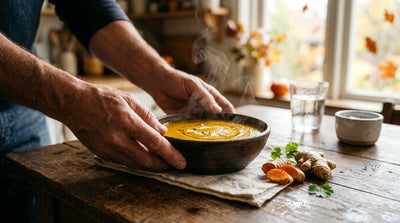
"A soup without pepper is like a day without sun", my grandmother used to say. She often prepared a simple potato soup that only found its perfection through the right note of pepper. The secret lay not in the quantity, but in the timing and in the quality of the pepper.
Her method: take the finished soup off the stove, let it cool briefly and only then stir in the freshly ground Sri Lanka pepper. This way the volatile aromas were preserved and gave the soup a depth that could not be achieved with any other spice.
This technique is particularly recommended for creamy soups such as pumpkin soup, cauliflower soup or classic potato soup. The complex character of Sri Lanka pepper perfectly complements the sweetness of these vegetables and creates a balanced taste experience.
Pepper magic for everyday vegetables
"Vegetables don't want to be drowned, they want to be woken up", was another of my grandmother's pieces of wisdom. She used Sri Lanka pepper to breathe life into simple vegetables without masking their natural flavour.
One of her favourite methods was to briefly steam vegetables such as green beans, carrots or courgettes and then toss them with a little butter and freshly ground pepper. The warmth of the butter released the aromas of the pepper, which then settled gently over the vegetables.
For salads, she recommended grinding the pepper directly into the dressing, never over the finished salad. "The pepper must bond with the oil before it meets the vegetables", she explained. This small change in the order makes an astonishing difference to the flavour.
From the field to the table: the journey of Sri Lanka pepper
My grandmother always stressed the importance of where our food comes from. "Know the path of your food", was one of her principles. The journey of Sri Lanka pepper from the field to our table is a story of tradition, craftsmanship and respect.
Sustainable cultivation as tradition
What is called "sustainable agriculture" today has always been everyday life for Sri Lanka's pepper farmers. The traditional growing methods conserve resources and preserve the fertility of the soil for generations to come.
The pepper plants often grow in the shade of larger trees, which not only offer protection but also contribute to biodiversity. These agroforestry systems are small ecosystems that are home to a wide variety of plants and animals.
The farmers use natural fertilisers such as compost and mulch to nourish the soil. Pests are often kept in check through mixed cropping and natural predators, rather than through chemical pesticides.
"The soil is a living being", my grandmother would have said. "If we look after it, it looks after our food." This wisdom is reflected in the quality of Sri Lanka pepper, which grows in healthy soil and carries its complex terroir within it.
Fairly traded for real flavour
My grandmother would have been pleased to see how more and more people today value fair trading conditions. "Good food begins with respect", she often said, "respect for the land and for the people who work it."
When you buy Sri Lanka pepper that comes directly from small farms and is fairly traded, you not only support the farmers and their families, but also secure the future of this special spice. Fair trade enables the farmers to invest in sustainable growing methods and to continuously improve the quality of their pepper.
The short supply chains, which lead directly from the farm to the consumer, also guarantee freshness and authenticity. Every corn carries the story of its origin within it, a story that is released with every grind.
Preserving the soul of the kitchen
My grandmother saw spices as more than just ingredients. "They are the soul of the kitchen", she often said. Sri Lanka pepper embodies this soul in a special way, because it unites tradition and flavour, culture and nature.
In a time when convenience often triumphs over quality, it is more important than ever to preserve this soul. Real Sri Lanka pepper reminds us that good food takes time - time to grow, time to harvest, time to prepare and time to enjoy.
"Haste is the enemy of flavour", my grandmother used to say. When we take the time to use Sri Lanka pepper properly, we honour not only its aroma, but also the hands that grew and harvested it, and the earth that nourished it.
The circle closes: from grandmother's kitchen into the future
Sri Lanka pepper is no ordinary spice, but a piece of living tradition. What grows on small farms under the sun of Sri Lanka brings honest flavour into your kitchen - a flavour that tells stories and creates connections.
Try it as my grandmother did: with respect, at the right time and with joy in true flavour. Grind it fresh, use it mindfully and let yourself be surprised by its complexity.
"A good spice is like a good friend", my grandmother always said. "It accompanies you without imposing itself, and makes your life richer." In this spirit, I invite you to rediscover Sri Lanka pepper and to give it the place in your kitchen that it deserves.
My grandmother's wisdom lives on in every corn of this special spice - a wisdom that speaks of respect, quality and the joy of real flavour. A wisdom that is worth passing on, from generation to generation, from kitchen to kitchen.