



Spices from Sri Lanka taste different because soil, altitude, climate and processing measurably change the concentration of the aroma-giving compounds. In the essential bark oil of Ceylon cinnamon, cinnamaldehyde accounts for 50 to 63 per cent, whereas in cassia cinnamon it is 92 to 98 per cent (Ranasinghe et al., 2013; Jayaprakasha and Rao, 2011). The same turmeric variety yields between 1.4 and 5 per cent curcumin depending on the agro-climatic zone (Sandeep, Nayak and Mohanty, 2015). With coumarin, the readings diverge even further: a test of 14 cinnamon powders published in 2024 found 2,300 to 3,500 mg/kg in the cassia samples, while five of six Ceylon powders stayed below 20 mg/kg (Stiftung Warentest, 2024). Origin is therefore not a marketing phrase but measurable chemistry. Anyone who buys a spice without a declaration of origin is not acquiring a defined product but a range. Just how wide that range can be is already evident when comparing two cinnamon powders from the same shelf.
What winemakers have called terroir for centuries applies equally to spices: a spice is an agricultural product whose essential oils develop under specific site conditions. How little of this reaches the label is shown by an analysis of Ceylon cinnamon labelling, which systematically examined the transparency and authenticity of the declarations and found considerable gaps (De Silva et al., 2021). The German market for spices and herbs generated around 447 million euros in 2025 (Statista, 2025), and for the majority of these goods the origin remains invisible to the buyer. At MrCOLOMBO we import directly from Sri Lanka and see the difference with every delivery. Cinnamon from the central region around Matale and Kandy smells different from wholesale goods of unknown origin, and pepper from the highlands carries a floral note that is simply missing from standard pepper. Precisely this difference is the reason why, with us, the growing region belongs on every label.
Short answer
Why do spices from Sri Lanka taste different? Because soil chemistry, growing altitude, harvest timing and drying determine which essential oils develop and in what concentration. Humus content as well as mobile phosphorus and sulphur in the soil demonstrably correlate with the yield and composition of the essential oil (Impact of Edaphic and Climatic Factors, 2022). For cinnamon, pepper and turmeric, Sri Lanka provides a combination of tropical monsoon climate, mineral-rich soils and traditional hand processing that is not exactly repeated in any other growing region.
At a glance
What does terroir actually mean for spices?
Terroir describes the interplay of soil, climate, altitude and human processing tradition at a specific place. With spices the effect is even more clearly measurable than with wine, because the aroma comes almost entirely from secondary plant compounds. Phenols, terpenoids and alkaloids are regarded as the leading classes of bioactive substances in culinary herbs and spices (Annual Review of Food Science and Technology, 2026); their volatile representatives are what we perceive as scent and flavour. For the plant, these substances serve a protective function against heat, drought, predators and fungal attack. Depending on the stress at the site, the same plant variety produces more or less of them. The compendium of the Competence Centre for Nutrition names climate and soil, the degree of ripeness, harvest and storage, grinding and keeping as the factors influencing spice quality (KErn, 2014). Of these five influencing factors, a buyer at the supermarket shelf can judge only the last one for themselves. Everything before it lies with the producer and remains invisible to the consumer without a declaration of origin.
Today the evidence can be established analytically. A study of Sichuan pepper identified 77 volatile compounds in 17 samples from different regions of origin, of which 16 key compounds determine flavour preference (Uncovering the chemical drivers of Sichuan pepper aroma, 2025). For turmeric, a validated UPLC-DAD analysis of 21 samples from Nepal and South Korea showed clear curcuminoid differences depending on the region of origin, with goods from warmer locations showing higher contents (Poudel, Pandey and Lee, 2019). In other words: a laboratory can tell from a sample where it was grown, because the ratio of the volatile compounds is typical of the site. This is exactly what underlies the difference in taste between spices with a declared growing region and anonymous goods from several countries. When blended, the aroma does not disappear, but the profile that defines a single region does. With mixed goods from several countries, what remains in the end is the average of several aroma profiles, and that tastes of nothing in particular.
Whoever leaves out origin inevitably blends. And whoever blends averages the aroma down to the lowest common denominator.
MrCOLOMBO experience report

How do soil and climate change the taste of a spice?
The mechanism begins in the root zone. A study on thyme showed how strongly soil parameters come through: humus content favoured the yield of essential oil, manganese and cobalt reduced it, and the content of mobile phosphorus and sulphur correlated positively with the carvacrol share (Impact of Edaphic and Climatic Factors on Essential Oil Composition, 2022). Soil pH was at a comparable level in all four chemotype clusters examined and specifically did not explain the differences. So it is the minerals, acting as cofactors in the enzymes of terpene and phenol synthesis, that matter. If their availability in the soil shifts, the aroma profile shifts, even though botanically the same species stands in the field. Sri Lanka offers an unusual range within a small area: sandy coastal soils in the south-west around Galle, lateritic red soils in the hill country around Kandy and Matale, plus markedly different rainfall levels between the dry zone in the north and the wet region in the south-west.
Alongside soil chemistry, the factor of time is at work. The tropical monsoon rhythm with two rainy and two dry phases per year allows long growing periods without interruption by frost, and the harvest windows follow these phases rather than a calendar date. Turmeric rhizomes from the north of Sri Lanka therefore ripen over many months in the warm soil instead of being forced through a short season. The curcumin range of 1.4 to 5 per cent in the same variety depending on the agro-climatic zone stems from precisely such site differences: the Roma variety delivered values between these two extremes in nine agro-climatic zones of Odisha (Sandeep, Nayak and Mohanty, 2015). A factor of 3.5 between two fields of the same plant lies far outside any measurement noise and explains why one turmeric powder tastes vividly earthy and the next flat and dusty. The same variety name simply does not guarantee a comparable raw material. Anyone who buys the same turmeric again in January as in June will, with anonymous goods, often receive a batch from a completely different growing area.
Why is the variety name not enough?
The packaging states the species, not the location. Curcuma longa is Curcuma longa, whether from India, Vietnam or Sri Lanka, and the variety name therefore covers a range within which the curcumin content can differ by more than threefold. With cinnamon the gap is even larger: Cinnamomum verum and Cinnamomum cassia share the same word in the trade, even though their coumarin readings, according to AGES data, lie up to a factor of 18 apart. Only the declaration of origin makes the aroma promise verifiable, because unlike the variety name it can be tied to a specific place. That is why we name the region for every product: turmeric from the north around Jaffna, cinnamon from the central region around Matale and Kandy, pepper from the highlands. If you want to go deeper, you will find the individual growing areas in detail in our overview of spices from Sri Lanka.
Why does Ceylon cinnamon taste different from supermarket cinnamon?
The cinnamon commonly sold on German shelves is mostly cassia (Cinnamomum cassia), whereas Ceylon cinnamon comes from the true cinnamon tree Cinnamomum verum, which originated in Sri Lanka and is still predominantly grown there today. The difference in taste has a clear chemical reason: in the essential bark oil of Ceylon cinnamon, trans-cinnamaldehyde accounts for around 50 to 63 per cent (Ranasinghe et al., 2013), while in the bark oil of cassia it is 92 to 98 per cent (Jayaprakasha and Rao, 2011). Cinnamaldehyde is the sharp, dominant carrier of cinnamon flavour. Less of it means that the finer accompanying aromas become perceptible at all: clove, citrus, a slightly resinous sweetness. Cassia drowns out, Ceylon differentiates. That is exactly why good Ceylon cinnamon tastes unfamiliarly mild to many people the first time, and many then reflexively reach for a larger amount, even though that is precisely what covers up the fine notes again. In most recipes, a teaspoon of cassia can be replaced one for one with a teaspoon of Ceylon cinnamon; the result then tastes less of heat and more of cinnamon.
Besides cinnamaldehyde, it is above all coumarin that separates the two types of cinnamon, a natural flavouring substance for which the German Federal Institute for Risk Assessment has set a tolerable daily intake of 0.1 mg per kilogram of body weight per day; the European Food Safety Authority arrived at the same value (BfR). The readings diverge widely: the Austrian AGES gives 1,880 to 3,260 mg/kg for cassia, while the highest Ceylon value measured was 185 mg/kg. A test of 14 cinnamon powders published by Stiftung Warentest in November 2024 found 2,300 to 3,500 mg/kg in the cassia samples, while five of the six Ceylon powders stayed below 20 mg/kg (Stiftung Warentest, 2024). An adult weighing 60 kilograms reaches the guideline value with just 2 grams of cassia cinnamon of average coumarin content per day (BfR, 2012). That corresponds roughly to one teaspoon of cinnamon powder in a rice pudding. With Ceylon cinnamon, the coumarin content according to the AGES readings is more than an order of magnitude lower, so the same amount consumed stays much further below the guideline value.
| Criterion | Ceylon cinnamon (Sri Lanka) | Cassia cinnamon |
|---|---|---|
| Botanical species | Cinnamomum verum | Cinnamomum cassia |
| Cinnamaldehyde (in bark oil) | 50-63 % | 92-98 % |
| Coumarin (AGES measuring range) | up to 185 mg/kg | 1,880-3,260 mg/kg |
| Aroma profile | mild, multi-layered, citrusy | strong, sharp, one-dimensional |
| EU protection of origin | Yes | No |
| Stick structure | many thin layers | one thick, hard bark |
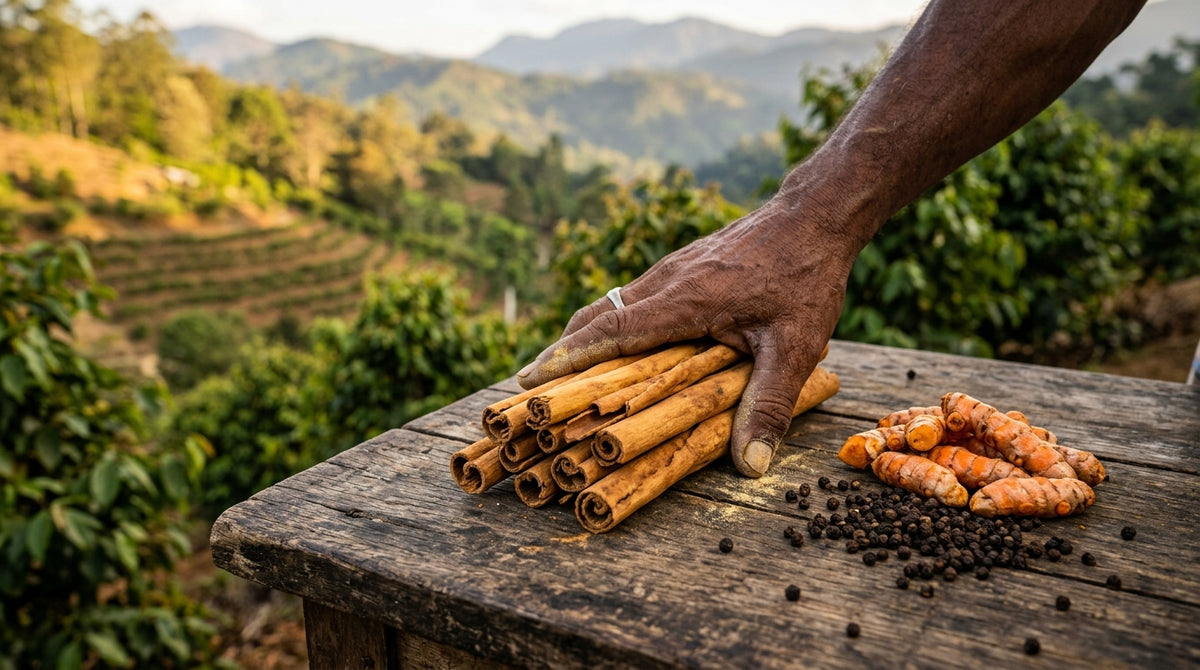
The European Commission registered "Ceylon Cinnamon" as a protected geographical indication on 2 February 2022; Implementing Regulation (EU) 2022/144 entered into force on 23 February 2022 and protects cinnamon sticks, cinnamon powder, cinnamon leaf oil and cinnamon bark oil from the whole of Sri Lanka. The origin is thus legally secured and no longer a mere assertion on the packaging. In addition, the Sri Lanka Export Development Board refers to the national cinnamon standard SLS 81, compliance with which it describes as essential for the quality of Ceylon cinnamon. Anyone who has seen the two types side by side once will recognise them even without a label: Ceylon sticks consist of many thin, brittle layers of bark and can be crumbled with the fingers, cassia is a single, hard roll. On goods receipt we check exactly these three characteristics first, fracture structure, colour and smell, before a batch goes into the range. We have written up the full comparison in our article on Ceylon cinnamon and cassia cinnamon.
Important
Coumarin values are a consumer protection topic, not health advice. This article is for information purposes and does not replace medical advice. If you have questions about your own diet, please consult your doctor or pharmacist.

What role does growing altitude play for pepper and cardamom?
Altitude works through temperature. On average, air temperature falls by around 0.65 degrees per 100 metres of elevation, in humid tropical mountain regions by about 0.4 to 0.6 degrees. The nights become cooler, the ripening period lengthens, and the plant has more time to store essential oils instead of merely building mass. That growing altitude is a hard production factor is shown by a study of five cardamom cultivars in the Sikkim Himalaya: three cultivars achieved the better yield figures at mid elevations between 975 and 1,515 metres, two others above 1,515 metres (Elevation determines the productivity of large cardamom, 2023). No specific altitude figure can be transferred from this, but the principle can: for every variety there is an altitude window in which yield and aroma fit together. For pepper from the Sri Lankan hill country and highlands this window lies lower than for cardamom in the Himalaya. What is decisive in the end is the temperature that actually arrives at this altitude, and in the tropics that additionally depends on slope and shading.
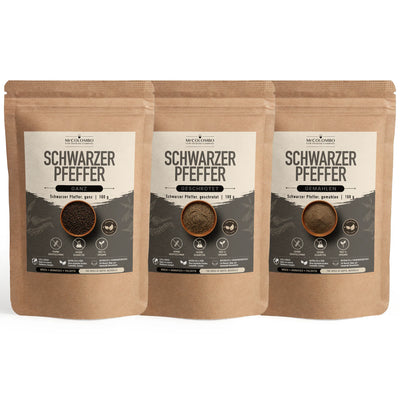
In pepper, the alkaloid piperine is the carrier of pungency (Piperine: A comprehensive review, 2020). How far the content diverges between pepper species is shown by a direct comparison of Piper nigrum and Piper trichostachyon: in the fruits of black pepper the piperine content was around 108 times higher. Because piperine can be quantified reliably, its content serves as a key figure in quality assurance (Comparative Quantification of Phenolic Compounds and Piperine Content, 2022). But pungency is only half the story. What distinguishes pepper from the Sri Lankan highlands are the volatile terpenes in the background: resinous, slightly citrusy, almost floral. These compounds evaporate fastest, which is why they are barely present any more in ground stock. Anyone who buys whole peppercorns and grinds them only at the plate therefore gets a different spice from the one in the shaker. You can read more in our article on the quality of black pepper.
How much does the curcumin content of turmeric vary by origin?
The curcumin content varies by more than threefold depending on origin, and that within the same variety. The Roma variety delivered curcumin values between 1.4 and 5 per cent in nine agro-climatic zones of Odisha, without any change of seed or cultivation method (Sandeep, Nayak and Mohanty, 2015). A validated UPLC-DAD analysis of 21 samples from Nepal and South Korea reached the same conclusion by a different route: the curcuminoid contents differed clearly by region of origin, with goods from warmer locations coming out higher (Poudel, Pandey and Lee, 2019). For the kitchen this means that the colour and earthiness of a turmeric powder depend not on the price but on the field. Our rhizomes grow in the north of Sri Lanka around Jaffna, where long dry phases and warm soils favour full ripening. The organic powder from this region is certified under the EU Organic Regulation and carries the control body number DE-ÖKO-005 on the pack. Harvesting there is spread over several months, because the rhizomes continue to ripen in the warm soil and do not come out of the ground in a single pass.
With turmeric, alongside the growing area, one factor decides that no field in the world can compensate for: the cleanliness of the supply chain. Öko-Test examined 19 ground turmeric powders and found saturated mineral oil hydrocarbons (MOSH) in all samples, in 16 of them in strongly elevated amounts; only a single product was rated "very good" (Öko-Test, 2022). Because turmeric is almost always traded as a powder, the goods cannot be checked with the naked eye, unlike cinnamon sticks or peppercorns. The buyer sees a yellow powder, nothing else. All the more weight falls on the information around it: a named growing region, organic certification with control body number, a filling date. That is why we buy the rhizomes directly from the farms and have them ground and packed in Sri Lanka, instead of sourcing loose goods through intermediaries and several transhipment points. That keeps the number of hands between field and jar small, which shows in the colour tone as much as in the smell on opening.
How much flavour is only decided after the harvest?
After the harvest, a large part of the aroma is decided, namely the part that no soil can rescue any more. Of the five influencing factors named by the compendium of the Competence Centre for Nutrition, three lie beyond the field: harvest and storage, grinding and keeping (KErn, 2014). In Sri Lanka, cinnamon bark is still peeled by hand, rolled and dried in the shade, because direct sun and high temperatures drive out the highly volatile aroma compounds. Peeling is preferably done in the humid weeks after the monsoon, because the bark then comes away from the trunk most cleanly; the harvest window follows the rain, not the calendar. After harvest, peppercorns are briefly blanched and then dried in the sun for several days, which produces the characteristic black, wrinkled skin. Grinding is an aroma factor too: if grinding is too fast, frictional heat develops that destroys precisely the compounds you paid for the origin to get. We explain why this is so in our article on the cryogenic grinding of spices.
German laboratory tests show the downside of poor processing. Foodwatch had 64 products made from rice, spices and tea tested in the laboratory and found residues of pesticides banned in Europe in 45 of them (foodwatch, 2026). That is a good two thirds of the sample. Such residues do not arise in the field alone, but along long, anonymous supply chains with many transhipment points in which batches of different origins mix. A short chain with a known farm of origin is therefore the only practicable way to control such residues at all, because every batch can be assigned to a field. The same applies to flavour: the fewer stations lie between harvest and jar, the less time the volatile compounds have to take their leave. Transparency and aroma hang on the same lever here. Whoever knows the origin can ask the producer; whoever does not can only trust that someone further up the chain has checked.
Our approach at MrCOLOMBO
We import directly from smallholders and cooperatives in Sri Lanka, without intermediary buyers or wholesalers, and know every station of the supply chain personally, from the turmeric field in the north through drying to packing. Our cinnamon partner farms are located in the central region around Matale and Kandy, the turmeric growing partners in the north around Jaffna, and they are fixed contacts rather than changing intermediaries. Our organic turmeric carries EU organic certification with the control body number DE-ÖKO-005, and our lemongrass and our moringa are organic certified too. Why this transparency matters more to us than the price is explained in our article on the advantages of organic spices.

How do you recognise spices with genuine origin?
The good news: you do not need a laboratory, just a few consistent test questions. For the German market for spices and herbs, Statista Market Insights reports revenue of around 447 million euros for 2025, with a forecast rise to about 551 million euros by 2030 (Statista, 2025). At this volume, the choice on the shelf noticeably determines the quality of cooking. According to the Department of Cinnamon Development, Sri Lanka achieved cinnamon export earnings of just under 80 billion rupees in 2025, equivalent to around 260 million US dollars, and thus the highest annual figure ever reached. The true cinnamon tree is grown mainly in the humid districts in the south and west of the island. Origin is documented there; it just has to reach the retailer and be passed on. It is precisely at this point that it is usually lost in the conventional trade.
Checklist for buying
Is a specific growing region stated on the pack? "Sri Lanka" is good, a named region such as Matale, Kandy or Jaffna is better. "EU and non-EU" means: blended.
Is the botanical species named? Cinnamomum verum instead of just "cinnamon", Piper nigrum instead of just "pepper". Whoever conceals the species usually has cassia in the bag.
Is there a filling or harvest date? Essential oils evaporate. A best-before date three years away says nothing at all about freshness.
Does the spice smell immediately on opening? Fresh goods are fragrant without you having to stick your nose in. If it stays silent, the aroma is long gone.
Does the price fit the story? Hand-peeled Ceylon cinnamon with a short supply chain cannot cost as little as machine-processed cassia mass-market goods.
After buying, storage at home is decisive, because even the best spice loses its top aromas within a few months in the wrong container. Light, warmth and oxygen are the three enemies, and the compendium of the Competence Centre for Nutrition lists keeping as a quality factor in its own right alongside climate, soil, degree of ripeness, harvest and grinding (KErn, 2014). It is the only one of these factors that the buyer has in their own hands. You will find specific recommendations in our guide to storing spices properly. If you want to taste the difference yourself, it is best to start with a single spice in a direct comparison, for instance with Ceylon cinnamon alongside the usual supermarket cinnamon in a rice pudding. Two small bowls side by side say more than any product description. The comparison is clearest when both samples are freshly opened and unground, because the volatile notes are then still fully present.
Why is the difference in origin worth it in everyday life?
The difference in origin is worth it in everyday life because it is measurable rather than a matter of feeling. A cinnamaldehyde share of 50 to 63 per cent in the bark oil of Ceylon cinnamon compared with 92 to 98 per cent in cassia (Ranasinghe et al., 2013; Jayaprakasha and Rao, 2011), a curcumin range of 1.4 to 5 per cent in the same turmeric variety depending on the agro-climatic zone (Sandeep, Nayak and Mohanty, 2015) and coumarin values that lay more than a hundredfold apart in the cinnamon powder test (Stiftung Warentest, 2024) describe not nuances for gourmets but fundamentally different raw materials under the same name. Origin is the only piece of information on a spice pack that makes these differences predictable. Everything else is either a variety name or advertising. Incidentally, anyone who has consciously switched once usually doses differently afterwards: less quantity, more aroma in the dish. Calculated per finished dish, the higher price per kilo is thereby noticeably put into perspective, and in the end there is less on the spice rack that delivers more.
In practical terms this means: replace one spice after another, always with a named growing region, and prefer whole goods over ground wherever possible. Whoever starts with cinnamon gets the biggest effect, because between 185 and 3,500 milligrams of coumarin per kilogram lies the widest gap that two powders under the same word can reach (AGES; Stiftung Warentest, 2024). With pepper, switching to whole peppercorns brings the most, because the volatile terpenes escape within a few weeks after grinding. And with turmeric, the control body number counts for more than the colour in the jar. Three such switches are enough to notice the difference in your own everyday cooking; everything else follows by itself once looking at the growing region has become a habit. Our entire directly imported range is built on exactly this principle, as is our black pepper from the highlands.