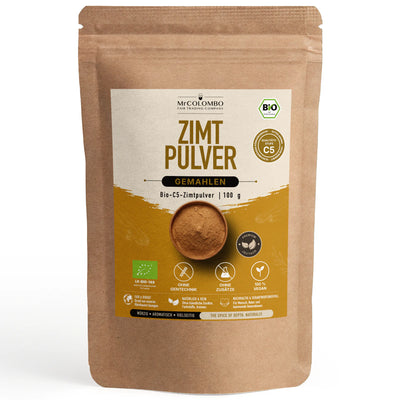
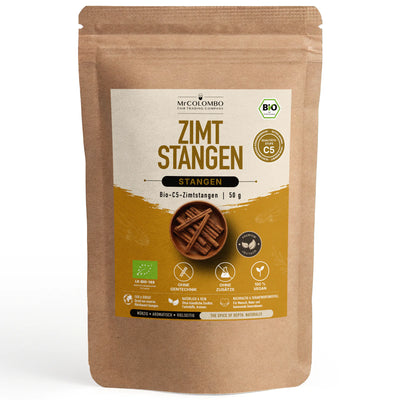
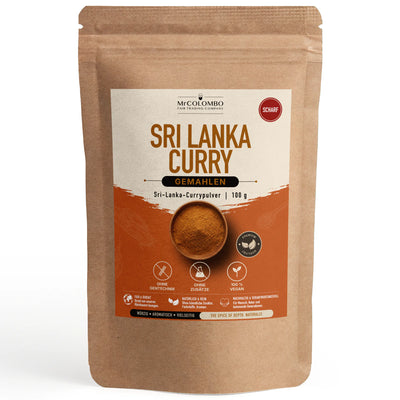
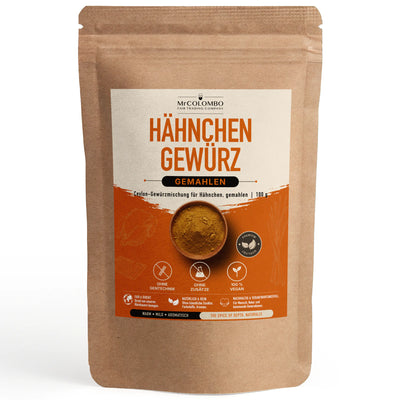
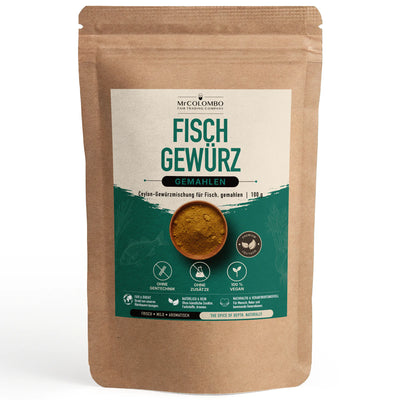
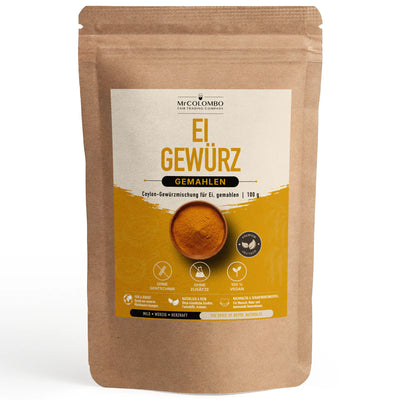




With conventional spice grinding, up to 30% of the essential oils are lost - because of heat. The grinding stones reach temperatures of up to 95 °C, and it is precisely this warmth that destroys the volatile aroma compounds that make a spice a spice in the first place. Cryogenic grinding solves this problem - and does so in a way that has been tried and tested in food technology for decades.
We use cryogenic grinding for all spices at MrCOLOMBO. When we first compared freshly harvested turmeric in Sri Lanka side by side with industrially ground powder, the difference in colour and smell was so obvious that we went looking for a processing method that preserves this state of freshness.
At a glance
How does cryogenic grinding work?
The process sounds complicated, but at its core it is easy to understand: before grinding, the spices are cooled down to extremely low temperatures with liquid nitrogen (LN2). The nitrogen evaporates completely in the process - no residue remains in the finished spice powder.
The process in three steps
Step 1 - Pre-cooling: The whole spices (turmeric roots, peppercorns, cinnamon bark) are placed in a cooling chamber and brought to an inlet temperature of below -50 °C with liquid nitrogen. This makes them brittle and easier to break down.
Step 2 - Grinding under cooling: During the grinding process, liquid nitrogen is fed in continuously. The temperature at the outlet stays between -5 °C and +15 °C. For comparison: with conventional grinding, the temperature in the mill rises to 70 °C to 95 °C.
Step 3 - Filling: The finished powder is packed airtight immediately. Thanks to the cold, oxidation is minimal throughout the entire process - the aroma compounds are practically frozen in.
Practical tip
Liquid nitrogen is not an additive. It evaporates completely and leaves no residue in the spice. Nitrogen makes up 78% of the air we breathe - so the process adds nothing to the spice, it only protects what is already in there.

Why does heat harm spices during grinding?
Essential oils - the carriers of aroma and flavour in spices - are volatile compounds that evaporate when exposed to warmth. That is exactly what happens in a conventional mill: when peppercorns or turmeric roots are crushed between grinding stones, frictional heat is generated. According to a study by Saxena and colleagues, the temperature in the mill rises to 70 to 95 °C, while the aroma loss amounts to up to 30% (Saxena et al., 2018). At these temperatures, the volatile terpenes and phenols responsible for the flavour evaporate. Piperine in pepper, curcumin in turmeric, cinnamaldehyde in cinnamon - all of these compounds are sensitive to heat.
On top of that comes a second problem: oxidation. Heat accelerates oxidative processes - with black pepper, according to Murthy and Bhattacharya, around 50% of the volatile oils are lost during conventional grinding (Murthy & Bhattacharya, 2008). When essential oils oxidise, their flavour changes. Turmeric becomes less earthy, pepper less pungent, cinnamon less sweet. The colour suffers too - oxidised curcumin loses its bright orange colour. A review paper identifies heat and oxidation as the two main causes of quality loss in spice processing (Balasubramanian et al., 2012).
What has evaporated is gone. The aroma loss from conventional grinding cannot be reversed.
How does cryogenic grinding compare with conventional grinding?
The difference shows up in measurable values. Several studies have directly compared cryogenically and conventionally ground spices:
| Property | Conventional | Cryogenic | Source |
|---|---|---|---|
| Temperature | 70-95 °C | -50 to +15 °C | Saxena 2018 |
| Oils (pepper) | ~50% loss | Minimal | Murthy 2008 |
| Aroma loss | up to 30% | under 5% | Saxena 2018 |
| Particle size | Coarse, uneven | Fine, even | Saxena 2018 |
| Antioxidants | Baseline | approx. 2x higher | FSR 2020 |
With black pepper, around 50% of the volatile oils are lost during conventional grinding, whereas with cryogenic grinding the majority is retained (Murthy & Bhattacharya, 2008). With coriander, the antioxidant activity doubles. And the aroma loss drops from 30% to under 5%.

Why is this relevant for your kitchen?
The figures from the laboratory sound abstract - yet the difference shows up directly in your kitchen. If cryogenically ground turmeric contains more than twice as much essential oil as conventionally ground turmeric (2.61% vs. 1.15%, Malik, 2023), you will notice it in the colour, smell and flavour of your dishes.
Colour
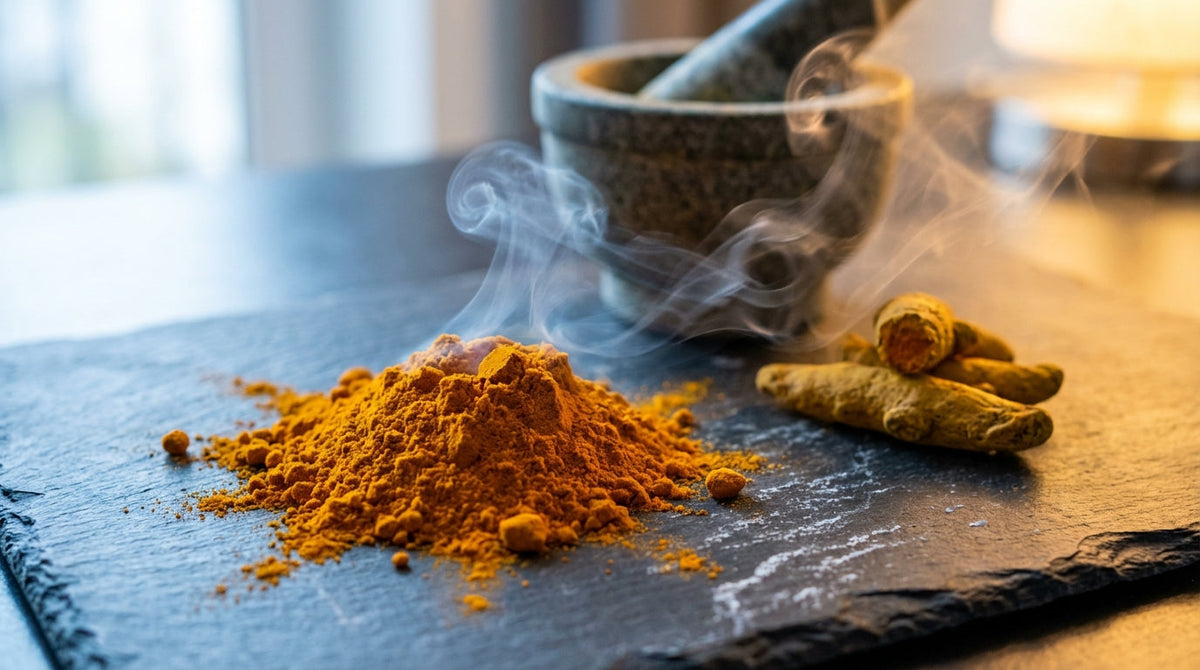
Cryogenically ground Ceylon turmeric glows a deep orange. Conventionally ground turmeric often looks pale yellow and dusty. The reason: the heat generated during conventional grinding breaks down curcumin.
Smell
Open the tin and smell it. Cryogenically ground turmeric smells earthy, warm and intense. Conventionally ground turmeric often smells of hardly anything at all - the volatile aroma compounds have already evaporated before the powder was even packed.
Flavour in the dish
More essential oils mean more aroma per teaspoon. You need less spice for the same flavour - which also puts the higher price into perspective.
Solubility
The finer powder dissolves better in warm drinks. Anyone who prepares golden milk will notice the difference: no grainy sediment, even distribution, a more intense colour in the glass.
Good to know
With our batches from Sri Lanka's Central Province, we see this with every delivery. When we have the freshly harvested turmeric roots ground cryogenically, the powder has an intensity that conventionally processed wholesale turmeric does not reach. That is not down to the root - it is down to the process.
Which spices benefit most from cryogenic grinding?
Not every spice benefits equally. The process makes the biggest difference with spices that have a high proportion of volatile aroma compounds:
Benefit strongly
TurmericBlack pepperCinnamonGingerCorianderClovesWith black pepper, piperine and volatile oils are retained - around 50% less loss (Murthy & Bhattacharya, 2008). With cloves, the oil content rises by 29.5% compared with conventional grinding (Singh & Goswami, 2000). Cinnamaldehyde, the main aroma compound in cinnamon, is particularly sensitive to heat.
Less of a difference is seen with salt (no essential oils), dried herbs with a low oil content and preparations that are heated strongly anyway.
At MrCOLOMBO we use cryogenic grinding for all our main spices: turmeric, Ceylon cinnamon and black pepper. Cryogenic grinding is also used for our spice blends.
What does cryogenic grinding cost - and is the surcharge worth it?
Cryogenic grinding is more expensive than conventional grinding. This is due to three factors:
Liquid nitrogen: Depending on the spice, consumption is 0.5 to 1.5 litres of LN2 per kilogram of material ground. The costs vary, but are typically 0.50 to 1.50 euros per litre.
Specialist equipment: Cryogenic mills require materials that can withstand extreme temperatures. The investment costs are significantly higher than for a conventional hammer mill.
Process control: Temperature monitoring and controlled nitrogen supply require trained staff and sensor technology.
For you, this means: cryogenically ground spices cost more. But the higher aroma concentration offsets the price. If you get more flavour per teaspoon, you need less spice per dish. If you want to know why directly imported spices are generally priced differently, you will find the background in our article on directly imported spices.
A practical example: for a cup of golden milk, with cryogenically ground turmeric you need only 1 teaspoon instead of one and a half to achieve the same intense aroma. Extrapolated over the month, the price difference is thus almost completely cancelled out. Add to that the visible difference in quality: the bright orange colour and the intense smell are immediately recognisable in cryogenically ground turmeric. For anyone who uses spices every day, cryogenic grinding is the most economical choice.
Which quality standards apply to ground spices in the EU?
EU Regulation 2023/915 has governed maximum levels for contaminants in spices since April 2023. These include pyrrolizidine alkaloids (PA), ochratoxin A, lead and cadmium. The limits are strict: for cumin, the maximum PA level is 400 µg/kg, and for ochratoxin A in general spices it is 15 µg/kg (European Commission, 2023).
Current figures show the scale of the problem: in 2024 alone there were 277 RASFF notifications for contaminated spices in the EU. The number of pyrrolizidine alkaloid incidents rose from 25 in 2022 to 55 in 2024. Oregano and cumin from Turkey were most frequently affected (Eissa, 2024). An EU-coordinated action examined a total of 1,885 spice samples with around 10,000 analyses between 2019 and 2021. The result: 17% of the samples were suspected of adulteration, and for oregano as many as 48% (EU/JRC, 2021).
Since January 2025, stricter import controls have applied: cumin from Turkey is tested for PA at a rate of 30%, nutmeg and cardamom from India for pesticides at a rate of 30% (CBI, 2025). Cryogenic grinding does not directly solve the contamination problem, but it stands for a processing philosophy that focuses on quality rather than quantity. Businesses that invest in cryogenic technology generally also work with certified raw materials and a controlled supply chain.
Important
As part of the SPICED project, the BfR warns of pathogens, illegal dyes and spore-forming bacteria in spices (BfR, 2016). Anyone buying spices should look for organic certification and traceable origin.
Why are Sri Lankan spices of particularly high quality?
In 2024, Sri Lanka exported spices worth 461.85 million US dollars - an increase of 16.11% on the previous year (EDB Sri Lanka, 2025). The island is the world's only source of true Ceylon cinnamon (Cinnamomum verum) and supplies around 90% of the global supply of true cinnamon. In February 2022, Ceylon cinnamon received EU protected geographical indication (PGI) status, and since January 2023 the first 45 producers and processors have been GI-certified (IFC/EDB, 2024).
The combination of tropical climate, volcanic soils in the Central Province and traditional cultivation produces raw spices with an above-average content of essential oils. Data from the Sri Lankan Ministry of Technology demonstrate the difference in grinding: cryogenically ground black pepper from Sri Lanka contains 2.61% essential oil, conventionally ground pepper only 1.15% (Malik, 2023). That is more than double.
At MrCOLOMBO we work directly with smallholder farmers in the Central Province, in Matale and in the Southern Province near Galle. Our partners are certified organic, and we know every stage of the supply chain personally - from the field to cryogenic grinding. Sri Lanka's spice industry supports over 70,000 smallholder farmers and creates around 350,000 jobs (IFC, 2024). Anyone who buys Sri Lankan premium spices is investing in quality and in a supply chain with a direct influence on the living conditions of the producers.
Cryogenic grinding preserves what makes the spice
The process is not a marketing invention. It is physics: cold preserves, heat destroys. With conventional grinding, up to 30% of the essential oils are lost. With cryogenic grinding, they stay in.
If you use spices that are supposed to smell intense, look vibrant and really bring flavour to the dish, look out for cryogenic grinding. The difference is not subtle - it is obvious.