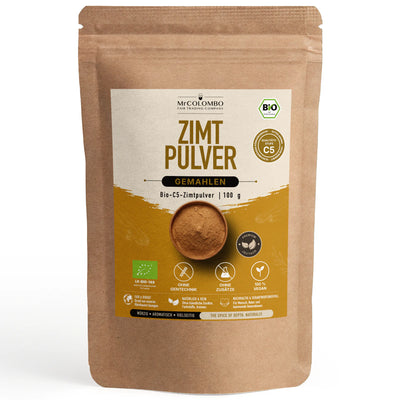
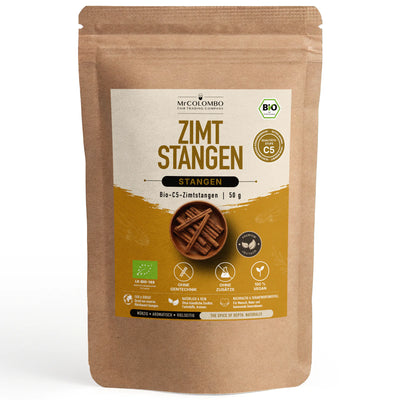
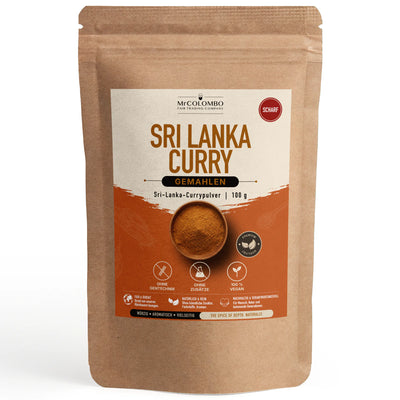
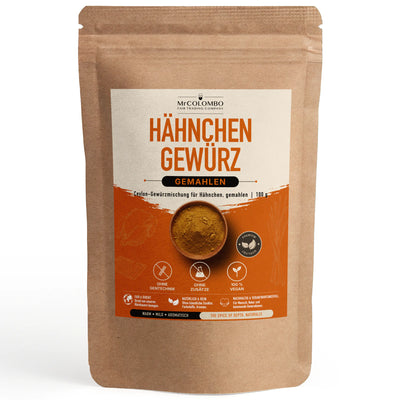
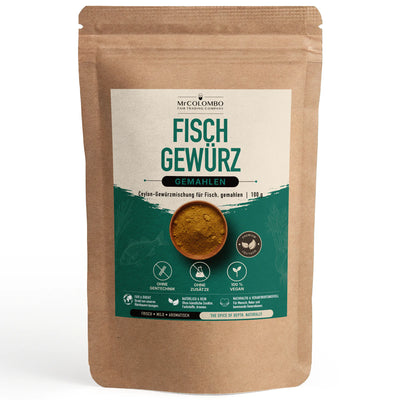
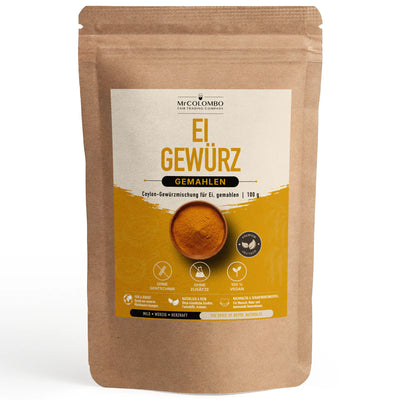


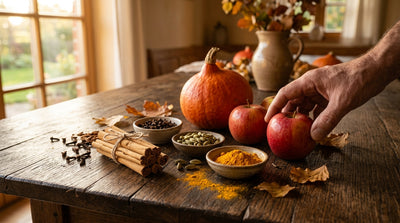



The harvest festival celebrates the year's harvest, and in Sri Lanka that has meant one thing above all for centuries: spices. The German market for spices and herbs turned over around 446.87 million euros in 2025 (Statista, 2025), and a large share of that goes into autumn cooking. Anyone cooking for the harvest festival reaches for pumpkin, apple and warm spices such as cinnamon, cloves and cardamom.
True Ceylon cinnamon, turmeric and cloves originally come from Sri Lanka, where smallholders in the Central Province and in Jaffna still harvest them by hand and process them in small family businesses to this day. MrCOLOMBO imports these spices directly from the cooperatives, without middlemen, and brings them freshly ground or as whole quills to German autumn tables. Three recipes show how this origin can be tasted in harvest festival cooking: a savoury pumpkin chutney, a mild apple and cinnamon bake and a warming spiced punch, each with a concrete link to the scientific side of the spices used.
Short answer
Which spices go with a harvest festival menu featuring pumpkin and apple? Turmeric and ginger for savoury chutneys, Ceylon cinnamon for bakes and punch, plus cloves and cardamom for warmth in the punch. According to the BfR (2012), Ceylon cinnamon contains around 100 times less coumarin than the cheaper cassia cinnamon and is therefore particularly suitable for regular enjoyment.
At a glance
What does the harvest festival have to do with spices from Sri Lanka?
The harvest festival traditionally marks the end of work in the fields and gives thanks for a good harvest; in Germany it is usually celebrated at the end of September or the beginning of October. In Sri Lanka, one of the two to three cinnamon harvests each year falls in the same season, as documented by the Department of Cinnamon Development for well-managed plantations. There, the peeled bark dries for four to seven days until it reaches a residual moisture content of at most 14 per cent, before being sorted into 13 quality grades in line with the SLS 81:2021 standard (Department of Cinnamon Development Sri Lanka). This seasonal closeness makes the harvest festival a fitting occasion to bring spices from Sri Lanka deliberately into autumn cooking, not merely as decoration but as the core flavour element of the recipes.
According to the Sri Lanka Export Development Board, Sri Lanka accounts for around 90 per cent of the global market share of true Ceylon cinnamon, its second-largest agricultural export after tea. The tree is grown mainly in the warm, humid central region around Kandy and Galle, while turmeric traditionally grows in the drier north near Jaffna. MrCOLOMBO sources its spices directly from smallholder cooperatives in these regions and does without middlemen, so that more of the sale price reaches the farming families. In Sri Lanka, turmeric is usually harvested between January and March, once the rhizomes have matured after around nine months of growth, while cloves are traditionally picked by hand in two harvest windows a year, as soon as their flower buds turn pink but have not yet opened. For a harvest festival menu, that means: anyone who chooses Ceylon cinnamon over anonymous mass-market goods supports a supply chain that can be traced back to the individual field.
How do you make a spicy pumpkin chutney with turmeric and ginger?
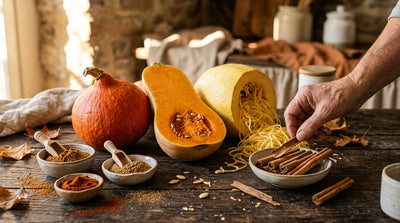
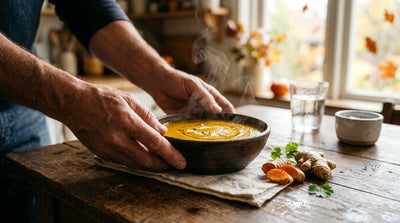
A pumpkin chutney with turmeric and ginger brings the golden colour of autumn straight to the harvest festival table and keeps easily for a week in the fridge. The recipe calls for around 800 grams of Hokkaido or musk pumpkin, peeled and cut into cubes, plus a finely chopped onion, two tablespoons of freshly grated ginger and a teaspoon of Turmeric Powder from Sri Lanka. The chutney is completed with 100 millilitres of cider vinegar, 80 grams of brown sugar, a pinch of salt and a knife tip of black pepper. The pepper is no coincidence: according to a study by Shoba et al. (1998), curcumin, the yellow pigment in turmeric, was absorbed 2000 per cent better in humans when combined with 20 milligrams of piperine from black pepper than without pepper. The ginger is also well documented scientifically: a meta-analysis of 13 studies with 1,174 female participants found a significant relief of nausea symptoms from ginger, without the frequency of vomiting falling markedly (Viljoen et al., 2014), evidence for the root's long tradition, not a substitute for medical advice.
Preparation step by step
The onion and ginger are sweated in a pan with a little rapeseed oil until translucent, then the pumpkin cubes, turmeric and pepper are added and roasted along for two minutes until the turmeric releases its aroma. The cider vinegar, sugar and salt are poured in, after which the chutney simmers uncovered over a low heat for 25 to 30 minutes until the pumpkin is soft and the liquid has thickened to a syrupy consistency. If you prefer a finer texture, briefly blend half of the chutney and stir it back in. Filled hot into sterilised jars, the chutney keeps for about a week in the fridge and goes well with fried cheese, sausages or as a spread on bread.

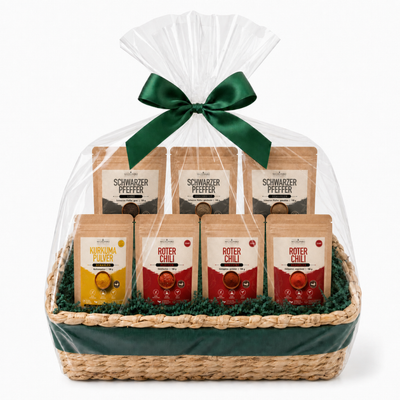
The turmeric powder (Curcuma longa, from the ginger family) in this recipe is single origin from Jaffna in the north of Sri Lanka, where it traditionally grows on dry, sandy soils and is gently ground after harvest. Because MrCOLOMBO trades directly with the farming families without middlemen, the intense colour and the spicy, earthy aroma are preserved, which industrially stored mass-market goods often lose. For the chutney, a single teaspoon is enough to add colour and depth without masking the sweetness of the pumpkin. If you cook with turmeric more often, you will also find the organic variant in the turmeric range from Sri Lanka, which is additionally EU organic certified under DE-ÖKO-005 and independently confirms the organic farming methods of the partner farms, as well as larger pack sizes.
With around 3 grams of fibre per 100 grams, the pumpkin chutney makes a small contribution to the DGE reference value of at least 30 grams of fibre per day for adults (German Nutrition Society, 2022). Our guide Making chutney yourself shows more basic techniques for preserving and seasoning chutneys in general. The following table gives an overview of the approximate nutritional values per portion.
| Nutritional value | per 100 g | per portion (approx. 40 g) |
|---|---|---|
| Calories | approx. 95 kcal | approx. 38 kcal |
| Fibre | approx. 3 g | approx. 1.2 g |
| Sugar | approx. 18 g | approx. 7 g |
| Fat | approx. 1 g | approx. 0.4 g |
Why should Ceylon cinnamon rather than cassia cinnamon go into autumn baking?
Ceylon cinnamon belongs in autumn baking because, according to the BfR (2012), it contains around 100 times less coumarin than the considerably cheaper cassia cinnamon found on most supermarket shelves. Botanically, the tree (Cinnamomum verum) belongs to the laurel family (Lauraceae); its characteristic aroma comes from the essential oil cinnamaldehyde, which occurs in milder concentration in the thin, multiply rolled bark than in the thicker, coarser cassia cinnamon. In high amounts, coumarin can put a strain on the liver, which is why the German Federal Institute for Risk Assessment recommends a maximum of 2 grams of cassia cinnamon per day for adults weighing 60 kilograms and only 0.5 grams for children weighing 15 kilograms. A classic apple and cinnamon bake for the harvest festival needs only a little cinnamon anyway: 250 grams of flour, 100 grams of butter, 80 grams of sugar, one egg, two tart apples in thin slices and two teaspoons of Ceylon Cinnamon Powder make a shortcrust base with a warm fruity note, without the coumarin question ever having to be asked.
The European Food Safety Authority sets the tolerable daily intake of coumarin at 0.1 milligrams per kilogram of body weight (EFSA Panel, 2008), a level that is quickly reached with daily consumption of cassia cinnamon in baked goods. EU Regulation (EC) No 1334/2008 additionally lays down binding maximum levels for coumarin in compound foods such as Christmas and autumn baked goods in Annex III Part B. An HPLC test by Stiftung Warentest on 51 cinnamon samples showed that 12 of the 51 samples exceeded the tolerable amount of coumarin at an assumed daily dose of 2 grams, while all the Ceylon cinnamon samples tested remained unproblematic (Stiftung Warentest, 2024). Anyone who bakes more often around the harvest festival, for instance over several weeks with changing types of baked goods, is therefore noticeably safer with Ceylon cinnamon. Children, for whom the BfR sets lower limits than for adults anyway, are also on the safe side with Ceylon cinnamon in baked goods. We explain more about the legal coumarin limits and how MrCOLOMBO complies with them in detail in the article Ceylon cinnamon and coumarin.
Preparation
The butter and sugar are beaten until fluffy, then the egg, flour and Ceylon cinnamon are added until a smooth shortcrust pastry forms, which rests in a cool place for 30 minutes. The dough is pressed into a greased tin, topped with the apple slices in a fan pattern and baked at 180 degrees, top and bottom heat, for 30 to 35 minutes until the edge is golden brown. If you like it more intense, dust the finished bake after cooling with a mixture of one tablespoon of sugar and a pinch of Ceylon cinnamon. The aroma of Ceylon cinnamon is generally considered milder and more floral than the stronger, slightly sharper aroma of cassia cinnamon.

| Criterion | Ceylon cinnamon | Cassia cinnamon |
|---|---|---|
| Botanical origin | Cinnamomum verum, Sri Lanka | Cinnamomum cassia, mostly China/Indonesia/Vietnam |
| Coumarin content | very low | considerably higher |
| Suitable for frequent consumption | Yes | No |
| Aroma | mild, floral, slightly sweet | strong, slightly sharp |
MrCOLOMBO's Ceylon Cinnamon Powder is ground from the finely rolled inner bark of the true Ceylon cinnamon tree, harvested and sorted in C5 premium quality according to the 13 quality grades of the SLS 81:2021 standard. Because the bark is dried and processed in the central region of Sri Lanka directly after harvest, the mild, slightly sweet aroma that distinguishes true Ceylon cinnamon from the stronger cassia variety is preserved. For the harvest festival bake, two teaspoons are enough to give the shortcrust pastry its typical autumn warmth. If you are looking for further uses, you will find every form from quill to powder in the Ceylon cinnamon range, and more ideas for everyday cooking in our collection Ceylon cinnamon recipes.
How do you make a spiced punch with cinnamon, cloves and cardamom yourself?
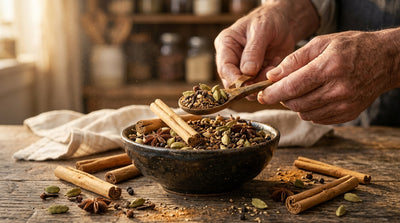
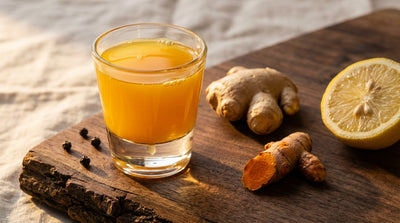
A home-made spiced punch brings together cinnamon, cloves (Syzygium aromaticum) and cardamom (Elettaria cardamomum) and can be prepared either with or without alcohol for a harvest festival celebration with the family. For the basic mixture, one litre of cloudy apple juice, two Ceylon Cinnamon Sticks, four whole cloves, four lightly crushed cardamom pods and one sliced organic orange are left to infuse for 15 minutes over a gentle heat, without boiling. For the alcohol-free version, the apple juice and spice base is already enough, served warm with a cinnamon stick as a stirrer. If you prefer an alcoholic version, add 200 millilitres of red wine or a dash of dark rum per litre of basic mixture shortly before serving, so that the alcohol does not boil off. Some recipes refine the punch further with a tiny pinch of freshly grated nutmeg. If you prefer cardamom and cinnamon as a warm, milk-based drink, you will find an alternative to the punch in our recipe for Ayurvedic tea.
With eugenol, cloves contain an aromatic active compound that showed a minimum inhibitory concentration of 0.25 to 2 milligrams per millilitre against several Candida strains in a laboratory study (Kowalska-Krochmal et al., 2022), an indication of the traditional use of the clove in the kitchen, not a substitute for medical treatment. In concentrated form, eugenol can irritate mucous membranes, which is why pure clove oil should only ever be used heavily diluted in the kitchen; in the punch, the four whole cloves are entirely sufficient. Cardamom, in turn, was at the centre of a double-blind, placebo-controlled study with 80 overweight, pre-diabetic women who took 3 grams of cardamom powder daily for eight weeks: compared with the placebo group, the inflammation marker hs-CRP, the ratio of hs-CRP to interleukin-6 and the oxidative stress marker malondialdehyde fell significantly (Rahimi et al., 2017). Both studies examine isolated active compounds in laboratory or supplement doses, not the small amount of cloves and cardamom in the finished punch, so they provide scientific background, not a promise of effect for the drink itself.
Important
Nutmeg is harmless in small pinches, but is quickly overdosed: as little as 5 grams of ground nutmeg, corresponding to 1 to 2 milligrams of myristicin, is considered a toxic dose with symptoms that can last up to 72 hours (Rahman et al., 2015). For the punch, a tiny pinch per jug is enough.
In 1502 the Portuguese navigator Vasco da Gama brought larger quantities of Ceylon cinnamon to Europe for the first time; in 1658 the Dutch secured control of the cinnamon trade on Ceylon and established the first systematically managed cinnamon plantations there.
after Druera, History of the Ceylon cinnamon trade
Cinnamon, cloves and cardamom in the spiced punch thus continue a centuries-old trading history: all three spices reached Europe via the same routes that Portuguese and Dutch merchants controlled from the 16th and 17th centuries onwards, as is historically documented in the example of the Ceylon cinnamon trade. Anyone who puts on a jug of punch today uses the same aromas that once travelled for months on sailing ships to Europe, but which now arrive within a few days directly from the cooperative on the harvest festival table.

The Ceylon Cinnamon Sticks for the punch come from the same central region of Sri Lanka as the ground powder and are worked by hand into the characteristic, multiply rolled quills of C5 premium quality. Because whole quills retain their essential oil longer than cinnamon that has already been ground, they develop a fuller aroma when infused slowly in the punch. After serving, the quills can be rinsed and used a second time for another jug.
What should you look out for when buying spices for the harvest festival?
When buying spices for the harvest festival, it is worth taking a look at origin and test seals, because an Öko-Test of 19 turmeric powders in November 2022 found detectable mineral oil in all 19 samples, in 16 of them above the limit of 4 milligrams per kilogram, and only a single product received the grade very good. Mineral oil residues often come from packaging, transport or processing in long, opaque supply chains with many intermediate stages. Anyone who knows which field a spice comes from and how it was processed can assess such risks far better than with an anonymous shelf product without any indication of origin.
The three recipes in this article do not need large quantities: one teaspoon of turmeric, two teaspoons of Ceylon cinnamon and a handful of cloves are enough for an entire harvest festival menu. That is precisely why investing in tested quality pays off more with spices than with staple foods that are consumed daily in large quantities. We collect further criteria for recognising high-quality spices in our guide Recognising spice quality.
Checklist for buying spices
Is a specific growing region stated on the packaging? Details such as "Jaffna" or "central region of Sri Lanka" are an indication of traceability, whereas mere origin statements such as "EU/non-EU" say very little.
Are there independent laboratory tests for coumarin, pesticides or mineral oil? Suppliers who disclose their own or independent test results make quality verifiable instead of merely claiming it.
Is it Ceylon cinnamon or cassia cinnamon? Only the designation "Ceylon cinnamon" or "true cinnamon" guarantees the lower-coumarin tree; "cinnamon" on its own can also mean cassia.
How many middlemen lie between the field and the packaging? The shorter the supply chain, the fresher the spice and the more of the price stays with the farming families.
Our approach at MrCOLOMBO
We buy directly from smallholder cooperatives in the Central Province, in Matale, Kandy, Galle and Jaffna, with no middlemen in between. That way it remains traceable which field a spice comes from, and a larger share of the sale price reaches the farming families rather than trade intermediaries.
Which spices belong on every harvest festival table?
At the harvest festival, turmeric, Ceylon cinnamon, cloves and cardamom connect autumn cooking with a centuries-old trading history that still begins on the same fields in Sri Lanka today. Pumpkin chutney, apple and cinnamon bake and spiced punch show how these spices can be built into three very different recipes with a few clearly measured quantities, from a savoury spread to a warm drink. Anyone who pays attention to origin, test seals and the difference between Ceylon cinnamon and cassia cinnamon when shopping automatically makes the lower-coumarin and traceable choice (BfR, 2012). In the end, the harvest festival also remains an opportunity to become aware of how many stages lie between a spice field in Matale or Jaffna and your own kitchen, and how much aroma is lost along the way the longer and more anonymous that chain is.