




C eylon cinnamon (Cinnamomum verum) from Sri Lanka contains less than 8 mg/kg of coumarin - around 250 times less than the cassia cinnamon commonly sold in shops - a decisive difference for anyone who cooks with cinnamon regularly, as the German Federal Institute for Risk Assessment (BfR, 2012) confirms. While cassia cinnamon uses up the tolerable daily intake (TDI) for a 60 kg adult at just 2 grams a day, Ceylon cinnamon remains of no concern even in generous cooking quantities. In terms of flavour, it wins you over with a delicately sweet, fruity aroma with notes of vanilla and a hint of citrus - entirely without the biting pungency of its cassia relative. That makes it the more versatile kitchen cinnamon: from the cinnamon bun to a hearty lamb curry to the evening golden milk ritual.
Sri Lanka produces around 90 per cent of the true cinnamon traded worldwide (IFC/UNIDO, 2024). More than 70,000 smallholders in regions such as Galle, Matale and the Central Province peel the wafer-thin inner bark by hand - a technique that has been handed down since Roman times. We at MrCOLOMBO know these plantations personally and import our Ceylon cinnamon directly from Sri Lanka without intermediaries. In this article we present seven tried-and-tested recipe ideas - from sweet to savoury - that make the most of the full aromatic potential of true Ceylon cinnamon. How cultivation by the coppicing method, the harvest during the monsoon season and the four trade grades fit together is described in detail in our article on Ceylon cinnamon from Sri Lanka.
At a glance
What makes Ceylon cinnamon the ideal kitchen cinnamon?
Ceylon cinnamon differs from cassia cinnamon not only in its coumarin content but also in the chemical composition of its essential oil. According to an analysis by Narayanankutty et al. (2021) in the journal Molecules, the bark oil of Cinnamomum verum consists of 66-97 per cent trans-cinnamaldehyde - the compound responsible for the typical cinnamon aroma. This cinnamaldehyde gives Ceylon cinnamon its mild sweetness without the sharp cassia note, which arises from higher proportions of other compounds. For the kitchen, this means: Ceylon cinnamon harmonises with delicate flavours such as vanilla, apples or coconut milk without overpowering them. You will find a detailed comparison of both types of cinnamon in our article on the quality difference between Ceylon and cassia cinnamon.
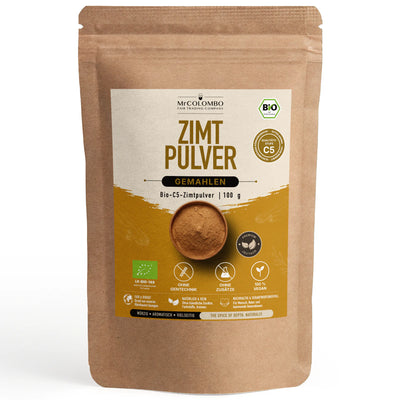
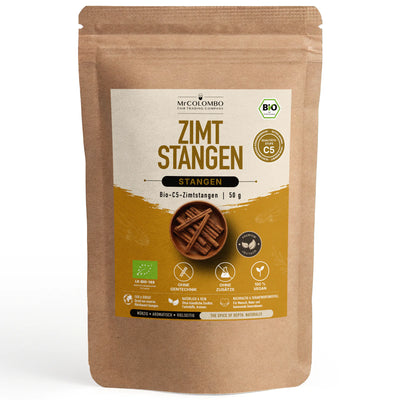
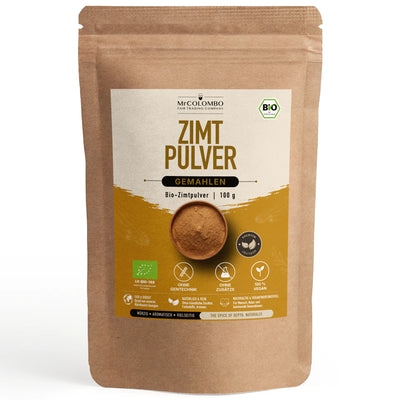
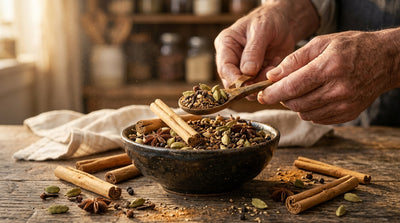
In practice, it is worth distinguishing between sticks and powder. Cinnamon powder is suited to doughs, porridge and crumbles - it is worked in from the start and releases its aroma immediately. Cinnamon sticks, on the other hand, go into soups, curries and drinks: they are added halfway through the cooking time and removed before serving, as the Kaisergranat spice encyclopaedia recommends. Ceylon sticks can be recognised by their paper-thin, multiply rolled bark - cassia sticks are noticeably thicker and consist of a single layer of bark. With cinnamon powder, only the label helps: the designation "Cinnamomum verum" or "Ceylon" guarantees the right variety.
Practical tip
Ceylon cinnamon develops its aroma best at moderate heat. When baking above 200 °C, part of the cinnamaldehyde evaporates. That is why, for crumbles and bakes, you should put the cinnamon into the filling - not into the crumble topping, which is directly exposed to the heat of the oven.

How do cinnamon buns and porridge turn out well with Ceylon cinnamon?
Recipe 1: Swedish cinnamon buns (kanelbullar)
Cinnamon buns have been enjoying a social media boom since 2024 - Google Trends recorded a peak value of 51 for the search term "Zimtschnecken" in Germany in January 2026 (Accio.com, 2025). The key to perfect kanelbullar lies in the cinnamon: it goes exclusively into the filling, not into the yeast dough, as King Arthur Baking (2021) explains in its cinnamon guide. For 12 buns, 2 tablespoons of ground Ceylon cinnamon are mixed with 80 g of soft butter and 60 g of sugar and worked into the rolled-out yeast dough as a spiral. Ceylon cinnamon is particularly well suited here: its mild, fruity sweetness harmonises with the buttery filling, whereas cassia cinnamon often comes through harshly. Bake at 200 °C for 12-15 minutes until the surface has a golden-brown sheen.
Recipe 2: Ceylon cinnamon porridge with apple
A warm porridge is the simplest way to integrate Ceylon cinnamon into your daily diet. The basic recipe according to EAT SMARTER consists of 100 g of rolled oats, 300 ml of milk or plant-based milk, 2 diced apples and half to one whole teaspoon of Ceylon cinnamon. The oats are brought to the boil with the milk and stirred over a low heat for 5 minutes before the apples and cinnamon are folded in. If you like it richer, follow the Reishunger recipe: cook 60 g of organic rice flakes in almond milk, stir in 1 teaspoon of Ceylon cinnamon and 1 teaspoon of turmeric, and top with banana slices and desiccated coconut. Both versions are ready in under 10 minutes and are also suitable for vegan cooking.
How do you prepare Ceylon chai and golden milk properly?
Recipe 3: Authentic Ceylon chai (masala chai)
Chai without cinnamon is like curry without turmeric - unthinkable. For two cups following the Varanasi recipe from Smarticular, 500 ml of water is brought to the boil with a 5 cm long Ceylon cinnamon stick, 3 cardamom pods, 3 cloves and 1.5 cm of fresh ginger. After 5 minutes of simmering, 2 teaspoons of black tea and 500 ml of organic milk are added. Leave to infuse for a further 3 minutes, strain, and sweeten with honey or cane sugar. The Ceylon cinnamon stick lends a more elegant aroma than cassia - its sweetness complements the cardamom and cloves rather than dominating them. If you would like to enjoy your chai as a refreshing summer version, simply let the finished chai cool down and serve it with ice cubes.
Recipe 4: Golden milk with Ceylon cinnamon
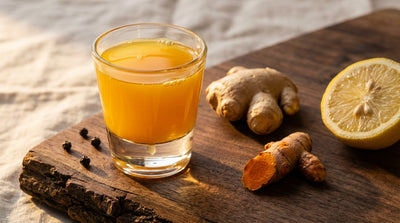
Golden milk - known in the Ayurvedic tradition as haldi doodh - combines turmeric, cinnamon and ginger in a warming drink that has been prepared in South Asia for thousands of years (Suriyagoda et al., 2021). For one cup, 250 ml of plant-based milk is warmed over a medium heat with 1 teaspoon of Ceylon cinnamon, 1 teaspoon of turmeric, a pinch of black pepper and a teaspoon of coconut oil - do not boil. The pepper is not there for flavour but, according to a much-cited study (Shoba et al., 1998), improves the absorption of curcumin in the body. You will find detailed instructions with further variations in our golden milk recipe. We stock our organic turmeric from Sri Lanka specifically for this use.

Why does Ceylon cinnamon belong in savoury dishes?
Recipe 5: Pumpkin soup with Ceylon cinnamon and coconut milk
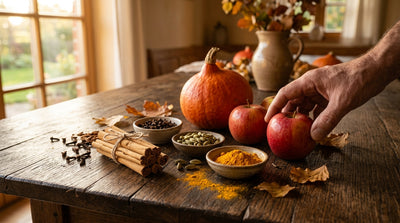
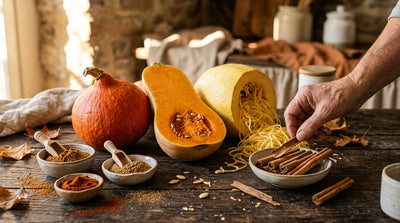
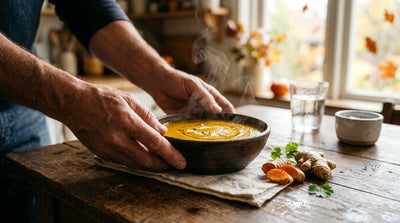
Cinnamon in savoury dishes is surprising only at first glance - in Middle Eastern and South Asian cuisine it has been part of the standard repertoire for centuries (Suriyagoda et al., 2021). For a pumpkin soup with an oriental touch, 800 g of Hokkaido pumpkin is gently sautéed in olive oil with 1 onion and 2 cm of fresh ginger, topped up with 400 ml of vegetable stock and 200 ml of coconut milk, and blended. The key is 1 teaspoon of ground Ceylon cinnamon, which together with a pinch of nutmeg and cumin creates a warm depth of flavour that harmonises perfectly with the natural sweetness of the pumpkin. Alternatively, a whole cinnamon stick can be cooked along with the soup and removed before blending - this gives a subtler aroma. This soup brings together the autumn pumpkin season with the peak cinnamon season and proves that Ceylon cinnamon is far more than a Christmas spice.
Recipe 6: Sri Lankan lamb curry with cinnamon stick
In Sri Lanka, the cinnamon stick is part of the base of every good curry - alongside curry leaves, coconut milk and roasted spices. The coastal region of Galle is famous for its cinnamon plantations, which have been cultivated since Roman times (Resplendent Ceylon). For an authentic lamb curry, 1 kg of lamb shoulder is cut into cubes and browned in coconut oil with an 8-10 cm long Ceylon cinnamon stick, garlic, ginger and curry powder. Then 400 ml of coconut milk and 200 ml of water are added - simmer over a low heat for 90 minutes. The cinnamon stick slowly releases its cinnamaldehyde and lends the dish a warm, sweet-spicy note. You will find more authentic curries in our Sri Lanka curry recipe. Our tip: the curry tastes even better reheated the next day, as the spices infuse overnight.
Important
This article is for information purposes and is no substitute for medical advice. Cinnamon in usual food quantities is considered safe (NCCIH/NIH). In rare cases, cinnamaldehyde can trigger contact allergies - if you have a known cinnamon allergy, you should avoid cinnamon. Cinnamon is not recommended for infants under one year of age. If you have any health questions, please consult your doctor or pharmacist.
How do you bake the perfect apple and cinnamon crumble?
Recipe 7: Apple and cinnamon crumble with Ceylon cinnamon
The apple and cinnamon crumble is a seasonal classic that reaches a new dimension with Ceylon cinnamon. "With Ceylon cinnamon, this crumble is truly irresistible," writes the Spicebar recipe team. For 4 portions, 4 apples are peeled, diced and mixed with 1.5 teaspoons of ground Ceylon cinnamon and 2 tablespoons of sugar - that is the filling. Separately, 120 g of spelt flour, 80 g of rolled oats, 80 g of cold butter and 50 g of sugar are worked into a coarse crumble. Put the filling into a greased ovenproof dish, spread the crumble on top and bake at 180 °C for about 25 minutes until the crumble is golden brown. The important difference from the standard version: the cinnamon goes into the apple filling, not into the crumble topping. This keeps the aroma protected, because the apples shield it from the direct heat of the oven. Walnuts or flaked almonds in the crumble add extra crunch.

What should you look for when buying Ceylon cinnamon?
Ceylon cinnamon is divided into four official quality grades defined by the Sri Lanka Export Development Board (EDB). The highest grade is Alba: wafer-thin, hand-rolled pieces of bark with a maximum diameter of 6 mm and aromas of cocoa, vanilla and fruit. These are followed by Continental, Mexican and Hamburg in descending order of fineness. For the kitchen, Continental quality is perfectly sufficient - Alba sticks are intended more for special occasions or for fresh grinding immediately before use. Stiftung Warentest (2024) tested 14 cinnamon powders and found 2,300-3,500 mg/kg of coumarin in cassia varieties, while Ceylon varieties were below 20 mg/kg - a more than hundredfold difference. For anyone who cooks or bakes with cinnamon regularly, Ceylon is the safe choice.
Since 2022, Ceylon cinnamon has carried the EU's protected geographical indication (GI) - a quality seal comparable to Parmigiano Reggiano or Champagne (IFC/UNIDO, 2024). When buying, it is worth taking a look at the indication of origin and the designation "Cinnamomum verum" or "Ceylon". Organic certification is another mark of quality: the German organic market grew by 6.7 per cent in 2024 to a record turnover of 18.23 billion euros (Ökolandbau.de, 2025), and organic spices are benefiting from this trend. Ground Ceylon cinnamon keeps its aroma for 6-12 months when stored in a cool, dark place in airtight containers. Cinnamon sticks even keep for 2-3 years. You will find a comprehensive overview of the best spices of Sri Lanka in our portrait.
| Dish | Form | Quantity |
|---|---|---|
| Cinnamon buns (12 pcs) | Powder | 2 tbsp |
| Porridge (2 portions) | Powder | ½-1 tsp |
| Ceylon chai (2 cups) | Stick | 1 × 5 cm |
| Golden milk (1 cup) | Powder | 1 tsp |
| Pumpkin soup (4 portions) | Powder/stick | 1 tsp / 1 stick |
| Lamb curry (4 portions) | Stick | 1 × 8-10 cm |
| Apple crumble (4 portions) | Powder | 1.5 tsp |
Ceylon cinnamon in the kitchen - more than a winter spice
Ceylon cinnamon deserves a permanent place in every kitchen - not just at Christmas time. From morning porridge to an authentic Ceylon chai to a hearty Sri Lankan-style lamb curry, these seven recipe ideas show the range of a spice that is unfairly reduced to cinnamon star biscuits. With its mild, fruity aroma and its unproblematic coumarin content, Ceylon cinnamon is the better choice for anyone who wants to cook and bake with cinnamon regularly.
Would you like to dive even deeper into the world of Sri Lankan spices? Then discover the best spices from Sri Lanka - and find out what role cinnamon plays in the island's spice tradition.