



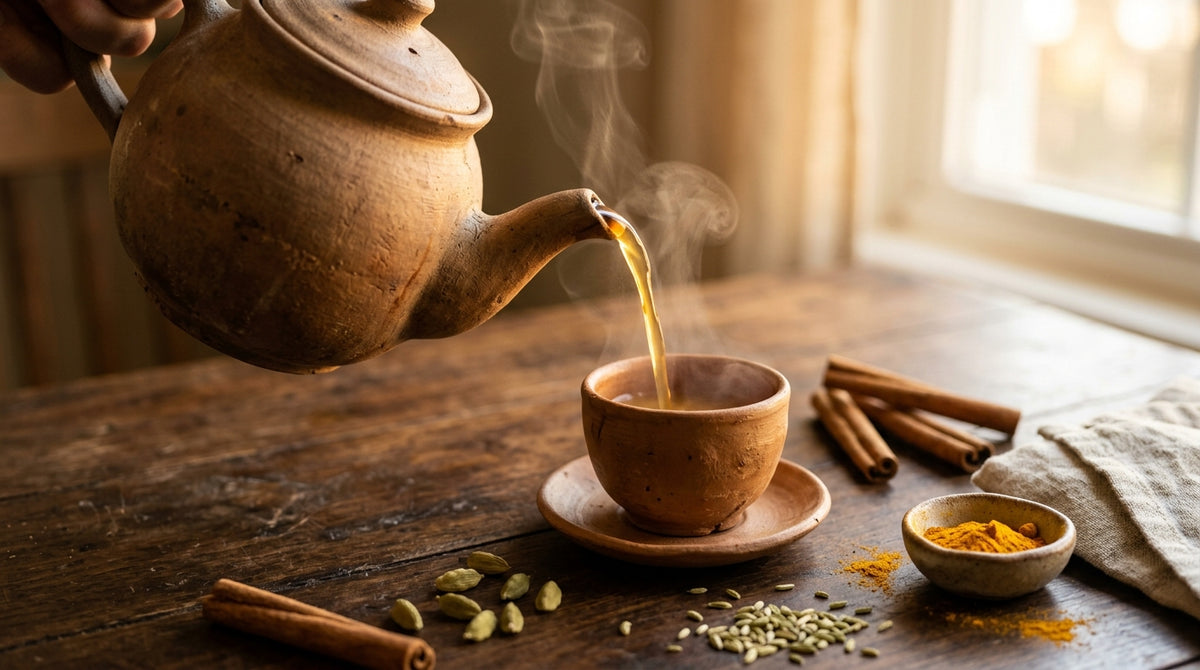
Ayurvedic tea is a warm spice infusion from the traditional Indian system of medicine that combines spices such as ginger, turmeric, cardamom, fennel and true Ceylon cinnamon according to the constitutional principle of the three doshas (Vata, Pitta, Kapha). These five tried-and-tested recipes can be prepared yourself in under ten minutes and need nothing more than whole spices, hot water and a little patience while they steep.
We at MrCOLOMBO import the main ingredients of these teas, above all true Ceylon cinnamon and freshly ground turmeric, directly from smallholder farmers in Sri Lanka. Sri Lanka covers around 90 per cent of the world market for true cinnamon (Sri Lanka Export Development Board) and thus provides the basis for an Ayurvedic tea that not only tastes good but is also on the safe side when enjoyed daily. It is precisely this difference in quality that decides whether a spice tea is fit to be an everyday drink.
Short answer
What is Ayurvedic tea and how do you make it? Ayurvedic tea is a spice-based infusion that, according to Ayurvedic teaching, is matched to your own constitutional type. Whole spices (such as fennel, cardamom, ginger, turmeric with a pinch of black pepper) are simmered or steeped in hot water for five to ten minutes. For daily consumption, Ceylon cinnamon is recommended instead of cassia, because according to the BfR (2012) it contains only traces of the substance coumarin.
At a glance
What actually is Ayurvedic tea?
Ayurveda is a roughly 5,000-year-old health system from India whose roots lie in classical texts such as the Charaka Samhita (Banyan Botanicals, 2024). In 2023 the WHO and the Indian Ministry of AYUSH signed an agreement on the worldwide recognition of traditional medicine, which underlines the growing importance of this tradition. At its centre stands the teaching of the three doshas: Vata (air and space), Pitta (fire and water) and Kapha (earth and water). An Ayurvedic tea is considered successful when it balances the prevailing dosha rather than amplifying it. That is exactly why there is no single Ayurvedic tea, but rather recipes that vary according to constitution and season.
In Ayurvedic tea culture, a distinction is made between various methods of preparation, which are grouped together under the term Kashaya (Ayurveda-Journal, Steuernagel). The Kwath, or decoction, is regarded as the most important form: whole spices are simmered slowly, ideally at 85 to 90 degrees Celsius, to gently release the fat-soluble and volatile constituents (ResearchGate Kwath Review, 2024). Anyone who knows the difference between an infusion and a decoction gets considerably more aroma out of their spices. A good basis for this is provided by fresh spices from Sri Lanka whose essential oils are still intact.

Which tea suits which dosha and which season?
In the Central European climate, the three doshas can be roughly assigned to the seasons (Ayurveda-Journal, Doshas in den Jahreszeiten). Kapha dominates the damp, cool spring from February to May, Pitta the hot summer from June to September, and Vata the dry, cold phase from October to January. This assignment helps when choosing a tea: in the Vata period, grounding, slightly oily teas such as golden milk provide warmth, in the Pitta summer the milder tulsi tea cools, and in the Kapha spring pungent blends such as Trikatu are stimulating. This is how any spice tea becomes a purposefully used ritual. The following table summarises which of the five recipes suits which type.
| Recipe | Vata (Oct-Jan) | Pitta (Jun-Sep) | Kapha (Feb-May) |
|---|---|---|---|
| CCF tea (cumin-coriander-fennel) | Yes | Yes | Yes |
| Golden milk (turmeric) | Yes | in moderation | sparingly |
| Trikatu warming tea | Yes | No | Yes |
| Tulsi tea | Yes | in moderation | Yes |
| Vata chai (cardamom, saffron) | Yes | sparingly | in moderation |
How do you prepare CCF tea for digestion?
CCF tea made from cumin, coriander and fennel is regarded in Ayurvedic practice as the classic beginner's tea and is suitable for all three doshas (tridoshic). In forums such as r/Ayurveda it is regularly recommended as the first step into Ayurvedic tea culture. For one litre, you put half a teaspoon each of cumin seeds, coriander seeds and fennel seeds into water and let it all simmer for five to ten minutes before straining it (Kripalu Center). Fennel (Foeniculum vulgare) contains up to 50 to 60 per cent anethole in its essential oil and is being studied by researchers for digestion-supporting properties (Rafieian et al., 2024). The tea tastes mildly nutty and can easily be prepared in a thermos flask as a day's supply.
Our way at MrCOLOMBO
CCF is perfect for starting out in Ayurvedic tea culture, because no rare ingredients are needed. If you like it spicier, add a slice of fresh ginger - that turns the mild CCF into a warming transitional tea for the cold season.
How does black pepper complement the flavour of golden milk?
Golden milk (Haldi Doodh) is the most searched-for Ayurvedic drink in Germany and is often enjoyed as a warming evening ritual. For one cup, you simmer one teaspoon of turmeric, a pinch of black pepper, one teaspoon of ginger powder and half a teaspoon of Ceylon cinnamon for five to seven minutes in 400 millilitres of plant milk. Honey is only added below 40 degrees so that its enzymes are preserved.
Curcumin is one of the most intensively researched plant compounds of all and is the subject of more than 13,000 studies (PubMed, as of 2026). An umbrella review of 25 meta-analyses (Xu et al., 2025) summarises the state of the data on inflammation markers such as CRP and IL-6. What remains important is a sober assessment: from a tea or latte you take in less curcumin than from concentrated preparations, which is why golden milk is above all a comforting drink to enjoy and not a medicine. If you want to go deeper, you will find the exact quantities in our detailed recipe for golden milk and the scientific context in our article on turmeric effects.

How does Trikatu tea warm you in the cold season?
Trikatu literally means the three pungents and is one of the best-known Ayurvedic spice formulas (Art of Living Retreat Center). It consists of ginger, black pepper and long pepper (Pippali) in equal parts. For a warming infusion, you put half a teaspoon each of ginger powder and black pepper into 500 millilitres of hot water and let the mixture steep for about ten minutes, optionally with lemon and honey. Ginger owes its pungency to the gingerols, whose share in fresh ginger is 1 to 3 per cent (Examine.com, 2024). When heated, gingerols are converted into shogaols, which makes the tea more pungent and more intense. Trikatu is ideal for the Vata and Kapha periods, but because of its pungency Pitta types should drink it only in small quantities.
Important
This article is for information purposes and is no substitute for medical advice. Pungent spice teas such as Trikatu may be unsuitable for those with a sensitive stomach, during pregnancy or when taking medication. If you have health-related questions, consult your doctor or pharmacist.
What makes tulsi the classic tea for stressful days?
Tulsi, holy basil (Ocimum tenuiflorum), is regarded in Ayurveda as a royal herb and is traditionally used in balancing tea blends. For an infusion, you pour 250 millilitres of hot water (a maximum of 90 degrees, not boiling) over one to two teaspoons of dried tulsi and let it steep uncovered for five minutes. The essential oil of tulsi consists of around 71 per cent eugenol (Arya et al., 2024). In a double-blind RCT (Lopresti et al., 2022) with 100 adults over eight weeks, the tulsi group reported a greater improvement on the Perceived Stress Scale than the placebo group. Accordingly, tulsi is frequently discussed in connection with stress in forums such as r/herbalism. The tea tastes spicy and herbaceous and can be nicely rounded off with a little cardamom or ginger.
How do you make a grounding Vata chai with cardamom?
The Vata chai is the most opulent of the five blends and is suited to the cold, dry Vata season. You simmer one cracked cardamom pod, one star anise, one stick of true Ceylon cinnamon and two threads of saffron in water for around ten minutes, then add half a cup of oat milk and one teaspoon of black tea and bring it briefly to the boil before straining. Cardamom contains the essential oils 1,8-cineole and terpinyl acetate and is being studied by researchers: a meta-analysis of eight RCTs (Heydarian et al., 2023) looked at the influence of 3,000 milligrams of cardamom daily on inflammation markers. For a refreshing summer version of this chai idea, it is worth taking a look at our iced chai latte. You will find the right Ceylon cinnamon for it in our Ceylon cinnamon selection.
Why should you use Ceylon cinnamon instead of cassia?
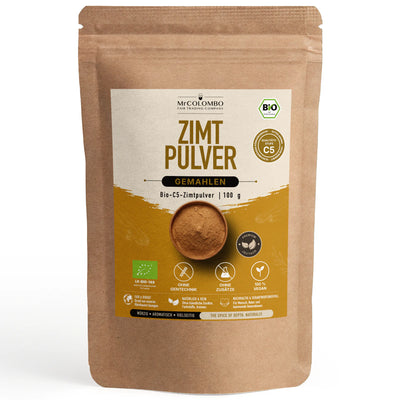
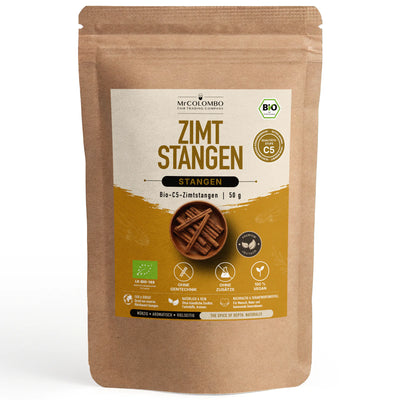
When enjoying spice tea daily, the type of cinnamon is crucial, and this is exactly where the most important difference comes in, one that hardly any recipe blog explains. There are two types: the inexpensive cassia cinnamon and true Ceylon cinnamon (Cinnamomum verum) from Sri Lanka. Cassia cinnamon contains the natural substance coumarin in high concentration, on average around 3,000 milligrams per kilogram (BfR), whereas Ceylon cinnamon contains only traces. According to the German Federal Institute for Risk Assessment, coumarin can put a strain on the liver in larger quantities; the tolerable daily intake (TDI) is 0.1 milligrams per kilogram of body weight (BfR). For a person weighing 60 kilograms, as little as about 2 grams of cassia cinnamon a day already uses up this value. Stiftung Warentest therefore expressly recommends Ceylon cinnamon for sensitive groups and for daily consumption (Stiftung Warentest, 2017).

This is where our origin pays off: with a world market share of around 90 per cent, Sri Lanka is by far the largest producer of true cinnamon, which is grown there on about 31,000 hectares and employs around 400,000 people directly or indirectly (EDB Sri Lanka). We at MrCOLOMBO source our Ceylon cinnamon directly from partner farms in the central region of the island and know every stage of the supply chain personally. If you would like to read about the difference in detail, you will find it in our comparison Ceylon cinnamon versus cassia cinnamon. This is how a lovely tea ritual becomes one you can enjoy every day without a second thought.
What should you look out for when buying the spices?
The quality of the ingredients determines the aroma and the safety of the tea. In 2021 ÖKO-TEST tested a total of 49 tea blends and found the banned insecticide chlorpyrifos in several samples, as well as elevated pyrrolizidine alkaloids, i.e. plant toxins from wild herbs (ÖKO-TEST, 2021). Stiftung Warentest likewise found that only every second one of 64 herbal teas was truly convincing (2017). The most important consequence: buy certified organic goods and go for whole rather than ground spices, because these keep their essential oil for longer. The organic share of tea in Germany already rose to 17.7 per cent in 2024 (Deutscher Teeverband, Tee Report 2025), a sign of growing quality awareness.
Checklist for buying tea
Is the type of cinnamon declared? Does the packaging say Ceylon or Cinnamomum verum? According to the Verbraucherzentrale consumer advice centre, only 4 out of 65 products do so - if in doubt, ask specifically for Ceylon.
Are the goods certified organic? Organic certification lowers the risk of pesticide residues, which ÖKO-TEST even found in conventional goods.
Whole or ground? Whole seeds and sticks keep their aroma for longer. Crush them in a mortar only shortly before infusing.
What is the origin? Single-origin spices with a clear indication of origin are more traceable than anonymous bulk goods. Our spice range from Sri Lanka is directly traceable.
Which Ayurvedic tea is the right one for you?
What matters for daily enjoyment is the quality of the spices, above all true Ceylon cinnamon instead of coumarin-rich cassia. If you start with whole, certified organic spices from a clear origin, you have already taken the most important step. Browse our turmeric range for your first blend and try your way through the five recipes - your favourite tea will find itself all on its own.