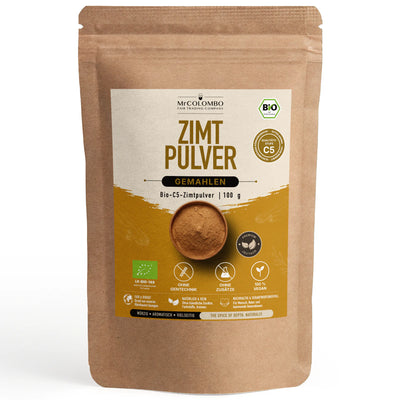

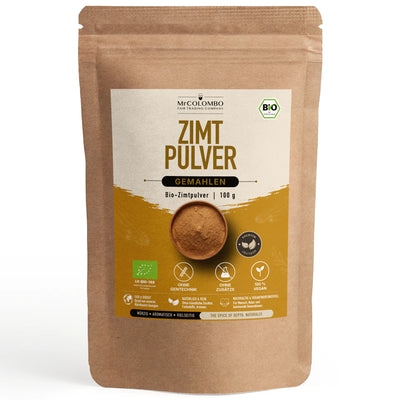
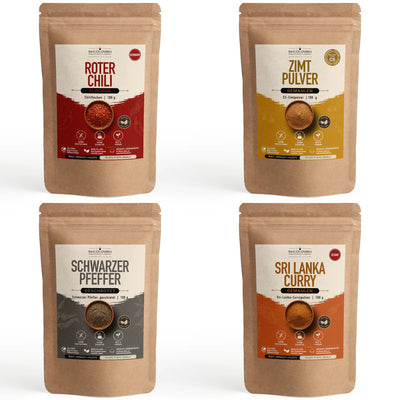


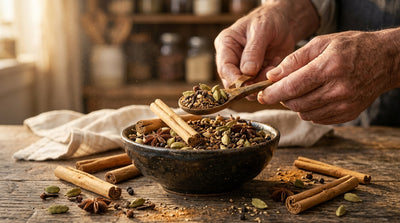



At its core, a fruity chutney needs four spices: Ceylon cinnamon, green cardamom, cloves and chilli. The proportions behind it have been tried and tested for generations and are easy to remember - for 1 kg of fruit, you need around 200 ml of vinegar and 200 g of sugar. What makes the mixture keep is not the spices but the acidity: below pH 4.6, Clostridium botulinum cannot multiply, which is why preparations pickled in vinegar are considered safe. This threshold has been established in food microbiology for decades.
So the spices determine the character, the acid the safety. This is exactly where good chutney parts company with average chutney, because a tired cinnamon that has been open for two years brings hardly any aroma to a hot-cooked fruit purée. We at MrCOLOMBO import Ceylon cinnamon, chilli and pepper directly from smallholder farmers in Sri Lanka and know every stage of the supply chain personally. You notice how big the difference is as soon as you start preserving: freshly rolled cinnamon sticks from the central region of the island release their essential oil into the hot vinegar liquor within minutes, while old stock needs twice the cooking time and still tastes flat in the end. The same applies to all three fruit variants: mango with Ceylon cinnamon and chilli, apricot with cardamom and ginger, plum with cloves and mustard seeds all follow the same basic ratio and differ mainly in their spice signature and in the cooking time required.
Short answer
Which spices do you need for homemade chutney? Ceylon cinnamon for the warm sweetness, green cardamom for the citrusy top note, cloves for the dark depth and chilli for the heat. Plus mustard seeds, ginger and black pepper as boosters. Preservation is handled by vinegar, sugar and hot filling. Spice extracts do show measurable antimicrobial effects in the laboratory - clove extract, for instance, inhibition zones of 14 to 18 mm (Zhao et al., 2024) - but they are no substitute for clean working.
At a glance
What is a chutney and where does it come from?
Chutney is a sweet, sour and spicy condiment paste made from fruit or vegetables, preserved by cooking with vinegar and sugar and flavoured with whole spices. The name goes back to the Hindi word "chatni", which means roughly to lick or to eat with relish. The Oxford English Dictionary traces the earliest English-language record of the word to the year 1792, noted by J. Bristow. During the colonial era the preparation travelled from India to Europe, where it initially served as an exotic accompaniment to cold roast meat (AOK Bundesverband, 2024). What distinguishes a chutney from a jam is above all the vinegar and the added salt; from a relish, the considerably longer cooking time and the resulting softer, darker texture. In Germany, the colonial side dish has long since become a product category in its own right, one that sits on the shelf all year round and pairs in the kitchen with cheese, curries, pan-fried meats and cold roasts.
The appeal of a chutney lies in the interplay of three flavours. The sugar caramelises slightly and binds water, the vinegar sets acidity against it, and the spices build a third layer on top. In Ayurvedic cooking, a small portion of chutney is traditionally regarded as an accompaniment that brings the warming spices to the plate in compact form - a pattern that can still be found in Sri Lanka today in its sambols and pickles. On the island, a small bowl of a hot and sour condiment paste made from lime, chilli and onion almost always sits beside the rice; it is eaten in tiny amounts to round off the meal, not as a sauce. Once you have understood this principle, you can process any fruit that keeps its structure when cooked: mango, apricot, plum, apple or rhubarb all follow the same blueprint of 1 kg fruit, 200 ml vinegar and 200 g sugar. Very soft, watery fruits such as strawberries, by contrast, collapse into a purée.
Which spices help make a fruit chutney keep?
No single spice on its own makes a fruit chutney keep. Shelf life comes from the combination of acid, sugar, heat and an airtight seal. Spices provide measurable additional effects that are well documented in laboratory trials. A screening of 67 spice extracts found 38 extracts with inhibitory activity against antibiotic-resistant Staphylococcus aureus strains, with galangal, cinnamon and yellow mustard seed among the five strongest (Zhang et al., 2019). Extract from cloves (Syzygium aromaticum, family Myrtaceae) achieved inhibition zones of 14 to 18 mm against various bacteria and fungi at minimum inhibitory concentrations of 3 to 6 mg/mL, while pepper extract was clearly lower at 8 to 14 mm (Zhao et al., 2024). An inhibition zone is nothing more than the germ-free area around a soaked disc on the agar plate: the larger the diameter, the stronger the inhibition in the laboratory model. For practice this means: spices are a useful additional factor, but no substitute for clean working.
The active compounds behind these effects are well described. In Ceylon cinnamon (Cinnamomum verum, family Lauraceae), it is above all cinnamaldehyde that carries the warm, slightly sweet note released when heated in the vinegar liquor. Eugenol, at around 53 percent, makes up the largest share of the active-compound profile of aqueous clove extract, which comprises 58 individual compounds in total; against Escherichia coli this extract achieved an inhibition zone of 33 mm (Wadi, 2025). That this value lies far above the 14 to 18 mm found by Zhao and colleagues is down to the extraction method and concentration, not to better cloves. When crushed and heated, mustard seeds release allyl isothiocyanate, whose release increases with rising temperature and humidity; the substance has a broad antimicrobial effect (Dai and Lim, 2014). On chilled meat samples at 2 degrees, cumin and clove oil reduced the total bacterial count by 3.78 log CFU/g after 15 days (Gottardi et al., 2016). These values come from controlled laboratory conditions with concentrated extracts, not from the cooking pot - in a chutney the concentrations are many times lower.

The second big lever is the vinegar. Apple cider vinegar inhibited Escherichia coli even at a dilution of 1:50, Staphylococcus aureus only at 1:25 (Yagnik et al., 2018). Because acetic acid is a natural component of many foods, the European Food Safety Authority did not consider an ADI limit necessary for buffered vinegar as a preservative (EFSA, 2022). Technically, the sugar does two things: it binds free water and thereby lowers the water activity available to microorganisms, and when caramelising it provides the dark colour and the syrupy binding. Nutritionally, the opposite applies: the German Nutrition Society, together with DAG and DDG, recommends less than 10 percent of energy intake from free sugars, which at 2,000 kcal is around 50 g per day (DGE/DAG/DDG, 2018). A tablespoon of chutney with about 5 g of added sugar remains perfectly justifiable; half a jar does not.
How do you make mango chutney with Ceylon cinnamon and chilli?
Mango chutney is the classic and the best place to start. For four 200 ml jars you need 1 kg of ripe but firm mango in 1 cm cubes, 2 red onions, 30 g fresh ginger, 2 cloves of garlic, 200 ml apple cider vinegar, 200 g brown cane sugar, 1 Ceylon cinnamon stick, 4 green cardamom pods, 2 cloves, 1 tsp roasted chilli powder and 1 tsp salt. Sweat the onions in a little oil until translucent, fry the ginger, garlic and chilli with them for 60 seconds, then add the sugar, salt and the whole spices and let them caramelise. Deglaze with the vinegar, add the mango and simmer uncovered over a low heat for 35 to 45 minutes until the mixture holds the imprint of a spoon. Ripe but still firm fruit matters more than the variety here: fully ripe mango disintegrates into purée in the hot liquor and loses the pieces that make a good chutney. The spoon imprint is the most reliable test for doneness, because the mixture still thickens noticeably as it cools and appears firmer in the jar than in the pan.
With cinnamon, it is worth taking a close look at the type. True Ceylon cinnamon (Cinnamomum verum) consists of thin layers of bark rolled into one another several times over and breaks like puff pastry when pressed with the handle of a spoon, whereas cassia cinnamon forms a single thick, hard tube. In flavour, Ceylon cinnamon is finer, less pungent and distinctly more citrusy - and it is exactly this difference that comes through in the hot vinegar liquor. The thin quills are made by hand: the inner bark is separated from the peeled shoot, pushed together in several layers and dried in the shade until it firms up as it contracts. It is precisely this handwork that explains the price difference compared with machine-processed cassia. Sri Lanka holds a global market share of around 80 to 90 percent in the "Ceylon Cinnamon" segment (UNIDO), and in 2024, of USD 461.85 million in export revenue in the spices and concentrates category, USD 217.58 million came from cinnamon alone (Sri Lanka Export Development Board, 2024). We have written up the details of the comparison of types in our article on Ceylon cinnamon and cassia cinnamon.
Briefly crush the cardamom pods with the blade of a knife before adding them so that the black seeds are exposed - whole, intact pods release almost nothing into the liquor. If you like it more intense, dry-roast the cardamom, cloves and cinnamon stick in the pan for 30 seconds until they smell fragrant. This technique comes from everyday South Asian cooking and brings noticeably more depth: when heated, the essential oils move from the tissue to the surface, which is why the pan smells markedly stronger after a few seconds than the cold pod does. The short time is crucial, because from about a minute onwards the aroma tips into bitterness, faster with cloves than with cardamom. At the end, fish out the whole spices or leave them in the jar, depending on whether you want a mild version or one that keeps maturing over the weeks. You will find suitable Ceylon cinnamon grades and further ideas in our collection of recipes with Ceylon cinnamon.
What makes apricot chutney with cardamom and ginger special?
Apricots naturally bring more acidity than mango, which is why the amount of vinegar is smaller here without leaving the safe acidity range. For four jars, take 1 kg stoned apricots, 150 ml white wine vinegar, 180 g sugar, 1 yellow onion, 40 g ginger, 6 green cardamom pods, 1 tsp mustard seeds, half a Ceylon cinnamon stick and the zest of half an organic lemon. Sweat the onion, briefly roast the ginger and spices with it, deglaze with the vinegar, stir in the sugar, then add the apricots and lemon zest. Cooking time: 30 minutes uncovered, going through once roughly with a potato masher so that pieces remain. With dried apricots the result is more concentrated and darker; in that case use 400 g dried fruit, leave to swell in warm water for 30 minutes and use the soaking water as well. That the smaller amount of vinegar still holds up here is down to the fruit: apricots bring plenty of fruit acid of their own, so the batch remains clearly within the safe range even with 150 ml vinegar. You should not reduce the amount any further without measuring the pH value.
Cardamom (Elettaria cardamomum, family Zingiberaceae) originally comes from the mountain rainforests of southern India and Sri Lanka. The perennial needs partial shade, consistently high humidity and humus-rich soils, which is why in the island's hill country it grows in the undergrowth of larger trees rather than in open fields. It was not until 1914 that a German plantation owner planted the first plants in Alta Verapaz in Guatemala, which today is the largest cardamom producer in the world. In India, according to the Spices Board India, small cardamom contributes around 9 percent of spice export revenue (financial year 2025/26). A randomised study of 194 obese women with polycystic ovary syndrome investigated how 3 g of green cardamom powder per day over four months, in addition to a calorie-reduced diet, affects the inflammation markers TNF-alpha, IL-6 and CRP (Cheshmeh et al., 2021). That is a single result in a very specific group and cannot be transferred to a spoonful of chutney - the recipe is about aroma, not effect.

In this recipe, the ginger is more than a source of heat. Ginger (Zingiber officinale) belongs botanically to the same family as cardamom, the Zingiberaceae, and owes its pungency mainly to the gingerols in the rhizome. It brings a resinous, slightly soapy freshness that cuts through the sweetness of the apricot. Ground ginger is no substitute for fresh here: the powder delivers warmth but not the citrusy top note that matters in this case. Here too there are laboratory findings: ginger extract obtained with subcritical water at 50 percent concentration showed an antibiofilm effect comparable to 0.5 percent peracetic acid (Akbari, 2023). For the kitchen, what counts above all is the handling: ginger should be finely grated and go into the pan only after the onions, because it turns bitter if fried for too long. If you want to store the spices for recipes like these properly, you will find the basics in our article on storing spices properly.
How do you season plum chutney with cloves and mustard seeds?
Plums are the darkest of the three fruits and can take the boldest spices. For four jars you need 1 kg stoned plums, 200 ml red wine vinegar, 200 g brown sugar, 2 shallots, 60 g raisins, 30 g ginger, 2 tsp crushed yellow mustard seeds, 6 whole cloves, 1 tsp chilli flakes and half a tsp freshly cracked black pepper. First dry-roast the mustard seeds until they begin to pop, then add the shallots. Briefly roast the ginger, cloves, chilli and pepper with them, deglaze with vinegar, stir in the sugar, add the plums and raisins. Cooking time 40 to 50 minutes, until the plum skins are soft and the mixture has a dark sheen. This chutney needs at least two weeks to mature in the jar before it shows its full aroma. The mustard seeds are more than a flavour note here: when crushed and heated they release allyl isothiocyanate, whose release increases with rising temperature and humidity (Dai and Lim, 2014). The six whole cloves additionally bring eugenol into the jar, which at around 53 percent makes up the largest share of the active-compound profile of clove extract (Wadi, 2025).
You control the heat through the form of the chilli. Responsible for it are the capsaicinoids of the chilli fruit (Capsicum, family Solanaceae), which sit mainly in the pale membranes, not in the seeds. As a guide for dosing: 1 tsp chilli flakes to 1 kg fruit gives a mild, everyday heat, while 2 tsp turn it into a distinctly hotter jar. Chilli flakes release their heat slowly and in spots, ground chilli powder distributes it immediately and evenly, and fresh chillies add fruitiness on top. In Sri Lanka, chilli is traditionally dried in the sun and, depending on its use, ground roasted or unroasted; the roasted version tastes rounder and slightly smoky, the unroasted brighter and more direct. For a dark plum chutney the roasted version is the better fit, because its roasted notes cushion the plum's acidity. The order matters here: chilli belongs in the hot fat together with ginger and shallot before the sugar goes in, because the capsaicinoids are fat-soluble and so spread evenly throughout the whole mixture. Our range of chilli from Sri Lanka covers both grinds.
Our approach at MrCOLOMBO
We buy chilli and pepper directly from smallholder farmers in the hill country and in the Northern Province around Jaffna, without middlemen. The cinnamon comes from the central region of the island, where the warm, humid spice gardens around Matale and Kandy lie. What these supply chains look like in practice, we describe in our article on spices from Sri Lanka.
How do you preserve chutney safely and how long does it keep?
The decisive figure when preserving is the pH value. Spores of Clostridium botulinum are only killed at temperatures above 100 degrees Celsius and therefore survive normal home preserving (LAVES). They become critical as soon as a food lies above pH 4.6; below this value, or pickled in vinegar, they cannot germinate. A chutney made to the basic ratio with 200 ml vinegar (5 to 6 percent acidity) to 1 kg fruit lies safely below that, which is why fruit chutneys are among the uncomplicated preserving projects. Less vinegar is only justifiable if the fruit itself brings a lot of acid, as in the apricot recipe with 150 ml. Anyone who cuts the amount beyond that leaves the safe range; pH test strips from the pharmacy cost little and end any debate. Heat preserving, pickling in vinegar or sugar, and fermenting are unanimously regarded as the proven methods of preservation for the private household (TÜV SÜD, 2022).
Checklist for safe filling
Jars really sterilised? Boil the jars and lids in bubbling boiling water for 10 minutes. Alternatively, put the empty jars in the oven at 130 degrees for 15 minutes - the twist-off lids still belong in the boiling water then, because the plastic seal in the lid cannot take the oven heat.
Chutney filled boiling hot? The mixture must be above 85 degrees when filling, otherwise no vacuum forms in the lid.
Rim wiped clean? A trace of fruit on the rim of the jar prevents a tight seal and is the most common cause of mould.
Jars turned upside down for 5 minutes? Then leave to cool upright until the lid audibly pops inwards.
Stored in a dark, cool place? Cellar or store cupboard below 18 degrees, not next to the cooker.
Filled properly hot and cleanly sealed, a fruit chutney keeps for five to six months, and many recipes with a high vinegar content even longer. Once opened, the jar belongs in the fridge and should be used up within four to six weeks; a clean spoon every time you take some out matters more than any amount of spice. If a lid bulges upwards, if it hisses unusually loudly on opening or if the contents smell yeasty, the jar goes unopened into the general waste. This rule applies without exception, even if there is nothing to be seen. Tasting is not an option if in doubt, because neither botulinum toxin nor the early stages of a yeast fermentation can be reliably detected by taste. For your store cupboard, it is therefore worth labelling every jar with the fruit and date when filling: anyone who finds an unlabelled jar in the cellar in February throws it away when in doubt, and that is the real loss.

Important
This article is for information purposes and does not replace medical advice. If you have health-related questions, consult your doctor or pharmacist. Home-preserved foods are generally not suitable for infants under twelve months because of the risk of botulism. Mustard seeds also count among the allergens subject to mandatory labelling in the EU: anyone giving the plum chutney as a gift should name them on the label or replace them with a little more fresh ginger.
Why is it worth looking at where the spices come from?
Origin matters because a chutney preserves the spices for weeks - along with everything else that is in them. In May 2026, a laboratory test found banned pesticides in 45 of 64 products examined; one chilli blend contained 22 pesticide active substances, seven of them not approved in the EU (foodwatch, 2026). In individual spice products, up to 15 different active substances were detected, and from five active substances upwards a product is marked down (Öko-Test, 2025). In the pepper test of March 2025, 21 brands were examined, several showed mineral oil components (MOSH/MOAH), and only five organic products received the rating "good" (Öko-Test, 2025). The point for the kitchen: unlike fresh vegetables, a spice is not washed but ground and cooked in, and in a chutney it then stays in the jar for months. Anyone who buys whole spices instead of powder has a practical advantage here, because sticks, pods and seeds can be checked by eye and adulterants are much harder to mix in. Traceable origin is therefore not a marketing argument but a quality criterion.
| Criterion | Ceylon cinnamon (Cinnamomum verum) | Cassia cinnamon (Cinnamomum cassia) |
|---|---|---|
| Structure of the stick | Many thin layers, brittle | One thick, hard tube |
| Flavour in the vinegar liquor | Fine, citrusy, not very pungent | Strong, sweetish, dominant |
| Suitable for fruit chutney | Yes | With reservations |
| Main growing region | Sri Lanka, around 80 to 90 percent global market share | China, Indonesia, Vietnam |
Sri Lanka has been deliberately expanding its cinnamon industry for some years now. Together with UNIDO, the country's Spice Council has introduced a certification programme for good manufacturing practice in cinnamon processing, which standardises harvesting, peeling and drying. In India too, the Spices Board's testing laboratories are accredited to ISO/IEC 17025, and the Bureau of Indian Standards has laid down quality standards for 16 spices, spice powders, concentrates and oleoresins. How strongly cinnamon carries exports is shown by the same statistics from the other side: cloves accounted for only USD 12.53 million in 2024, cinnamon for a good seventeen times that (Sri Lanka Export Development Board, 2024). For us, direct import means that we know the harvest year, region and drying method of a lot - for Ceylon cinnamon from the central region just as for chilli from the north of the island. If you want to go deeper, our recipe for coconut sambol offers another Sri Lankan condiment paste that works on the same principle.
A chutney forgives a lot when it comes to the fruit, but nothing when it comes to the spice. What goes into the jar in August, you will still taste in December exactly as it was.
MrCOLOMBO experience report
What does a good fruit chutney really need?
Three recipes, one blueprint: 1 kg fruit, 200 ml vinegar, 200 g sugar, plus Ceylon cinnamon, cardamom, cloves, mustard seeds and chilli in the amount that suits the fruit. Safety comes from an acidity below pH 4.6 and from hot filling; aroma comes from fresh spices with a traceable origin. Antimicrobial laboratory values of individual spice extracts are an interesting additional effect, but they replace neither sterile jars nor vinegar: clove extract achieves inhibition zones of 14 to 18 mm in the laboratory (Zhao et al., 2024), while in the cooking pot the concentrations are many times lower. If you keep this distinction in mind, you can safely preserve any summer fruit. The only step that cannot be corrected later is the choice of spices before cooking: salt, acid and sweetness can still be adjusted in the pan, a tired aroma cannot. Our directly imported spices and the Sri Lanka curry recipe show how the same spices also work outside the preserving season.