



G round spices lose around 50 per cent of their volatile aroma compounds within six months - as shown by GC-MS analyses of 312 commercially available samples over 48 months (Koletti et al., 2023). In paper bags or open containers, the loss of essential oils rises to as much as 47 per cent within a few years, whereas airtight containers limit the loss to just 5 per cent (Kaewtathip & Charoenrein, 2012). Proper storage therefore determines not only taste and colour but also the economic value of your spice collection. With a German market volume of 446.87 million euros and rising pepper prices - in 2024 the German Spice Industry Association reported that pepper prices had doubled owing to crop failures in Vietnam - every thought given to optimal storage pays off.
As a direct importer from Sri Lanka, we at MrCOLOMBO know how much care already goes into drying and packaging on the plantations in the Central Province. But what use is the best post-harvest handling if the spices are stored incorrectly at home in the kitchen? This article shows you - scientifically grounded and with concrete figures - how to preserve the aroma, colour and quality of your spices over months and years.
At a glance
Why do spices lose their aroma?
The aroma of a spice resides in its essential oils - complex mixtures of monoterpenes, sesquiterpenes and phenolic compounds. These molecules are at once the most valuable and the most delicate part of the spice. According to a comprehensive review by Turek and Stintzing (2013) in the journal Comprehensive Reviews in Food Science and Food Safety, temperature, light and oxygen are the three main drivers of essential oil degradation. Monoterpenes - the lightest and most volatile aroma components - react particularly quickly with atmospheric oxygen and break down into odourless compounds. With a per-capita consumption of 0.22 kilograms of spices per year in Germany (Statista, 2025) and rising prices, every loss of aroma also means a direct financial loss for the household.
The degradation is particularly dramatic in ground spices. A GC-MS study of 312 commercially available spice samples over 48 months shows that ground spices lose around 50 per cent of their volatile compounds within six months of grinding, while whole spices still retain 80 per cent of their potency after more than two years (Koletti et al., 2023). The reason lies in the enlarged surface area - grinding breaks open the cell structures and exposes the essential oils to the surrounding air. So anyone who wants to keep their spices aromatic for as long as possible should understand the mechanisms behind aroma loss and counteract them deliberately.
Which four enemies threaten your spices?
In the world of spices, the concept of the ‘four enemies’ has become established: light, heat, moisture and air. Each individual factor accelerates the loss of quality in a different way. UV light destroys light-sensitive compounds particularly aggressively - curcumin in turmeric loses up to 65 per cent of its colour intensity within just 24 hours under direct light exposure (Zamuz et al., 2021). The carotenoids in paprika powder also degrade under the influence of light via Maillard reactions (Al-Jaal et al., 2019). The practical consequence: spices do not belong in transparent jars on the windowsill, but in dark containers or closed cupboards.
Heat is the second enemy. Even at temperatures above 20 °C, the oxidation of essential oils accelerates markedly. Capsaicinoids in chilli lose 12.7 to 22.6 per cent of their content over five months at room temperature, whereas cold storage significantly improves retention (Reyes-Jurado et al., 2014). The most common mistake in German kitchens: storing spices directly above the cooker or next to the dishwasher, where cooking vapours and waste heat gradually destroy the quality. The German Nutrition Society (DGE, 2025) recommends the creative use of spices as a substitute for salt - all the more important, then, that their aroma is preserved through correct storage.
Moisture - the third enemy - encourages clumping, mould growth and, in the worst case, the formation of mycotoxins from a relative humidity of 60 per cent upwards. EU Regulation 2023/915 sets strict limits for aflatoxins in spices: a maximum of 5 µg/kg for aflatoxin B1 and 10 µg/kg for the sum of all aflatoxins. According to a recent risk analysis (Frontiers in Microbiology, 2025), salmonella, Bacillus cereus and moulds are among the most common contaminants when storage is inadequate. The fourth enemy, oxygen, oxidises the highly volatile monoterpenes in particular and is responsible for the typical ‘musty’ aroma of old spices. Airtight seals are therefore not optional but mandatory for every spice cupboard.
Practical tip
Store your spices in a closed kitchen cupboard, at least two metres away from the cooker. The ideal temperature is between 15 and 20 °C with humidity below 60 per cent. Drawer organisers with the labels facing upwards are particularly practical.

Whole or ground - which keeps longer?
Whole spices are clearly superior to ground ones in terms of shelf life - and the figures are unambiguous. According to a long-term study (Koletti et al., 2023), whole spices retain 80 per cent of their volatile aroma compounds over two years, whereas ground spices are down to just 50 per cent after only six months. The German Spice Industry Association (2025) confirms: whole spices such as pepper, cardamom, nutmeg and Ceylon cinnamon keep for four to five years when stored correctly. Aniseed, dill, coriander and cloves even reach five years. Ground spices, by contrast, lose a considerable amount of their seasoning power after just a few months.
The reason lies in the physics of grinding. In conventional grinding, the grinding head reaches temperatures of up to 95 °C, which according to Saxena et al. (2018) destroys around 30 per cent of the volatile compounds during the grinding process itself. Cryogenic grinding - in which the spice is cooled with liquid nitrogen while it is being ground - by contrast preserves 62.56 per cent more essential oils. MrCOLOMBO relies on this gentle process to ensure maximum aroma quality even in ground products. If you would like to learn more about the advantages of cryogenic grinding, you will find all the details in our article Cryogenic grinding of spices. The best strategy for home: buy spices whole wherever possible and grind them fresh in a mill or a mortar only immediately before use.
Which containers are best suited to spices?
The choice of container has a measurable influence on shelf life. A study by Kaewtathip and Charoenrein (2012) in the journal Food Research International shows the difference clearly: spices in paper bags lose up to 47 per cent of their essential oils over five years, whereas airtight containers limit the loss to just 5 per cent - regardless of whether the spices are whole or ground. Dark glass with an airtight screw cap or swing-top closure offers the best compromise between protection from light, aroma-tightness and everyday practicality.
| Material | Light protection | Airtight | Recommendation |
|---|---|---|---|
| Dark glass | Very good | Very good | Ideal - best overall solution |
| Ceramic | Very good | Good | Good, but heavy and fragile |
| Stainless steel / metal | Very good | Very good | Ideal - especially as a masala dabba |
| Transparent glass | No protection | Very good | Only in a closed cupboard |
| Plastic | Variable | Moderate | Not recommended - absorbs odours |
One particularly proven solution comes from India: the masala dabba. This round stainless-steel container with seven small inner bowls and a double lid reliably protects everyday spices from light and air. In India, masala dabbas have been passed down for centuries as family heirlooms from mother to daughter - traditionally on the eve of the wedding, as a symbol of handing on culinary knowledge. The typical contents include cumin, mustard seeds, turmeric, coriander, chilli powder, fenugreek and garam masala. Modern versions with a silicone seal offer additional protection against moisture (Spice Kitchen UK, 2023).
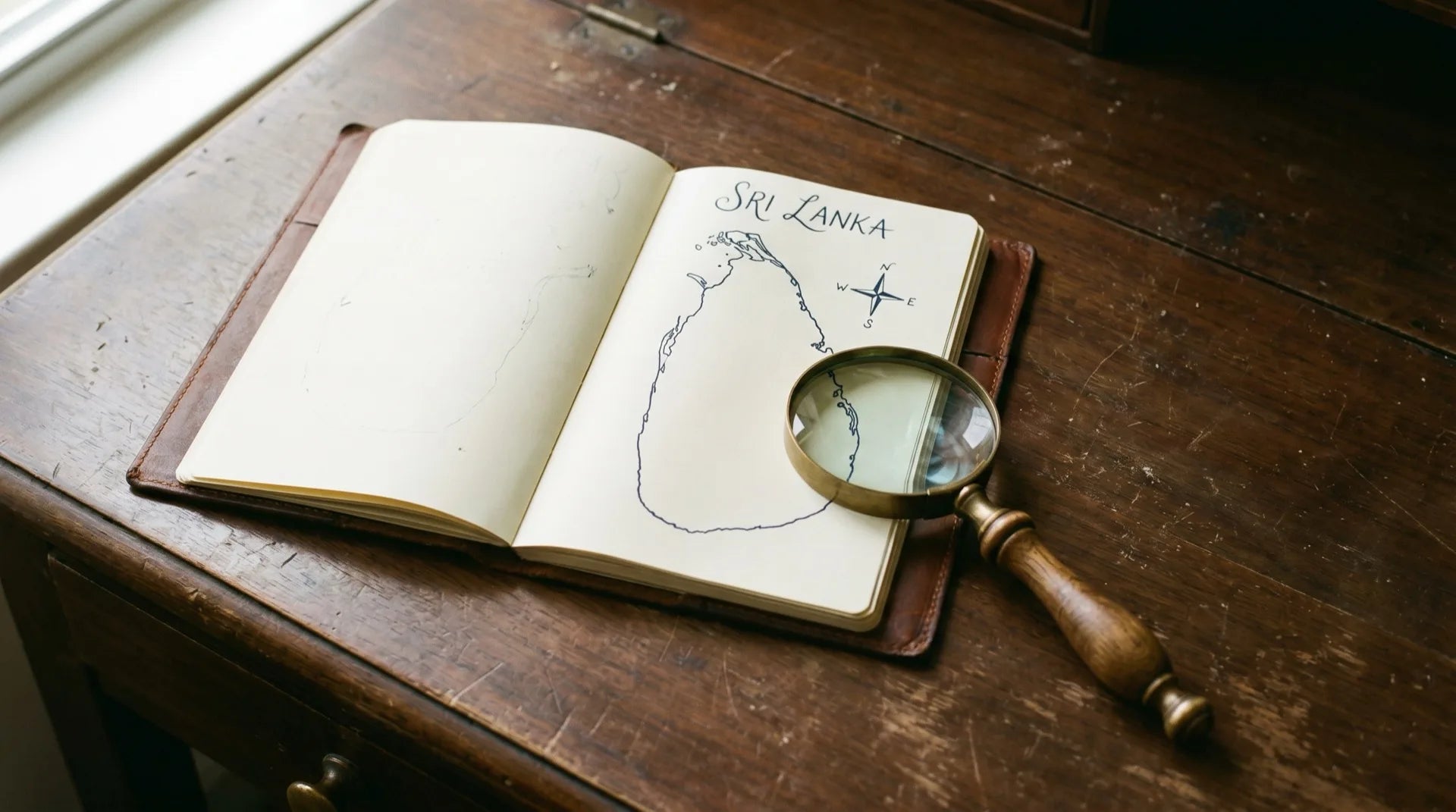
In Sri Lanka too, where MrCOLOMBO sources its organic spices directly from smallholder farmers, correct storage between harvest and export is the highest priority. On the cinnamon plantations in the Galle region, the freshly peeled bark strips are first stacked and fermented for 24 hours, then dried in the shade for three to five days - never in direct sunlight, which would destroy colour and essential oils (EDB Sri Lanka, 2023). The critical threshold is 65 per cent relative humidity; above that, moisture absorption and loss of aroma threaten (Department of Cinnamon Development, Sri Lanka, 2023). Anyone who has ever experienced the intense, sweet-woody scent of freshly dried Ceylon cinnamon sticks in a storage shed in Galle understands immediately why this care makes the difference between excellent and mediocre cinnamon.

How long do different spices keep?
Shelf life varies greatly depending on the form and type of spice. The figures from the German Spice Industry Association (2025), supplemented by international data from McCormick (2024) and Healthline (Hill, 2023), give a clear picture. Whole hard spices such as black pepper, cardamom, nutmeg and cinnamon sticks keep for four to five years when stored correctly. Whole seed spices such as aniseed, cloves and coriander likewise reach up to five years. Dried herbs such as oregano, thyme and rosemary keep for one to three years. Ground spices and spice blends should be used within six to twelve months.
| Spice form | Shelf life | Examples |
|---|---|---|
| Whole spices | 3-5 years | Peppercorns, cinnamon sticks, cloves, cardamom |
| Dried herbs | 1-3 years | Oregano, thyme, rosemary, basil |
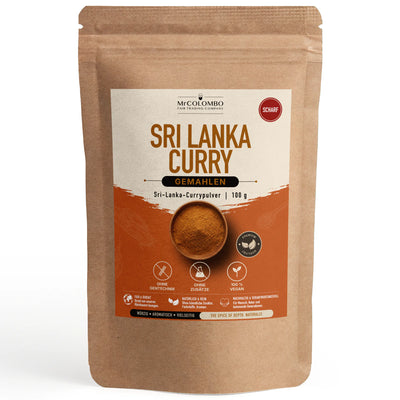
| Ground spices | 6-12 months | Turmeric, paprika, cumin, cinnamon |
| Spice blends | 6-12 months | Curry, garam masala, ras el hanout |
A common misunderstanding concerns the best-before date (BBD). The Federal Ministry of Food and Agriculture (BMEL, 2026) makes it clear: the best-before date is not an expiry date. It merely indicates until when the manufacturer guarantees taste, smell and colour under correct storage. Spices can often be used well beyond the best-before date - they do not become harmful to health, but gradually lose their aroma. Piperine in black pepper, for example, shows remarkable stability: according to Siripongvutikorn et al. (2005), the loss of pungency after six months of storage at room temperature is only 6.8 to 11.9 per cent. Our article on black pepper and its quality explains more about the quality characteristics of pepper.
How can you tell whether spices are still fresh?
The most reliable test of a spice's freshness is the smell test: rub a small amount between your fingers and smell it. Fresh spices immediately release an intense, characteristic aroma. If the spice smells flat, musty or of almost nothing, it has lost most of its essential oils. Besides the smell, the colour also provides clues. Turmeric should be a bright orange-yellow - pale, dull powder points to curcumin degradation through light exposure (Zamuz et al., 2021). Paprika powder changes from a strong red to a brownish tone once its carotenoids have oxidised.
Clumping and hardening are further warning signs - they indicate that moisture has got into the container. With unpackaged spices, microbiological contamination is also an issue: according to Faraj et al. (2021), unpackaged spices show the highest microbial counts, whereas professionally packaged imported spices with a food safety management system show the lowest contamination. The WHO/FAO (2022) documents salmonella contamination rates of 0.6 to 14 per cent depending on the region of origin and type of spice. Salmonella can survive in pepper for over a year at low water activity (aw 0.5). Another practical tip: label every container with the date of purchase to keep track of shelf life.
Important
If spices show visible mould, unusual discolouration or a rancid smell, they should be discarded immediately. Incorrectly stored spices can contain mycotoxins - which is why EU Regulation 2023/915 sets strict limits for aflatoxins (max. 5 µg/kg B1). When in doubt: better to replace than to risk it.

What are the most important rules for storing spices?
Storing spices properly requires a basic understanding of the chemical and physical processes behind aroma loss. These four principles reliably protect your spices:
- Store in the dark: UV light destroys curcumin and carotenoids - use dark containers or closed cupboards.
- Keep cool: Temperature below 20 °C, at least two metres away from the cooker.
- Keep dry: Humidity below 60 per cent, never reach into the jar with damp fingers.
- Seal airtight: Glass or stainless steel with tight-fitting closures limit aroma loss to just 5 per cent.
Whole spices keep three to five times longer than ground ones and can be freshly ground as needed. And with the simple smell test between your fingers, you can tell at any time whether a spice still has its full strength.
If you would like to delve even deeper into the world of spice quality, our article on the difference between Ceylon cinnamon and cassia cinnamon offers further fascinating insights into the quality characteristics of individual spices.