



The hidden truth behind your pepper shaker
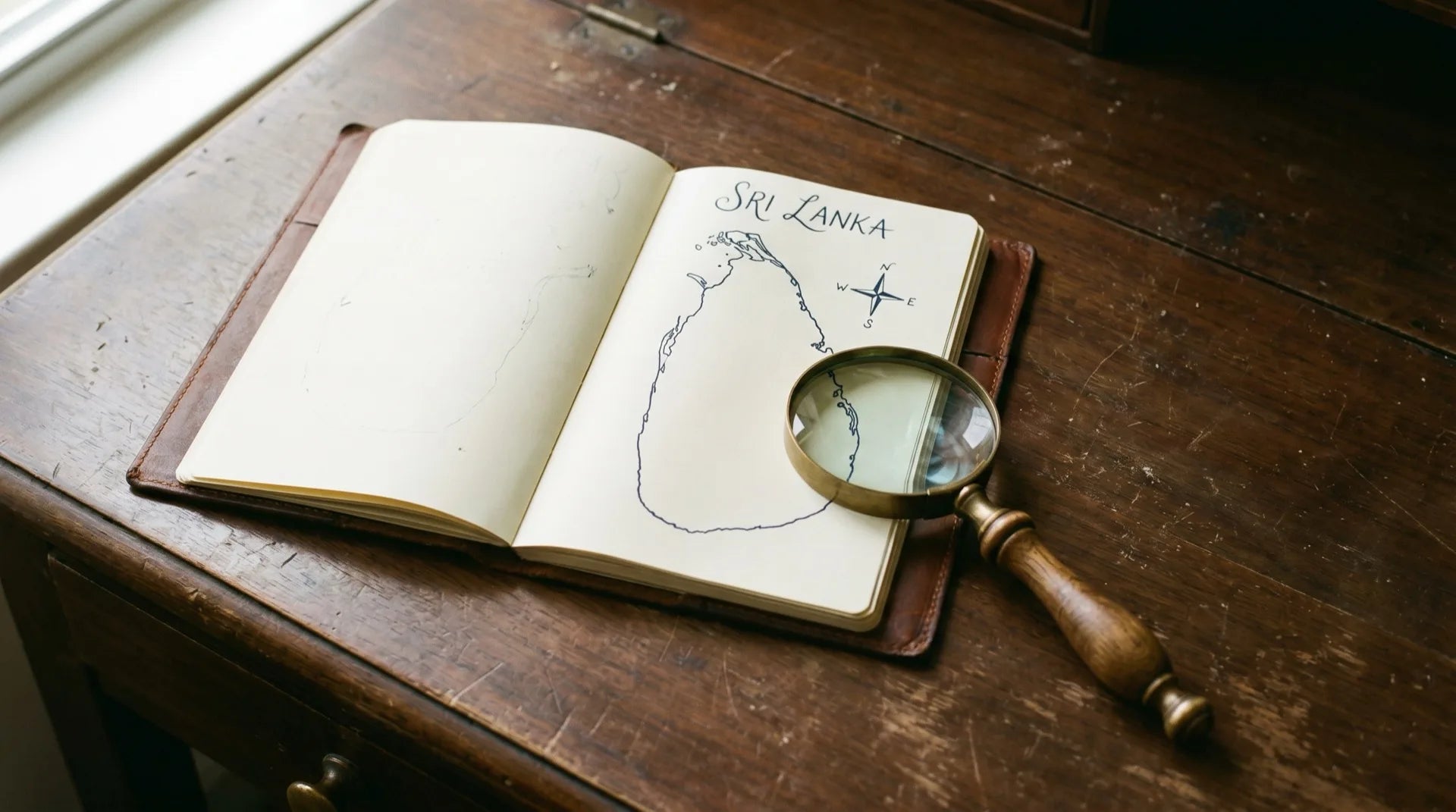
My grandmother would have said: "A good pepper needs time, not shortcuts." When she cooked, she would take the little wooden box with the black corns and crush them between her fingers. The scent that rose up was like a journey to faraway lands. Today I reach for Sri Lanka pepper myself and finally understand what she meant. Between what sits on many supermarket shelves and what grows on the small farms of Sri Lanka lie not just thousands of kilometres, but whole worlds of flavour. It is the difference between a fleeting sneeze and a deep breath full of aromas. Between industrial goods and real Sri Lanka pepper lies a story that can change your kitchen forever.
The hidden journey of pepper
Not all pepper is the same. This simple realisation only hits you when you taste a real Sri Lanka pepper for the first time. The little black spheres have a journey behind them that is as old as trade between cultures itself. Even the ancient Romans paid in gold for the "black gold" from the East.
Hand-picked vs. machine-harvested
In Sri Lanka, pepper's journey begins with hands, not machines. Each pepper berry is harvested individually when it has reached exactly the right degree of ripeness. Not too early, not too late. The pickers know their plants, which climb up trees like lianas, and know exactly when the perfect moment has come.
"Our farmers harvest the peppercorns when they turn from green to yellow," explains a pepper farmer from the hills of Matale. "That is the moment when they have developed their full aroma."
In industrial production, by contrast, whole pepper vines are harvested by machine, regardless of the ripeness of the individual berries. What follows is a technical process designed to standardise colour and shelf life. The result? A standardised product without character.
The whole black pepper from Sri Lanka instead goes through a traditional drying and maturing process. The peppercorns are dried in the sun until they develop their characteristic black colour and their complex aroma. No chemicals, just sun, time and knowledge passed down over generations.
What your tongue really recognises
Have you ever tasted a pepper and been disappointed? Perhaps there was only that flat heat that burns briefly on the tongue and then disappears? That is typical of industrial pepper. Your taste buds recognise the difference immediately, even if you may not be able to put it into words.
The flavour explosion of real peppercorns
Sri Lanka pepper is like a well-composed piece of music. It begins with a fresh, almost lemony note, then develops a warm, woody depth and ends with a complex heat that does not just burn but fills the palate with aromas. This complexity comes from a multitude of natural aromatic compounds contained in high-quality peppercorns.
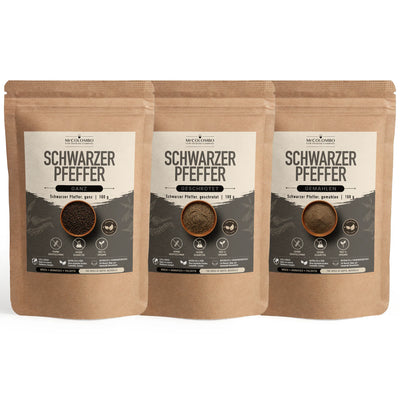
The cracked black pepper releases these aromas particularly intensely, because the freshly broken surface gives off more essential oils. Try crushing your pepper yourself in a mortar or grinding it fresh in a mill, and you will never want to go back to ready-ground pepper.
A simple test: take a peppercorn and crush it between your fingers. Does it smell merely hot, or do you discover notes of citrus, wood, perhaps even flowers? Real Sri Lanka pepper tells you a whole story with its scent.
Many people perceive noticeably more nuances in high-quality pepper. With industrially produced pepper, there are often only two or three. The difference lies not only in the variety, but above all in the cultivation method, the harvest and the gentle processing.
The true price of quality
"Why is good pepper more expensive?", a friend asked me recently. The answer is simple: because behind every corn stand real people, not machines. Because quality takes time. And because a fair price means the farmers can make a living from their work.
Why cheap pepper is expensive for our planet
Industrial pepper production follows the same logic as many other mass-produced goods: maximum yield at minimum cost. That means monocultures, chemical fertilisers and pesticides. The soil becomes impoverished, biodiversity dwindles, and in the end a depleted landscape is left behind.
In Sri Lanka, by contrast, pepper often grows in traditional mixed cultures. The pepper vines climb up trees that provide shade and at the same time bear other fruits. This system mimics the natural rainforest and maintains soil fertility without artificial additives.
"A living soil brings forth aromatic plants.", says a farmer from the Kandy region. "And strong plants bring us aromatic pepper."
The black pepper powder from such sustainable cultivation methods may seem more expensive at first glance. But the true price of cheap industrial pepper is not paid at the till, but by the environment and the people in the growing regions.
Long years of experience show that diverse cultivation systems are more resilient. They store more carbon, need less water and provide habitat for numerous animal and plant species.
The art of conscious seasoning
Once you have tasted the difference, you will understand why chefs around the world swear by high-quality pepper. It is not about luxury, but about respect for food and for the people who grow it.
A good Sri Lanka pepper can turn a simple dish into something special. Try freshly ground pepper over strawberries or vanilla ice cream - you will be surprised how well this combination works. Or add a pinch of whole black pepper to your coffee grinder before you grind coffee, for a subtle, spicy aroma.
Using high-quality pepper also means you need less of it. The intensity and complexity of the flavour is so much greater that a small amount is enough to transform your dish.
The soul of pepper
A spice is only as good as its origin. Sri Lanka pepper carries the sun, the soil and the hands of its homeland within it. It tells of morning mist over green hills, of the red earth that nourishes it, and of the people who grow it with care.
Industrial goods, on the other hand, are anonymous. They have no story, no soul. They are a product, not a food in the true sense of the word.
Your food deserves this story - not the anonymous industrial goods from the supermarket shelf. Every time you season, you are choosing a way of doing business, a vision of how our food should be produced.
Taste the difference for yourself. You will taste the difference, and my grandmother would have nodded proudly. She already knew back then what many of us are only now rediscovering: that good food takes time, care and respect. That true flavour does not come from factories, but from the living connection between people and nature.
And the next time you season your food, remember: in every corn of Sri Lanka pepper there is a whole world of flavour. A world that is worth discovering.