




You are standing in front of the spice shelf in the organic shop. One jar of turmeric proudly bears the Fairtrade seal; next to it sits a cheaper one without a seal. Three euros' difference. Is it worth it? And what exactly happens to the extra money?
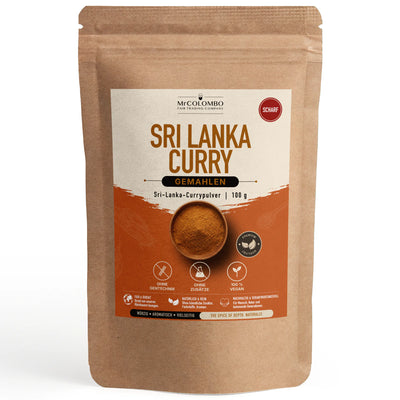
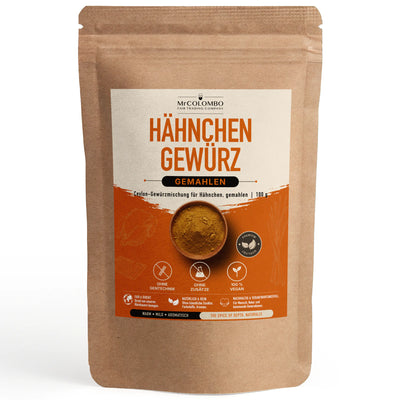
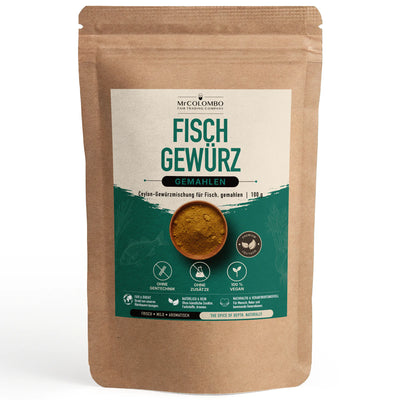
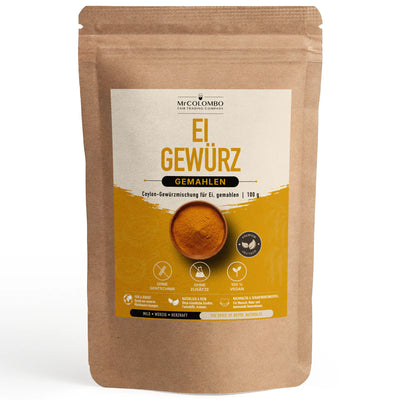
Fair trade spices are spices from certified supply chains that secure guaranteed minimum prices for smallholder farmers (around 3,500 USD per tonne for turmeric) and a social premium of 200 to 500 USD per tonne. Worldwide, less than five per cent of all spices are certified fair (Fairtrade International, 2024), while farmers in conventional trade receive only five to ten per cent of the final consumer price, according to Oxfam (2023). A comparative study by SOAS University of London shows that Fairtrade farmers achieve 14 to 18 per cent higher incomes than non-certified comparison groups (Cramer et al., 2023). We at MrCOLOMBO import our organic spices directly from smallholder farmers in the provinces of Matale, Kandy and Galle in Sri Lanka, without intermediaries and without a fair trade seal. Instead, we invest the certification costs in higher producer prices. This article shows what the seals achieve, where their limits lie and why transparency often says more than a logo.
Short answer
Are fair trade spices worth it? In many cases, yes: according to SOAS University, Fairtrade farmers achieve 14 to 18 per cent higher incomes than non-certified comparison groups (Cramer et al., 2023). In the kitchen, the extra cost for the consumer rarely amounts to more than 10 to 15 cents per dish. Those who choose direct importers with a transparent supply chain can achieve similar or better results for producers - without certification costs.
At a glance
What does fair trade mean for spices?
Fair trade stands for higher producer prices, stable purchase agreements and investment in local communities. The three core promises: a minimum price (approx. 3,500 USD/t for turmeric according to Fairtrade International, 2024), a premium (200-500 USD/t for community funds) and long-term relationships. A Cornell working paper analysing the distribution of these premiums shows that 60 to 75 per cent of the funds flow into schools, water supply and drying facilities at community level (Cornell University, 2023). For smallholder farmers exposed to seasonal price fluctuations, a guaranteed minimum price often means the difference between a harvest they can plan for and a sale below production costs.
The global spice market amounts to around 22.1 billion US dollars per year (Grand View Research, 2024). Of this, less than five per cent is certified fair. That is not only down to consumer awareness but also to structural barriers: fair trade certification costs a cooperative 2,000 to 5,000 euros a year (Fairtrade International, 2024) - money that small producer groups in particular often cannot raise. According to the FAO (2023), around 80 per cent of the spices traded worldwide come from smallholder farmers with less than two hectares of land. This is precisely why there has been a debate for years about whether seals are the right instrument or whether direct trading partnerships are more effective.
Nor is all fair trade the same. Behind the term stand various organisations with differing standards. Some guarantee fixed minimum prices, others rely on sustainability dividends, and still others combine ecological and social criteria. Anyone who shops consciously should know the difference - otherwise you end up paying more for a logo that delivers less than you thought.

Which fair trade seals exist for spices?
| Criterion | Fairtrade | Rainforest Alliance | Naturland Fair |
|---|---|---|---|
| Minimum price | Yes | No | Yes |
| Organic standard | Optional | No | Mandatory |
| Environmental focus | Medium | Very strong | Strong |
| Costs for farmers | High (2,000-5,000 EUR/year) | Medium | High |
Important
An organic seal on its own says nothing about fair trading conditions. Organic regulates cultivation methods, not working conditions or prices.
What problems does the conventional spice trade have?
A typical supply chain has four to seven stages, each taking a margin of 10 to 30 per cent (IDH, 2024). The farmer often receives only five to ten per cent of the final price. Of 6 EUR turmeric in the supermarket, perhaps 30 to 60 cents reach the producer (Oxfam, 2023). A comparative study by the University of Göttingen (2022) shows that direct relationships between importer and cooperative, with contracts running for at least three years, can achieve comparable or even higher producer shares than certified supply chains.
The problems become particularly visible with two crops: vanilla from Madagascar is the second most expensive spice plant in the world - and at the same time a documented scene of child labour and armed harvest theft (US Department of Labor, 2024). Rising world market prices have paradoxically worsened the situation, because the margins between farmer and wholesaler have widened further. Cardamom from parts of India and Guatemala struggles with similar structures: seasonal harvest workers, including minors according to the ILO, work in steep mountain regions for daily wages below the subsistence level.
Added to this is a rather underestimated factor: price volatility. Spice prices fluctuate by up to 200 per cent over the course of a year (World Spice Organization, 2024). A farmer without a purchase guarantee does not know in spring whether their harvest will still be economically viable in autumn. This uncertainty leads to distress sales, debts with intermediaries and, in the next generation, frequently to the farm being given up - a spiral that is hard to break without stable contracts.
Those who get fair prices can deliver better quality. Simple logic.
MrCOLOMBO experience report
Further problems: climate change is shifting harvest times, child labour is documented in some regions (ILO/UNICEF, 2024), and price pressure leads to spice adulteration. Read more about organic spices and their advantages in our article.

What distinguishes direct trade from fair trade?
Direct trade means no intermediaries: prices are negotiated directly between importer and cooperative. Without intermediaries, potentially 30 to 50 per cent stays with the farmer instead of 5 to 10 per cent (University of Göttingen, 2022). However, the term is not protected and there is no external control. Since 2024, the EU directive on supply chain due diligence (CSDDD) has also obliged large companies to identify human rights and environmental risks in their supply chains - a standard that structurally favours direct importers with a traceable supply chain.
Our approach at MrCOLOMBO
We import directly from smallholder farmers in Sri Lanka - without fair trade certification. We would rather invest the certification costs of 2,000-5,000 EUR/year in higher producer prices. On our page about quality from Sri Lanka, we show where our spices come from.
Criticism of fair trade seals: heavy bureaucracy, certification costs exclude the poorest producers (SOAS University, 2023), and the distribution of premiums depends on the cooperative. Fair trade has not failed - but no system is perfect.
What the EU supply chain due diligence directive (CSDDD, 2024) specifically requires: companies with 1,000 or more employees and 450 million euros in turnover must identify, document and - where necessary - remedy human rights and environmental risks across their entire supply chain. Direct importers with short, well-documented supply chains are structurally at an advantage: those who know their cooperatives personally can provide this evidence without needing external certification. For consumers this means: a transparent supply chain with proof of origin meets the requirements of this directive - and thus signals a level of protection that goes beyond the mere seal.
What does fair trade cost in comparison?
| Category | Price/kg | Share for the farmer |
|---|---|---|
| Conventional | 15-25 EUR | approx. 1.50-3.00 EUR |
| Fair trade certified | 25-40 EUR | approx. 4.00-6.00 EUR |
| Direct import, premium | 30-50 EUR | approx. 5.00-10.00 EUR |
The extra cost of fair trade does not end up in a corporation's margin - it flows back into the supply chain. In concrete terms, that means higher producer prices, investment in schools and health centres through the Fairtrade premium, organic conversion costs, smaller batches with greater logistical effort and more thorough quality control. A premium batch of turmeric, for example, is selectively harvested, slowly dried and tested for curcumin content before it is dispatched. This effort costs time and staff - and that is precisely the economic lever behind the price difference on the shelf.
Anyone who looks at the price comparison on a daily-cost basis sees things more realistically: a meal with one tablespoon of high-quality turmeric (about 6 grams) costs, purely arithmetically, between 18 and 30 cents. The extra cost compared with discount goods rarely amounts to more than 10 to 15 cents per dish. Measured against the entire household budget, that is a negligible item - with a concrete effect at the other end of the supply chain.
How do smallholder farmers in Sri Lanka benefit?
Sri Lanka supplies around 90 per cent of the Ceylon cinnamon traded worldwide (IFC, 2024). Around 300,000 smallholder farmers work in the spice sector; most farms are small, between 0.5 and 2 hectares (Sri Lanka EDB, 2024). The main growing areas are Matale and Kandy for turmeric and pepper, and Galle and the Southern Province for Ceylon cinnamon. Stable purchase contracts make it possible to invest in better seedlings and drying facilities. Sri Lanka's spice exports grew by more than 62 per cent in June 2024 alone compared with the same month of the previous year (Sri Lanka EDB, 2024), reaching a total volume of around 400 million US dollars.
We see this directly with our partners: families we have worked with for years have measurably improved their spice quality - because the investment pays off.
One example: our Ceylon cinnamon comes from the Southern Province, where cinnamon peelers have passed on their craft for generations. Through direct trade without intermediaries, the families receive a price that is three to four times the world market price. In return, they supply cinnamon with a coumarin content below 0.02 % - well below the EU limit. If you would like to learn more about the variety of spices in Sri Lanka, you will find a comprehensive overview in our article.
The difference shows with turmeric too: conventional goods are often grown on monoculture plantations and pass through several traders. Our farming families in the Central Province rely on mixed cultivation with pepper and cardamom, which protects the soil and promotes biodiversity. You can taste the difference - and it can be measured in the curcumin content. In our spice collection from Sri Lanka, this philosophy is in every jar.
When fair trade and quality depend on each other
Fair pay and quality are not opposing goals - they depend on each other. A farmer who receives a stable price for their turmeric that is well above the world market can afford to dry for longer, sort more carefully and invest in good packaging. A farmer under price pressure takes the next harvest before it is ripe, cuts corners on drying and sells mixed qualities together.
That sounds banal, but it has measurable consequences. Turmeric that was harvested too early has a lower curcumin content. Incorrectly dried turmeric develops mould spores that remain detectable in the product even after grinding. The quality features of a spice are directly linked to the growing and trading conditions.
What you as a consumer can really influence
Every purchase is a small decision. Anyone who buys spices at the discounter and chooses the cheapest price sends a signal to the market: price beats quality and fairness. Anyone who instead buys from a transparent supplier that discloses its supply chain and pays fair prices sends the opposite signal.
That does not mean you always have to buy the most expensive option. It means you should take a closer look: where does the spice come from? Who grew it? What is on the label - and what is missing? If the indication of origin is missing, that is a warning sign. If there is no information at all about the importer, likewise. Take note of the checklist further down in the article - it helps you ask the right questions. How organic spices contribute to the question of quality is explained in our article about organic spices and their advantages.
And the next time you buy turmeric: smell it. A good organic turmeric from fair direct trade smells intense and earthy, almost floral. Cheap commercial goods often smell of very little - that is no coincidence, but a direct result of the supply chain.
Shopping checklist
Seal present? Minimum standard secured.
Country and region of origin? Traceability possible.
Importer transparent? Basis of trust established.
Price plausible? No dumping prices for organic/fair.
Supply chain documented? Gold standard of transparency.

Climate change and supply chains: a growing challenge
Fair trading conditions are becoming even more important because of climate change. In Sri Lanka, harvest times have shifted over the last two decades. Irregular monsoon rains, more frequent dry spells and changing temperature patterns directly affect turmeric cultivation. Farmers who have invested in stable systems and good seed stock cope better with these changes than those who have been put under maximum price pressure. Fair trade is thus also a kind of investment in climate resilience.
Another factor is soil quality. Turmeric needs deep, well-drained soils rich in humus. Farmers under price pressure resort to fast-growing varieties and intensive use of fertiliser, and avoid fallow periods. That exhausts the soil within a few years. Those who instead think long-term with their farming partners invest in crop rotation, compost and mixed cultivation - methods that preserve the soil for future generations. Everything else about organic spices and sustainable growing methods can be found in our separate article on organic spices.
Certification or personal relationship: which counts for more
The question of whether a certificate or a personal relationship carries more weight cannot be answered in general terms. Certificates create trust without prior knowledge - they are indispensable for supermarket shelves. Personal relationships go deeper, but cannot be verified by consumers without a direct connection to the producer.
What you can demand as a consumer: transparency. Who imports the spice? From exactly where? At what price is the farmer paid? Small direct importers can often answer these questions more concretely than big brands behind a seal. Ideally, you combine both: a certified product from a transparent supplier.
Buying fair trade spices: seal or transparency?
Whether certified or direct trade: what matters is that you as a consumer take a closer look. Who grows your spice? Under what conditions? With us you will find the answers - from the origin of our spices to quality control.