




G ermany imports around 80,000 tonnes of spices every year - yet the journey from the field to the kitchen is often longer and riskier than most consumers realise. According to the European Rapid Alert System RASFF, there were a total of 277 notifications relating to herbs and spices in 2024 alone, 47 per cent of them due to pesticide residues (CBI/RASFF, 2024). Anyone who understands how spices actually reach Germany can make more informed purchasing decisions - and see why importing directly from the producer makes a fundamental difference to quality, safety and freshness.
The decisive difference lies in the length of the supply chain: conventional spices pass through up to six intermediate stages before they reach the supermarket shelf. With direct import - as practised by MrCOLOMBO from Sri Lanka - there are only two stages: the farm and the end customer. That means shorter storage times, seamless traceability and a higher content of essential oils. Current EU data, scientific studies and our own import experience show why this distinction matters for quality, safety and flavour.
At a glance
How do spices actually get to Germany?
Germany is one of the largest spice importers in Europe. According to the German spice industry association Fachverband der Gewürzindustrie, domestic consumption in 2022 stood at 94,052 tonnes of unprocessed spices, with an import value of around 491 million euros (Fachverband der Gewürzindustrie, 2023). A large proportion of these goods comes from tropical growing countries such as India, Vietnam, Indonesia and Sri Lanka. Pepper alone accounts for 16.1 per cent of the total import weight. In the conventional supply chain, the journey from the growing field to the German spice shelf typically comprises six stages: farmer, local collectors, one to three national intermediaries, exporter, European bulk importer and finally the retailer (La Plantation, 2024).
Along the conventional trade route, spices are re-stored, re-packed and often mixed with other batches at every intermediate stage. The result: spices on the supermarket shelf are frequently one to five years old, as the French direct importer La Plantation has documented (La Plantation, 2024). Every additional intermediate stage increases the risk of contamination, reduces traceability and lowers the share of the value added that remains with the producer. Europe imports a total of 676,000 tonnes of spices a year - 71 per cent of them from developing countries (CBI, 2024). The question is not whether, but how these spices are controlled and transported.
What distinguishes direct import from wholesale?
The wholesale route works through a network of fragmented players. Hundreds of small commission agents in the growing countries buy raw goods from farmers, often without any documented quality inspection. A study in Operations Management Research (2023) identifies the core risks of this structure: unfair wages, pesticide misuse, opaque networks of intermediaries and the loss of all batch traceability from the second trading stage onwards. The goods are handled several times over before they reach a European bulk importer - who in turn sells them on to packers and private labels.
With direct import, the typical four to five intermediate stages of the conventional supply chain are eliminated. The model reduces the chain to two parties: producer and importer. For the consumer, that means measurable differences. Firstly, freshness: directly imported spices typically reach the customer within a few weeks of the harvest, not after years in storage. Secondly, traceability: every batch can be assigned to a specific farm or cooperative. Thirdly, price fairness: Fairtrade International documents that direct trade companies pay farmers up to six times the commodity price (Fairtrade International, 2024). In conventional trade, according to industry estimates, the farmer often receives less than five per cent of the final retail price.
Why are supermarket spices so often contaminated?
The contamination of conventional spices is not a marginal problem but a systematically documented one. A comprehensive analysis of 3,741 RASFF notifications on herbs and spices between 2000 and 2022 shows that this product group accounts for 5.3 per cent of all EU rapid alerts - with pesticides, ethylene oxide and salmonella as the main causes (Eissa et al., 2024). India is the most frequently reported country of origin. In 2024 alone, RASFF recorded 277 notifications, with the ethylene oxide scandal - involving up to 186 mg/kg in sesame, 3,700 times the EU limit - regarded as the largest food recall in EU history (PMC, 2022).
Heavy metals and mycotoxins as underestimated risks
Alongside pesticides, heavy metals are a growing problem. A systematic review of 50 international studies found lead levels of up to 41.2 mg/kg and cadmium levels of up to 8.07 mg/kg in spice samples (Food and Environmental Pollution, 2024). A further study in Food Control shows that 20 per cent of the spice samples examined exceed the EU lead limit of 0.3 mg/kg - and as many as 31 per cent in the case of unpackaged goods (Food Control, 2024). By contrast, businesses with a certified food safety management system (FSMS) show markedly lower contamination rates. Mycotoxins also represent a considerable risk: in 140 spice samples examined, aflatoxin B1 was detected at up to 39.12 µg/kg, and 96.3 per cent of all RASFF notifications on black pepper concern aflatoxins (MDPI Microorganisms, 2023).
Important
Contaminants in spices can reach large numbers of consumers through their use in downstream products such as ready meals, sauces or spice blends, as the BfR (German Federal Institute for Risk Assessment) documented as part of the SPICED project (BfR, 2017). If you have specific health concerns, contact your doctor or the responsible food monitoring authority.
How does EU import control for spices work?
With Regulation (EU) 2023/915, the European Union has for the first time set uniform contaminant limits specifically for spices. Since May 2023, binding maximum levels for lead have applied: 2.0 mg/kg for bark spices such as cinnamon, 0.6 mg/kg for fruit spices and 0.9 mg/kg for seed spices. For ochratoxin A in Capsicum spices the limit is 20 µg/kg, for pyrrolizidine alkaloids in caraway 400 µg/kg (EUR-Lex, 2023). The EU General Food Law Regulation (EC) No 178/2002 stipulates that the importer counts as the ‘first placer on the market’ and bears full liability for product safety.
In practice, this means tighter border controls for high-risk goods. Implementing Regulation (EU) 2019/1793 prescribes increased inspection rates for certain combinations of country of origin and spice: cumin from India has been subject to a 30 per cent inspection rate since January 2025, and nutmeg from Indonesia to a 50 per cent rate for aflatoxins since July 2024 (Zoll Deutschland, 2025). Every high-risk consignment requires a CHED-D (Common Health Entry Document). The importer bears all the costs of the border control - a financial incentive to focus on quality in the country of origin from the outset. The Federal Office of Consumer Protection and Food Safety (BVL) confirms that herbs and spices account for around 10 per cent of all RASFF notifications with Germany as the receiving country (BVL, 2024).
Practical tip
When buying spices, look for suppliers who disclose their supply chain and can present their own laboratory analyses. Certifications such as FSSC 22000 or organic seals are a good first indicator - but they do not replace transparency about origin and batch traceability.
What advantages does direct import offer for quality and freshness?
The central quality advantage of direct import can be condensed into three factors: freshness, control and transparency. According to industry research, spices in conventional trade are frequently one to five years old by the time they reach the consumer (La Plantation, 2024). During this time, essential oils and bioactive compounds measurably degrade. With direct import, this period is shortened to a few weeks. The importer knows the exact harvest date, the processing method and the storage conditions of every single batch. The study in Food Control (2024) shows that FSMS-certified businesses - the kind that direct importers prefer to choose as partners - have significantly lower heavy metal contamination rates than non-certified suppliers.
Spice adulteration is a growing problem in global supply chains. For 2024 alone, the European Commission and the Joint Research Centre document a total of 28 confirmed cases of spice fraud involving synthetic dyes such as Sudan red, ground wood shavings or wheat bran as bulking agents (MDPI Foods/JRC, 2023). DNA-based authenticity tests are considered the gold standard - but they can only be used meaningfully where batch traceability is seamless. Precisely this traceability is the structural advantage of direct import: those who know their producers personally do not need to have anonymous mass-market goods tested for authenticity. Stiftung Warentest confirms this trend: of 21 oregano products tested, only one in three received the rating ‘good’ - five of the seven best were organic products with transparent origin (Stiftung Warentest, 2020).
To be honest
Direct import also has its limits: the product range is smaller than that of a wholesaler, because a single importer can only work with a limited number of producers. Delivery times are longer - fresh harvests from Sri Lanka take four to six weeks to reach Germany. And prices are above supermarket level, because fair producer prices, organic certification and our own laboratory analyses come at a cost. If you are looking for the cheapest spice, you are better served by wholesale. If you prioritise transparency, freshness and traceability, you will find them in direct import.
What does the Supply Chain Act mean for the spice trade?
Since 2023, the German Supply Chain Due Diligence Act (LkSG) has obliged companies with more than 3,000 employees - and since 2024 those with more than 1,000 employees - to comply with human rights and environmental due diligence obligations throughout their entire supply chain (BMAS, 2024). This is particularly relevant for the spice sector: the study in Operations Management Research (2023) identifies child labour, unfair wages and pesticide misuse as documented risks in fragmented spice supply chains with hundreds of small commission agents.
For the spice trade, the LkSG has concrete consequences: direct importers with direct farm contacts and their own quality management meet the requirements structurally more easily than wholesalers with multi-tier, non-transparent procurement routes. Those who know their farmers personally can check working conditions directly, demonstrate fair prices and monitor environmental standards on site. For restaurateurs and retailers who themselves fall, or will fall, under the LkSG reporting obligation, choosing a transparent supplier is therefore not only an ethical but increasingly a legal decision. The CBI study (2024) confirms that FSSC 22000 and GFSI certification are increasingly becoming a prerequisite for importing into the European market.
Why does MrCOLOMBO import directly from Sri Lanka?
Sri Lanka is not just any spice country - it is the country of origin of true Ceylon cinnamon and, according to World Bank data, holds 85 per cent of the global market share for Cinnamomum verum (World Bank WITS/EDB Sri Lanka, 2023). In 2024 the island exported spices worth 461.85 million US dollars, an increase of 16.11 per cent on the previous year. Particularly remarkable: pepper exports grew by 90.14 per cent (Sri Lanka EDB, 2024). Sri Lanka is the only country in the world to offer certified protection of geographical origin (GI) for five spices: Ceylon Cinnamon, Ceylon Pepper, Ceylon Cloves, Ceylon Nutmeg and Ceylon Cardamom.
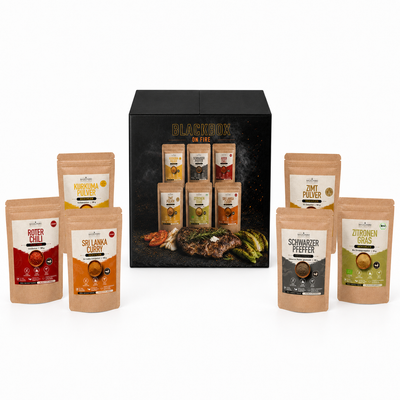
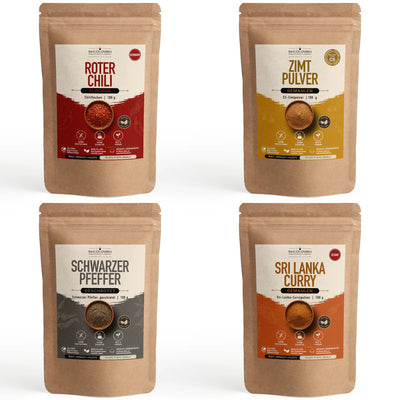
We know every stage of our supply chain personally - from the turmeric fields of the Central Province and the cinnamon peelers in the Galle region to the pepper processing in Matale. Anyone holding freshly peeled Ceylon cinnamon in their hand smells the difference immediately: a warm, multi-layered aroma with sweet honey notes that industrially stored cassia cinnamon simply cannot offer. The cinnamon bark is peeled by hand, rolled in thin layers and gently dried at low temperatures - a process that protects the cinnamaldehyde content while keeping the coumarin content minimal. This direct contact is not a marketing promise but operational reality: we visit our partner farms regularly, check cultivation methods on site and make sure that the organic certification of our cooperatives exists not only on paper. The difference between Ceylon cinnamon and cassia cinnamon is also evident in the contaminant load: according to the BfR, our Ceylon cinnamon contains only 0.004 per cent coumarin - around 250 times less than commercially available cassia cinnamon (BfR, 2012). If you would like to learn more about the variety of spices in Sri Lanka, you will find a comprehensive overview in the linked article.
Direct import is not a luxury - it is the better supply chain
The data is unambiguous: conventional spice supply chains with six intermediate stages systematically produce higher contaminant loads, less freshness and non-transparent origins. The 277 RASFF notifications in 2024 alone - almost half of them due to pesticides - are not outliers but the result of an industry structure optimised for volume rather than traceability. Direct import solves this problem not through stricter regulation but through shorter routes: fewer stages, fewer contamination risks, more transparency.
For consumers, this means that choosing the right spice supplier is one of the most effective decisions for quality and safety in your own kitchen. If you want to know how the quality of specific spices differs in detail, you will find further information in our comparison on the quality differences in black pepper.