




The colours of life on your plate
My grandmother would have said: "A colourless meal is like a day without sun." In her little kitchen, where the scent of spices filled the air, colouring food was not a science but an art, passed down from generation to generation. Between the sun-drenched fields of Sri Lanka and your kitchen there is really only a single step. The natural food colour our ancestors used does not come from sterile laboratories, but straight from the fertile soil.
At a time when artificial dyes can be found in so many products, more and more people are discovering the beauty of natural alternatives. These colours tell stories of traditions, of hands that tend plants, and of knowledge preserved over centuries.
The forgotten art of colour
Before food chemistry existed, colouring food was a matter of nature. Every culture developed its own techniques to make dishes not only tastier but also more visually appealing. In Sri Lanka, where the sun shines more intensely and the vegetation grows more lushly, we have a particularly rich tradition of natural colouring.
Using natural food colours is not a new invention, but a return to what our grandparents took for granted. They knew that the colour of food does not only delight the eye, but also says something about its quality and its origin.
What my grandmother knew about turmeric
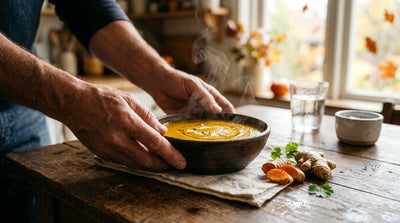
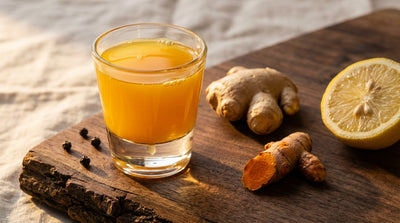
My grandmother would have said: "Turmeric is gold that grows out of the earth." She used it not only as a spice, but also as a colouring for festive rice dishes and special occasions. The bright yellow root, which has been cultivated in Sri Lanka for thousands of years, not only colours intensely but also brings with it an earthy, slightly bitter flavour.
What my grandmother knew intuitively and what is well researched today: turmeric contains curcumin, a pigment that is not only responsible for the golden-yellow colour, but is also traditionally valued in many cultures.
She taught me that the colour of a dish is part of its identity. A yellow rice for the New Year festival was not simply a coloured dish, but a symbol of prosperity and good fortune. Natural food colour carried a cultural meaning that went far beyond mere aesthetics.
From plant to plate
The journey of a natural food colour
The path of a natural food colour begins in the field. Take, for example, beetroot, whose vivid purple has been used for colouring for centuries. In Sri Lanka and many other parts of the world it is carefully grown, harvested and processed.
The farmers who cultivate these plants often follow traditional methods that manage without chemical fertilisers and pesticides. After the harvest, the plant parts are dried, ground or extracted to concentrate their colour pigments.
What arrives in your kitchen as a powder or extract has a long journey behind it. It carries the energy of the sun, the minerals of the soil and the care of the people who grew it. Every natural food colour has its own story and its own character:
Beetroot: Its deep red can range from pink to an intense purple and is perfect for desserts, doughs and even as a natural lipstick.
Spirulina: This blue-green alga gives you a breathtaking turquoise to blue, ideal for smoothies and modern dessert creations.
Hibiscus: Its ruby-red colour lends teas, desserts and glazes a touch of elegance.
Activated charcoal: For dramatic black in breads, ice cream or Halloween creations.
Your kitchen as a colour palette
Imagine your kitchen as a studio in which you create not only flavour but colour too. With natural food colours you can conjure up dishes that not only taste good but are a true feast for the eyes.
The beauty of natural colours is their unpredictability. Unlike synthetic dyes, which always look the same, natural pigments react to acid, heat and other ingredients. A dough made with beetroot powder can vary from pale pink to deep purple depending on the other ingredients.
For a strong violet, South-East Asian cuisine traditionally reaches for ube, a purple yam, which colours desserts and baked goods without any artificial additives.
Simple techniques for vibrant results
You do not need to be a kitchen artist to experiment with natural colours. Here are a few simple techniques you can try:
Infusions: Steep colour-intensive ingredients such as hibiscus flowers or beetroot in hot water or milk to obtain a coloured liquid that you can use for doughs, creams or glazes.
Working powders in directly: Beetroot powder, turmeric or matcha can be stirred straight into doughs, sauces or dressings. Start with small amounts and increase slowly, as these powders bring flavour with them too.
Making concentrates: Simmer down colour-intensive fruits or vegetables until a concentrated colour forms. You can then dose this drop by drop.
Layering technique: Work with different natural colours to create layers in desserts or drinks. After all, we eat with our eyes too!
A special tip from Sri Lanka: for an intense red, as traditionally used for festive sweets, combine beetroot with a dash of lemon juice. The acid enhances the brilliance of the colour and ensures a vibrant result.
Natural vs. artificial colours
In a world full of artificial additives, the question arises: why should you reach for natural food colours? The most obvious reason is purity. Natural colours bring no synthetic chemicals with them, only what nature has created.
While artificial dyes are often labelled with numbers such as E120 or E133, natural colours have names like turmeric, beetroot or spirulina. They are foods, not laboratory products.
Another advantage: natural food colours often bring subtle flavour nuances with them that can enrich your dish. Turmeric lends a slightly earthy note, beetroot a delicate sweetness, and matcha a hint of green tea.
Colours for every occasion
Natural food colours can be used in many ways. Here are a few ideas for different occasions:
For children's birthdays: Colourful cupcakes with beetroot red, turmeric yellow and spirulina blue delight children's eyes, without questionable additives.
For festive occasions: A festive rice coloured with saffron or an aperitif tinted with hibiscus lend your celebration meal a touch of elegance.
For everyday life: Give your morning smoothie a vibrant colour with a teaspoon of beetroot powder and start the day full of colour.
For special diets: If you have to or want to avoid certain additives, natural colours are the perfect alternative.
Nature's cycle in your kitchen
My grandmother would have said: "What comes from the earth gives back to the earth." Natural food colours are part of a larger cycle. The plants grow in the soil, take in sunlight and nutrients, and we use their colours to make our lives more colourful.
When you choose natural colours, you support not only independent retailers but also sustainable agriculture. Many of the plants from which natural colours are obtained are grown by smallholder farmers in countries like Sri Lanka. Your decision in favour of natural products supports these communities and their traditional cultivation methods.
The colours of the future
At a time when more and more people want to consume more consciously, natural food colours are experiencing a renaissance. What was once considered old-fashioned is now regarded as innovative and forward-looking.
Chefs and food manufacturers are experimenting with new techniques to improve the stability and intensity of natural colours. Science is helping to understand traditional knowledge and develop it further.
The future of food colours lies not in ever new synthetic compounds, but in rediscovering and refining what nature offers us.
From tradition to the modern kitchen
Natural food colours are more than colourful ingredients - they are part of a tradition that has outlasted generations. They connect us with our ancestors, with the earth and with the knowledge that has been passed down over centuries.
Your food deserves the vibrancy and depth that only real plant colours can give. With every coloured dish you connect with the origin, with the soil of Sri Lanka and with the knowledge of our ancestors.
Give it a try: start with a simple experiment, perhaps a rice coloured with turmeric or a cake batter tinted with beetroot powder. Let the colours inspire you and discover how they can change not only the appearance but also the character of your dishes.
My grandmother would have said: "The most beautiful colours do not come from bottles, but from the heart of nature." And as so often, she was right.