



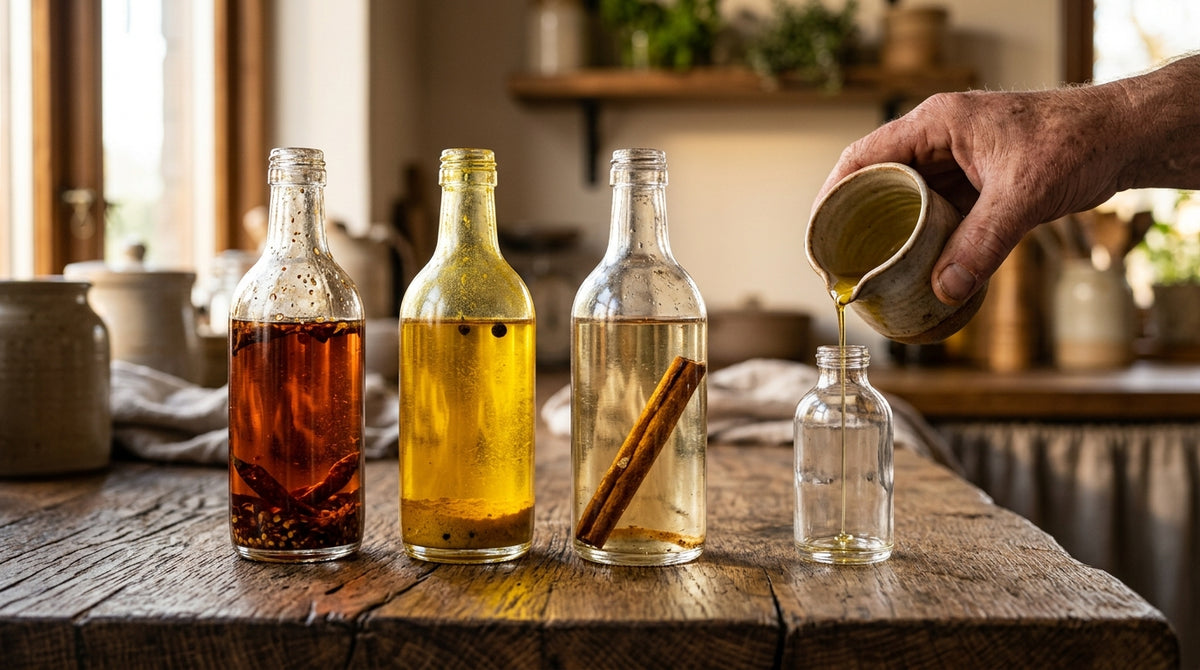
Making spiced oil yourself works safely if only dried spices are used, the oil is briefly heated to around 82 degrees Celsius and the finished blend is kept refrigerated and used up within a few days - because in the low-oxygen environment of oil the bacterium Clostridium botulinum can multiply, warns the German Federal Institute for Risk Assessment (BfR, 2016).
Anyone who knows this rule can prepare chilli oil, turmeric oil or Ceylon cinnamon oil without danger and even benefit from the chemistry of the spices: curcumin, capsaicin and piperine are fat-soluble and only release their aroma fully in oil. At MrCOLOMBO we process turmeric, chilli and Ceylon cinnamon directly from the growing region in Sri Lanka - this knowledge of raw-material quality and active-compound content feeds into the following guide.
Short answer
How do you make spiced oil safely at home? Use only dried spices, heat the oil to 82 degrees Celsius (180 degrees Fahrenheit), pour into sterile bottles, refrigerate immediately and use within a few days. Alternatively, acidify with a citric acid solution to a pH of 4.2 or below, in which case storage at room temperature is also possible (University of Georgia Cooperative Extension).
At a glance
What happens chemically when spices infuse in oil?
The three main active compounds at stake in spiced oil are all fat-soluble rather than water-soluble. Curcumin from turmeric, whose content in the dried root is 2 to 5 per cent (JECFA/Spices Board India), is strongly lipophilic - it barely dissolves in pure water but dissolves completely in oil, as Examine.com summarises in its curcumin overview. Capsaicin from chilli behaves similarly: a study in the Asian Journal of Pharmaceutical and Clinical Research (2014) showed that gingelly, olive and sunflower oil offered the highest solubility for capsaicinoids from Bhut Jolokia chilli, so the choice of oil directly influences extraction efficiency. Piperine from black pepper is also poorly water-soluble but readily fat-soluble, according to a review in Applied Sciences (2019) - bioavailability rises markedly in oil- or fat-based preparations.
This fat solubility is nothing new: in the Ayurvedic tradition, spiced oils macerate for at least two weeks in a sunny spot so that the active compounds pass fully into the oil (veda-life.de). The Indian tadka technique uses the same principle in a fast-track version - spices such as turmeric are briefly heated in hot oil or ghee to release the essential oils. It is precisely this principle that makes spiced oil more than just a carrier: it is the extraction method that makes the full aroma and the colouring of the spices accessible in the first place.
Which oil is best suited to spiced oil?
The German Nutrition Society (DGE) recommends vegetable oils such as rapeseed or olive oil as the fat base of the daily diet, with a maximum of 30 per cent of energy intake coming from fat. For spiced oil, the quality of the base oil also counts: in a test by Stiftung Warentest (2010), 7 of 19 ready-made spiced oils tested failed with a "poor" rating - polycyclic aromatic hydrocarbons (PAHs), trans fats and, in one product, 3-MCPD esters exceeding the tolerance value by 240 per cent were found. Making it yourself with a tested base oil avoids this risk. Öko-Test (2011) found up to 15 pesticide residues per product in 8 of 30 spices tested, with organic products performing considerably better - another argument for single-variety, traceable raw material.
For hot extraction, the smoke point of the oil determines the result: if the smoke limit is exceeded, bitter and potentially harmful breakdown products form. The following table, based on figures from WebstaurantStore, compares the smoke points of common base oils.
| Oil | Smoke point | Suitability for spiced oil |
|---|---|---|
| Extra virgin olive oil | 163-190 °C | For gentle cold infusion, not for strong heating |
| Refined olive oil | 199-242 °C | Good for hot extraction of chilli and turmeric |
| Virgin coconut oil | approx. 177 °C | Aromatic, medium heat tolerance |
| Refined coconut oil | approx. 232 °C | Neutral in taste, heat-stable |
How do you make chilli oil safely and aromatically at home?
Following the America's Test Kitchen method, the oil is heated to around 149 degrees Celsius until it "shimmers" - that is, begins to move slightly without smoking - and is then poured over the chilli flakes. Important for safety: only dried chilli flakes or chilli powder are used, never fresh, moist chilli pods, as residual moisture increases the risk of Clostridium botulinum (BfR, 2016). A positive side effect of the right choice of spice: a study in the journal Antioxidants (Odeh et al., 2021) showed that spice additions such as chilli and oregano markedly lowered the peroxide value of linseed oil over 180 days of storage, by up to 68.7 per cent in the case of oregano - chilli likewise had a preserving effect on the oil and at the same time showed the least bitterness among the spice additions tested.
For a Sri Lankan variation, a dried Ceylon cinnamon stick can be added to the hot oil before it is poured over the chilli flakes - the cinnamaldehyde-rich aroma compound of Ceylon cinnamon bark gives the chilli oil a warm, slightly sweet note that cassia cinnamon does not deliver in this form. After pouring, the oil is left covered at room temperature until it is lukewarm and then goes straight into the fridge. The result is a chilli oil that benefits from high-quality raw material in both aroma and shelf life.
If you want to reduce the heat, replace part of the chilli flakes with roasted chilli powder - the roasting slightly softens the pungency and brings additional roasted aromas into the finished oil without changing the basic preparation method.

How do you make Ceylon cinnamon oil and what sets it apart from cassia cinnamon oil?
For pure Ceylon cinnamon oil, one to two whole cinnamon sticks are roughly broken up and added to oil heated to around 149 degrees Celsius until they release their aroma - alternatively, following Ayurvedic tradition, the broken bark infuses cold in the oil for several weeks. According to the Sri Lanka Export Development Board, the essential oil of Ceylon cinnamon bark contains 60 to 75 per cent cinnamaldehyde, the aroma compound behind the warm, slightly sweet note. Unlike the considerably cheaper cassia cinnamon, the coumarin content of true Ceylon cinnamon (Cinnamomum verum) remains around 250 times lower at roughly 0.004 per cent, as the German Federal Institute for Risk Assessment (BfR, 2012) confirms for daily use - one reason why Ceylon cinnamon is also better suited than cassia cinnamon to a spiced oil used regularly.
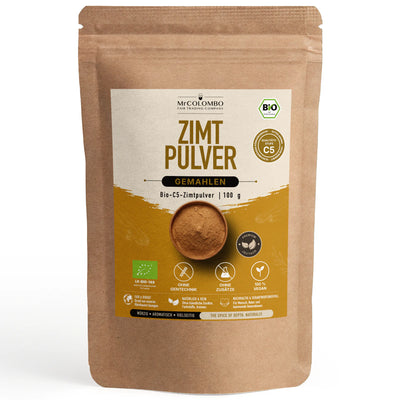
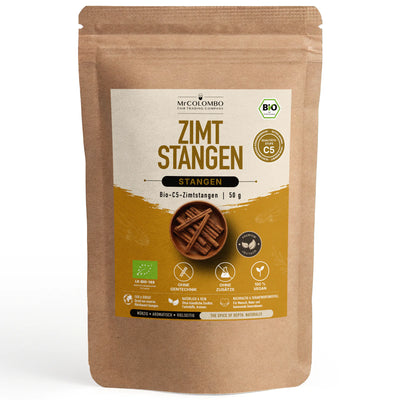
Our Ceylon cinnamon sticks come from the central region of Sri Lanka and carry the C5 classification (Continental Grade 5), one of the highest-quality official trade grades for Ceylon cinnamon. The thin, multi-layered quills are peeled and rolled by hand - a process that only succeeds with sufficiently pliable, freshly harvested bark and explains the higher purchase price compared with thick-barked cassia cinnamon. For spiced oil, a single stick is enough, as the intense aroma passes fully into the oil even in small quantities.
How do you make turmeric and pepper oil with high bioavailability?
Dried turmeric root contains 2 to 5 per cent curcumin, as confirmed by both the official JECFA evaluation of the FAO/WHO and the Spices Board India. Because curcumin is fat-soluble, the colouring and aroma compound dissolves much more readily in warm oil than in water. An LC-MS/MS study by Khajehpour et al. (2023, Food Science & Nutrition) also showed that giving pepper at the same time extended the half-life of curcumin in urine from 2.2 to 4.5 hours and increased 24-hour excretion - an indication of measurably altered uptake in the body when turmeric and piperine from black pepper are consumed together. In 2010 the EFSA set an ADI value for curcumin (E100) of 3 milligrams per kilogram of body weight per day - for typical household use as spiced oil, actual consumption lies far below this.
For the preparation, neutral oil is gently warmed, turmeric powder stirred in and left to infuse briefly - following the principle of the Indian tadka technique, in which spices are briefly heated in hot fat to release their essential oils. Then freshly ground or whole black pepper is added. If you prefer the traditional Ayurvedic variation, let the mixture macerate for at least two weeks in a sunny but cool place, as is customary in Ayurvedic practice, before straining it and continuing to use it from the fridge.
Our turmeric root (Curcuma longa) comes from northern Sri Lanka around Jaffna, where the tropical dry zone with intense sunshine and long harvest months lets the rhizomes ripen slowly. Selected batches additionally carry EU organic certification under DE-ÖKO-005. After harvest the root is gently dried and only freshly ground shortly before dispatch, so that colour and aroma are fully preserved for the spiced oil.
Our in-depth article Turmeric effects explains more about the active-compound density and the constituents of turmeric, as does our guide to preparing golden milk, which is based on the same fat-solubility principle.

Is home-made spiced oil dangerous? The botulism risk explained
Oil displaces oxygen and thus creates precisely the environment in which the bacterium Clostridium botulinum can multiply and form its nerve toxin - a danger that hardly any recipe site calls by name. As early as 2016 the BfR explicitly warned against the home production of oily herb and vegetable products for storage. According to the Robert Koch Institute, between 0 and 24 cases of botulism were reported in Germany each year between 2001 and 2017, predominantly as isolated cases caused by contaminated food. The number sounds small, but the illness is potentially life-threatening, which is why caution in home production matters more than with industrially manufactured, chemically stabilised products.
Real cases show that the risk is no grey theory: in 1989, three people in Missouri fell ill with botulism after eating garlic bread made from a home-prepared garlic-in-oil product with a pH of 5.7 (St. Louis Outbreak Investigators, American Journal of Public Health, 1990). In 2003 a Danish medical journal documented the case of a 38-year-old man who fell ill after eating garlic in chilli oil, with both the toxin and the bacterium detected in the leftover food (Lohse et al., 2003). As recently as December 2025, a whole-genome sequencing analysis confirmed a botulism outbreak in Lombardy whose source was a home-preserved chilli conserve in oil (Arnaboldi, S. et al., 2025) - according to the sequence analysis, the pathogen strain from patient and food was identical.
The University of Georgia Cooperative Extension names two scientifically tested, safe methods: either the oil is heated to 82 degrees Celsius (180 degrees Fahrenheit) and the finished blend is then stored refrigerated for a maximum of four days, or fresh ingredients are acidified with a citric acid solution (one tablespoon to two cups of water) to a pH of 4.2 or below, which also allows storage at room temperature. Vinegar or lemon juice without precise pH measurement, by contrast, are considered by the Extension to be insufficiently tested and therefore unsafe.
Important
Use only dried ingredients for spiced oil, heat the oil before bottling and always store the finished product refrigerated. Consume home-made spiced oil without pH acidification within a few days - when in doubt, better to pour it away than to take the risk.
Checklist for safe spiced oil
Only dried spices used? Fresh, moist ingredients such as fresh garlic cloves or fresh chilli pods considerably increase the botulism risk.
Oil heated to 82 degrees Celsius? The brief heat treatment reduces the microbial load but is no substitute for continuous refrigeration.
Bottles clean and dry? Sterile, completely dried glass bottles prevent additional contamination.
Put straight into the fridge? An unbroken cold chain is mandatory for non-acidified oil, not optional.
Used up within a few days? Without pH acidification, the four-day rule of the University of Georgia Cooperative Extension is the upper limit.
How long does spiced oil keep and how do you store it properly?
Refrigerated and without pH acidification, home-made spiced oil is safe to consume for a maximum of four days according to the University of Georgia Cooperative Extension; after that, the risk of contamination rises regardless of smell or appearance. If, on the other hand, the oil is acidified with citric acid solution to a pH of 4.2 or below, storage at room temperature for several weeks is also possible. Interesting for choosing a recipe: certain spices additionally have a positive effect on the oil's shelf life. A study in the journal Antioxidants (Odeh et al., 2021) showed that adding chilli or oregano lowered the peroxide value of linseed oil by up to 68.7 per cent over 180 days of storage - a measurable antioxidant effect that keeps the base oil itself fresh for longer.
As a general rule: store in a dark, cool place with as little contact with air as possible, ideally in dark glass bottles with a tightly closing cap. If you regularly stock larger quantities of different spices, our article Storing spices properly offers further tips on light, moisture and choice of container that can be applied in much the same way to spiced oils. Cloudiness, rising bubbles in the closed bottle or a rancid, soapy smell are clear signals to dispose of it immediately - when in doubt, the rule is always: better to pour it away than to taste it.

Is making spiced oil yourself worth it?
Making spiced oil yourself is worth it if two rules are observed: use only dried, high-quality raw material and take the cold chain or the pH acidification seriously. Anyone who observes these two points avoids both the contaminant load of industrial spiced oils, which Stiftung Warentest found in more than a third of the products tested, and the real but avoidable botulism risk of home production. At the same time, the kitchen benefits from the fat solubility of curcumin, capsaicin and piperine - aromas and colourings that are barely accessible in water but fully accessible in oil.
The quality of the starting spice determines the result at least as much as the preparation method. At MrCOLOMBO, turmeric, chilli and Ceylon cinnamon come directly from the growing region of Sri Lanka, without intermediaries and with known origin - a solid basis for spiced oil that convinces in both safety and aroma. If you want to understand the Ceylon cinnamon difference in detail, you will find it in our comparison Ceylon cinnamon, cassia and coumarin.