

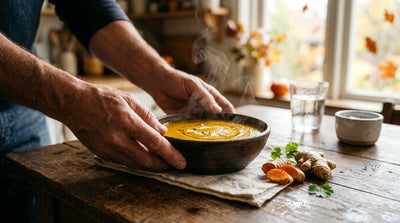




Turmeric with black pepper, Ceylon cinnamon and chilli measurably extend the shelf life of pre-cooked dishes: in a recent study, curcumin and piperine extended the shelf life of vacuum-packed minced lamb at 4°C from 7 to 21 days (Elghareeb et al., 2025). Anyone who deliberately builds these spices into their weekly meal-prep cooking benefits from more flavour and a scientifically documented shelf-life span.
At MrCOLOMBO, the turmeric and Ceylon cinnamon for this meal prep come directly from Sri Lanka, from the north of the island and from the central region around Kandy and Matale. The following sections explain the correct dosage of turmeric and pepper, show realistic shelf-life values for the fridge and freezer and provide five concrete recipe ideas for the weekly kitchen, from the curry lentil bowl to the chilli mince skillet with nutmeg.
Short answer
Which spices are best suited to meal prep? Turmeric with freshly ground black pepper, Ceylon cinnamon, chilli and nutmeg show preserving and antioxidant properties in studies, for instance an extended shelf life from 7 to 21 days for vacuum-packed, spiced minced lamb (Elghareeb et al., 2025).
At a glance
Why do certain spices have a preserving effect when batch cooking?
Several spices show preserving effects on cooked and raw foods in recent studies: curcumin and black pepper extended the shelf life of vacuum-packed minced lamb in the fridge from 7 to 21 days (Elghareeb et al., 2025). By day 21, the salmonella load in the spiced sample had also fallen by 2.75 log CFU per gram compared with the untreated control (Elghareeb et al., 2025). Responsible for this are plant compounds that inhibit the growth of certain bacteria and slow down fat oxidation in laboratory experiments. Cinnamaldehyde from cinnamon has been shown to disrupt the cell membrane of Staphylococcus aureus and E. coli (Pang et al., 2021; Doyle & Stephens, 2018). Capsaicin from chilli showed a bactericidal effect against resistant streptococci in laboratory experiments at a minimum inhibitory concentration of 64 to 128 micrograms per millilitre (Marini et al., 2015). Piperine from black pepper also inhibited biofilm formation by Listeria and salmonella in studies (Food Control, 2023). These effects are laboratory findings on food shelf life, not a substitute for the cold chain and hygiene when batch cooking.
For practical purposes, this means: anyone who uses turmeric, pepper, cinnamon or chilli in marinades and sauces combines flavour with a measurable side effect from food research. What matters is that this remains classified as a food-safety topic, not a health promise: the studies examine shelf life and microbial load, not the effect in the human body. The cold chain, kitchen hygiene and the two-hour rule of the German Federal Institute for Risk Assessment remain the basis of every meal-prep week (BfR). Spices replace neither the fridge nor cleanliness in the kitchen; they complement classic preservation, because essential oils and secondary plant compounds demonstrably slowed the multiplication of certain germs in laboratory studies. This interplay of traditional seasoning craft and modern food research makes spices an underrated tool for batch cooking.
How much turmeric and black pepper give the best effect?
The combination of turmeric and freshly ground black pepper follows a clear ratio from research: in a clinical study, 20 milligrams of piperine increased the bioavailability of 2 grams of curcumin by 2000 percent (Shoba et al., 1998). Piperine is the pungent compound in black pepper and influences how much curcumin the body absorbs from food at all. For the kitchen, this means one thing above all: turmeric should practically never be processed on its own, but always together with freshly ground pepper, for example when sweating in oil or ghee at the start of the cooking process. In this way, the seasoning combines with a pharmacokinetically proven effect from research, entirely without additional preparations or dietary supplements. For everyday kitchen practice, a generous pinch of freshly ground pepper to one to two teaspoons of turmeric powder is usually enough, even if cooking temperatures naturally do not replicate the exact clinical dosage from the study one to one.
For context, the EFSA gives an acceptable daily intake of 3 milligrams per kilogram of body weight for curcumin as the food additive E100, derived from a NOAEL range of 250 to 320 milligrams per kilogram in animal testing (EFSA, 2010). The platform Examine.com documents a range of 50 to 4000 milligrams of curcumin per day in clinical studies, frequently combined with 5 to 6.7 milligrams of piperine, spread over several servings. A frequently used standard combination is 500 milligrams of curcumin plus 5 to 6.7 milligrams of piperine, divided into three daily servings (Examine.com). These figures come from dietary supplement studies and are not cooking instructions. What matters is less the exact gram than the regularity: anyone who prepares turmeric fresh with pepper several times a week comes culinarily closer to the combinations used in studies than with a single application. For everyday meal prep, the culinary context is sufficient: one to two teaspoons of turmeric powder per serving, processed together with freshly ground pepper, instead of ready-mixed curry powder that has often been stored for a long time and has lost flavour.
How long do spiced dishes keep in the fridge and freezer?
How long a pre-cooked dish keeps depends on the spice, the storage temperature and the packaging: freezer storage at minus 18°C over 28 days suppressed lipid oxidation and microbial growth in pre-cooked lamb stew far more effectively than storage at 4°C in the fridge (Yang et al., 2025). For everyday life, many meal-prep kitchens rely on practical values: most pre-cooked dishes keep for 3 to 4 days chilled and 2 to 3 months frozen (HelloFresh practical value). Vacuum-packed minced lamb seasoned with curcumin and black pepper clearly exceeded this range and kept in the fridge for up to 21 days (Elghareeb et al., 2025). The following overview shows typical guide values by type of dish.
| Type of dish | Fridge | Freezer |
|---|---|---|
| Rice and pasta dishes | 3-4 days | 2-3 months |
| Lentil and curry dishes | 4-5 days | 2-3 months |
| Spiced meat, vacuum-packed (curcumin + pepper) | up to 21 days | 2-3 months |
Important
According to the BfR, cooked food should stand at room temperature for a maximum of 2 hours and then be cooled to below 7°C within 120 minutes (BfR). Only then does it belong in the fridge or freezer.
In practice, vacuum-packed or well-sealed storage in glass containers is recommended, because contact with oxygen accelerates fat oxidation and aromas from cinnamon or chilli evaporate more quickly. Anyone who batch cooks on Sunday for the whole week should store portions for the first three to four days in the fridge and freeze the rest immediately, instead of keeping everything chilled. This keeps the quality stable over the entire week, and the turmeric-pepper marinade retains its flavour noticeably longer than with continuous fridge storage.

Why is Ceylon cinnamon better suited to the daily meal-prep menu than cassia cinnamon?
The difference lies in the coumarin content: cassia cinnamon contains on average up to 3000 milligrams of coumarin per kilogram, and in the case of the most heavily contaminated brand even up to 7017 milligrams per kilogram on the brand average (Blahova & Svobodova, 2012), while Ceylon cinnamon stays below 8 milligrams per kilogram. The German Federal Institute for Risk Assessment gives a tolerable daily intake of 0.1 milligrams of coumarin per kilogram of body weight (BfR, 2012). Anyone who uses cinnamon only occasionally in Advent baking usually stays below this value. But anyone who, as is common with meal prep, builds cinnamon into savoury dishes several times a week reaches the critical threshold considerably faster with cassia cinnamon. Ceylon cinnamon offers a practical safety margin here for regular kitchen use.
Independent tests also confirm this difference: in a comparative test, Stiftung Warentest found cassia cinnamon powder with 2300 to 3500 milligrams of coumarin per kilogram, while 5 of 6 Ceylon cinnamon samples tested stayed below 20 milligrams per kilogram (Stiftung Warentest, 2012). Since 2 February 2022, Ceylon cinnamon has also been registered as a protected geographical indication of the EU; since then, genuine Ceylon cinnamon may only come from Sri Lanka. The underlying Czech market analysis examined 60 cinnamon samples from 12 different brands, with one control sample of genuine Ceylon cinnamon remaining completely coumarin-free (Blahova & Svobodova, 2012). More on the difference and the background to the coumarin debate is explained in the article Ceylon cinnamon and coumarin. For daily meal prep, for instance in the pumpkin bowl from idea three, Ceylon cinnamon is therefore the more obvious choice, because regular consumption automatically increases the weekly coumarin intake and the margin to the TDI value is narrower with cassia cinnamon.

Which 5 spice ideas are suited to the meal-prep week?
The following five ideas combine the findings on dosage and shelf life with recipes that are easy to prepare in advance. Each idea uses at least one spice from the previous sections and is suitable for portions over several days. Four of the five ideas are based on plant protein sources such as lentils and mung beans, because these reheat particularly well without losing texture. The order follows the preparation time, from the quick bowl to the skillet that still convinces the next day.
Curry lentil bowl with turmeric and black pepper
Red lentils are cooked until soft according to the classic dal principle in stock with onions, garlic and ginger, before turmeric and freshly ground black pepper are added. The order is important: turmeric should always be processed together with the pepper, never in isolation, so that the bioavailability from the research by Shoba et al. (1998) also takes effect in the kitchen. The bowl can be stored in portion jars in the fridge for up to 4 to 5 days and complemented with rice, natural yoghurt or fresh coriander. Anyone looking for a suitable basic recipe will find inspiration in the article Sri Lanka curry recipe.
Ayurvedic kitchari for batch cooking
Kitchari is based on rice and mung beans and is regarded in Ayurvedic cuisine as an easily digestible basic meal, seasoned with ginger, turmeric, cumin and coriander. The mixture of pulses and rice provides a filling base that can be batch cooked in large quantities. Chilled, kitchari keeps for around 5 days according to practical values, because the spices it contains and the low fat content favour storage. More on the basic principles of spice cooking is provided in the article Ayurveda spices in the kitchen. For the week, kitchari is particularly suitable as a base that is varied daily with different vegetables.
Savoury Ceylon cinnamon pumpkin bowl with curry yoghurt
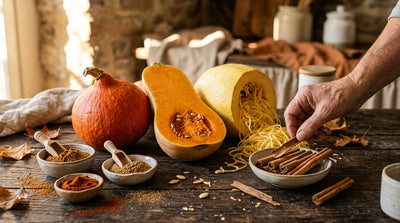
In Germany, cinnamon is mostly regarded as a sweet spice, yet Ceylon cinnamon also works superbly in savoury dishes: roasted pumpkin with cumin, a pinch of Ceylon cinnamon and a dollop of curry yoghurt shows how versatile the mild aroma is. Because of its low coumarin content, Ceylon cinnamon is better suited here for everyday use than cassia cinnamon, especially when the bowl is on the menu several times a week. The roasted aromas of the pumpkin harmonise with the slightly sweet, woody note of the cinnamon without making the dish seem dominantly sweet. Pre-cooked, the bowl keeps for 3 to 4 days in the fridge.

Mediterranean vegetable skillet with chilli and black pepper
Peppers, courgette and aubergine form the base of this skillet, seasoned with cumin, chilli and plenty of freshly ground black pepper in Cajun or harissa style. The heat of chilli comes from capsaicin, which has shown bactericidal properties against certain bacterial strains in laboratory studies (Marini et al., 2015), making the skillet a robust choice for several days in the fridge. Anyone who prefers it milder simply reduces the amount of chilli and replaces it with more smoked paprika. For hot spices, it is worth taking a look at the Chilli collection from MrCOLOMBO.
Chilli mince skillet with nutmeg
This skillet combines minced beef with chilli, cumin and a fine pinch of freshly grated nutmeg. In a study on pre-cooked beef patties, nutmeg extract significantly reduced the rancid taste and the oxidative change in the fat after freezer storage and microwave reheating (Parvin et al., 2020). For meal prep, this means: anyone who freezes minced meat dishes and later reheats them in the microwave benefits from a small amount of nutmeg in addition to the classic seasoning with chilli and cumin. The skillet keeps for 3 to 4 days chilled and up to 3 months frozen, entirely without loss of quality in taste.
Why does a curry often taste better the next day?
Many cooks report that curries and stews taste more intense on the second day, and food research offers a plausible explanation for this: overnight, essential oils and water-soluble aroma compounds from turmeric, cinnamon and chilli diffuse deeper into the sauce and ingredients, instead of merely clinging to the surface. At the same time, a study on nutmeg extract showed that the targeted addition of spices noticeably improves the oxidative stability of pre-cooked meat after freezer storage and microwave reheating and reduces rancid aromas (Parvin et al., 2020). Rancid aromas arise when unsaturated fatty acids in the fat react with oxygen, a process that the nutmeg extract in the study by Parvin et al. (2020) measurably slowed down, especially with repeated reheating in the microwave. For meal prep, this means: a curry that infuses overnight is no coincidence in terms of taste, but follows a physical diffusion process plus a measurable effect against fat oxidation.
In practical terms, for weekly planning this means: dishes with turmeric, cinnamon or chilli benefit from resting in the fridge for at least one day before they are frozen. Anyone who freezes immediately after cooking loses part of this diffusion effect. One day of waiting in the fridge, then freezing in portions, often brings together the best result in terms of flavour and shelf life.
Where do the spices for our meal prep at MrCOLOMBO come from?
Sri Lanka holds a global market share of 80 to 90 percent in true cinnamon and is regarded as the country of origin of Ceylon cinnamon (Sri Lanka Export Development Board). With its tropical climate and the highlands around Kandy, Matale and the Central Province, the island offers ideal conditions for cinnamon, turmeric, pepper and chilli. In many operations, processing follows the SLS 81 standard, which regulates the hygiene, sorting and packaging of Ceylon cinnamon. More background on the island's most important growing regions and spices is provided in the article Spices from Sri Lanka.
MrCOLOMBO imports the spices for this meal prep directly from smallholder cooperatives in Sri Lanka, without intermediaries between the field and dispatch to Germany. The turmeric comes from the north of the island, the Ceylon cinnamon from the central region around Kandy and Matale, both from partner farms with organic certification. This direct supply chain allows shorter routes from field to milling and thus fresher, more aromatic spices than with mass-market goods traded several times over. For organic-quality turmeric, it is worth taking a look at the Turmeric collection, and for Ceylon cinnamon at the Ceylon cinnamon collection.
Our way at MrCOLOMBO
We know every stage of the supply chain personally, from the turmeric field in the north of Sri Lanka to the cinnamon bark from Matale. Direct import from smallholder cooperatives instead of intermediaries means shorter routes and fresher spices for your meal prep.
Is the effort with spices worth it for weekly batch cooking?
Spices alone replace neither the fridge nor the cold chain, but the combination of turmeric, black pepper, Ceylon cinnamon, chilli and nutmeg makes weekly batch cooking more aromatic and, according to current research, in individual cases considerably longer-lasting, as the 21 days for vacuum-packed minced lamb with curcumin and pepper show (Elghareeb et al., 2025). Anyone who consistently combines turmeric with freshly ground pepper, chooses Ceylon cinnamon instead of cassia cinnamon for everyday use and observes the BfR's two-hour rule when cooling down batch cooks more safely and with more intense flavour. The five ideas in this article, from the curry lentil bowl to the chilli mince skillet, can be combined as you like. Anyone who would like to go deeper into the topic of curry spices next will find further recipes in the Sri Lanka curry recipe article linked above.