



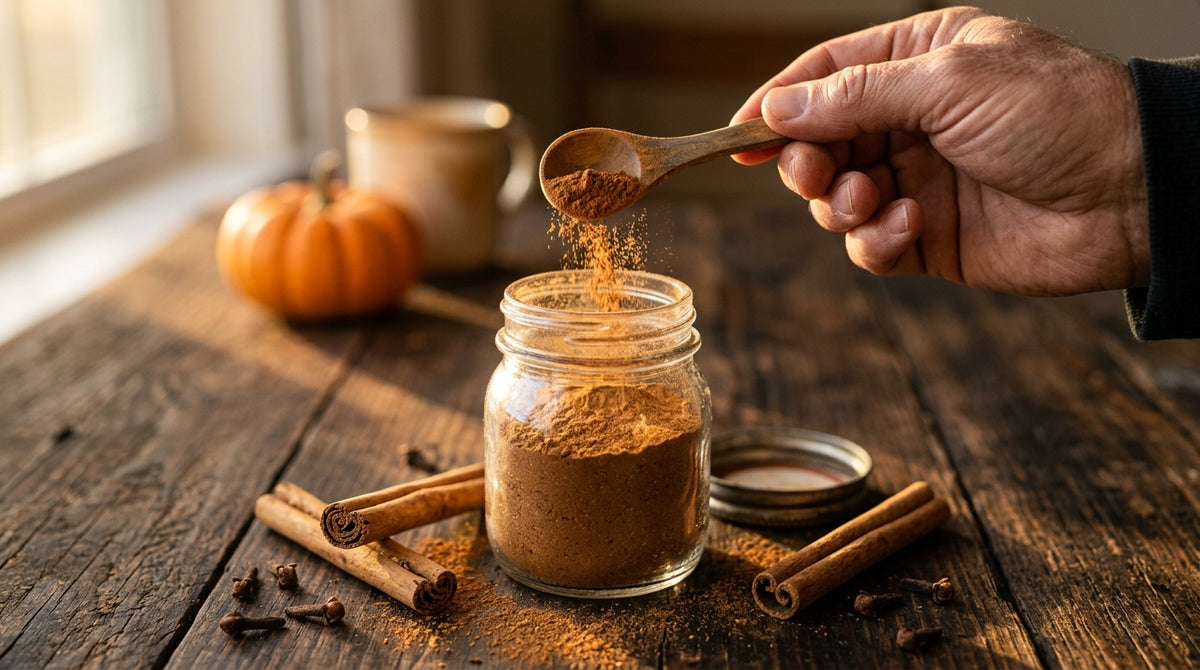
Pumpkin spice is a spice blend of cinnamon, ginger, nutmeg, cloves and allspice that can be mixed at home in a matter of minutes. For the classic recipe, five spices and a screw-top jar are all you need. The global market for pumpkin spice products is expected to grow to around 2.8 billion US dollars by 2035 (IndexBox, 2026) - reason enough to understand the blend properly for once, rather than buying it ready-made in a jar.
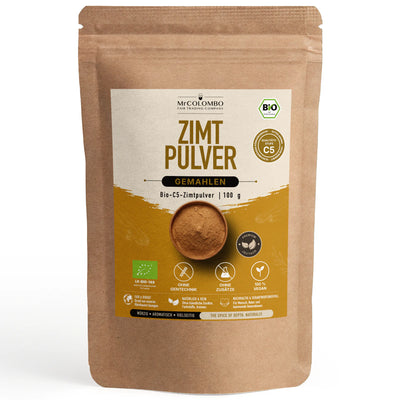
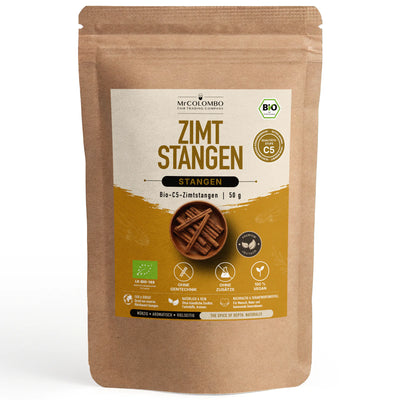
At MrCOLOMBO we deal every day with the question of which type of cinnamon ends up in a kitchen. Sri Lanka supplies around 90 per cent of the world's Ceylon cinnamon (Sri Lanka Export Development Board, 2024), and it is precisely this origin that makes a measurable difference in pumpkin spice - not only in terms of flavour, but also in terms of coumarin exposure. Mixing it yourself means that the decision about the type of cinnamon lies with you and not with an anonymous manufacturer of ready-made blends. Many ready-made blends in the supermarket only state the word cinnamon on the label without naming the botanical variety; anyone who mixes their own, by contrast, makes this decision consciously. On the shelf, the difference can often be felt by touch: Ceylon cinnamon sticks consist of several thin, softly rolled layers, whereas cassia bark usually comes as a single, noticeably harder roll.
Short answer
What is pumpkin spice and how do you mix it yourself? Pumpkin spice is a blend of cinnamon, ginger, nutmeg, cloves and allspice in a ratio of roughly 4:2:1:1:0.5 teaspoons. Mixed at home, you control freshness, added sugar and above all the type of cinnamon (Saveur; BfR, 2021).
At a glance
What is pumpkin spice and where does the spice blend come from?
Pumpkin spice is a spice blend of cinnamon, ginger, nutmeg, cloves and allspice that was originally developed for pumpkin pie. The spice company McCormick launched the first commercial version of this blend in 1934. Starbucks first tested the Pumpkin Spice Latte in 2003 in stores in Vancouver and Washington D.C. before the drink was rolled out nationwide in 2004 (Starbucks Newsroom, 2015). Curiously, the drink only actually contained pumpkin purée in its recipe from 2015 onwards; before that, the spices alone delivered the entire flavour. The pumpkin itself originates from Central and South America, where it has been cultivated for more than 7,000 years. Since the 18th century it has been regarded as a firm symbol of autumn in the English-speaking world. Around 80 per cent of what people perceive as taste arises through the sense of smell and not through the tongue, explains Gabriel Keith Harris of North Carolina State University (Harris, NC State University, 2023).
When we first tried a genuine pumpkin spice blend with Ceylon cinnamon instead of cassia, the difference was immediately noticeable: milder, less sharp on the finish, distinctly more floral in aroma.
MrCOLOMBO experience report
Which spices belong in the classic pumpkin spice blend?
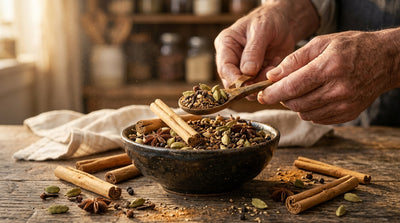
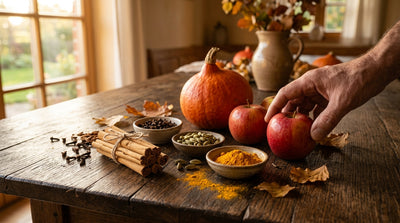
Five spices form the core of every classic pumpkin spice blend: cinnamon, ginger, nutmeg, cloves and allspice, with cinnamon dominating in terms of quantity. Each of these spices travels to the tin from a different region of the world. Cinnamon traditionally comes from Sri Lanka, where Ceylon cinnamon has been peeled and rolled by hand for centuries. Nutmeg comes largely from Indonesia, in particular from the Banda Islands, the historical place of origin of the nutmeg plant. Ginger is now grown primarily in India and Australasia; the plant originally comes from South-East Asia. Allspice, also known as pimento, grows almost exclusively in Central America and the Caribbean and tastes like a mixture of cinnamon, nutmeg and cloves all at once. Cloves traditionally come from Indonesia, but are now also cultivated in Madagascar and Tanzania. This geographical span explains why a single blend tastes so complex: five continents are packed into the same teaspoon, a circumstance that makes every single supply chain vulnerable to crop failures and fluctuations in quality.

How do you mix pumpkin spice in the right ratio?
There is no single standard ratio for pumpkin spice; different sources recommend different proportions depending on the desired intensity. The US magazine Saveur goes for plenty of warmth with three tablespoons of cinnamon, while America's Test Kitchen prefers a reduced, sharper version without cloves. German recipe sites such as eat.de often work with considerably more cinnamon relative to the other spices. The following table compares four common variants, including the MrCOLOMBO recommendation with Ceylon cinnamon.
| Recipe variant | Cinnamon | Ginger | Nutmeg | Cloves | Allspice |
|---|---|---|---|---|---|
| Classic US (Saveur) | 3 tbsp | 2 1/4 tsp | 1 1/2 tsp | 3/4 tsp | 3/4 tsp |
| Reduced (America's Test Kitchen) | 2 tsp | 1 tsp | 1/2 tsp | - | 1/2 tsp |
| German variant (eat.de) | 8 tsp | 2 tsp | pinch | 1 tsp | pinch |
| MrCOLOMBO recommendation (Ceylon) | 4 tsp | 2 tsp | 1 tsp | 1 tsp | 1/2 tsp |
For your own blend, all the spices are simply stirred thoroughly in a small bowl until no lumps remain visible. The blend is then transferred into a clean, dry screw-top jar. If you have little experience in measuring out spices, it is worth starting with the reduced variant and working your way towards the desired intensity with each subsequent batch. A small test quantity of two to three tablespoons is perfectly sufficient for the first attempt before a larger stock is made up. The entire mixing process takes barely longer than five minutes, including measuring and transferring into the jar, and can be repeated as often as you like with slightly altered proportions. Further ideas for using Ceylon cinnamon in the kitchen are collected in our recipe overview for Ceylon cinnamon.
Why does the type of cinnamon make the difference in pumpkin spice?
In pumpkin spice, the type of cinnamon determines more than just the taste; it also determines the coumarin content of the blend. Cassia cinnamon contains on average around 3,000 milligrams of coumarin per kilogram, whereas Ceylon cinnamon is regarded as safe from a health perspective (BfR, 2021). The German Federal Institute for Risk Assessment sets the tolerable daily intake (TDI) at 0.1 milligrams of coumarin per kilogram of body weight. For an adult weighing 60 kilograms, this limit is already reached at about two grams of cassia cinnamon a day; for a child weighing 15 kilograms, at as little as around 0.5 grams (BfR, 2024). Our article on Ceylon cinnamon vs. cassia cinnamon explains more about the direct comparison of the two types of cinnamon. In 2022, Stiftung Warentest tested a total of 51 cinnamon samples and found that with 12 of them, an adult weighing 60 kilograms would exceed the TDI at a daily intake of two grams. For everyday practice this means: anyone who uses Ceylon cinnamon exclusively does not even need to do this calculation, because the amount of coumarin there remains uncritical even with generous dosing.
Important
This article is for information purposes and does not replace medical advice. Pregnant women, children and people with liver conditions should, as a precaution, consult a doctor or pharmacist if they regularly consume larger quantities of cassia cinnamon or nutmeg.
When buying, it is worth taking a look at the exact designation: true Ceylon cinnamon carries the botanical name Cinnamomum verum and is sorted according to a four-tier grading system from Alba to Hamburg, with Alba, at a bark diameter of around 6 millimetres, regarded as the finest quality. Sri Lanka thus holds around 90 per cent of the global market share for true cinnamon (Sri Lanka Export Development Board, 2024). Anyone who reads only "cinnamon" on the label without a botanical addition is in most cases buying the cheaper, coumarin-richer cassia cinnamon without noticing. A look at the ingredients list is therefore doubly worthwhile: if it says Cinnamomum verum or Ceylon, it is the mild variety; if it says only Cinnamomum cassia or gives no botanical information at all, you should assume the cheaper, coumarin-richer type.
Our approach at MrCOLOMBO
Our Ceylon cinnamon comes from the Central Province of Sri Lanka, where we work directly with organic-certified agricultural cooperatives. The direct import without intermediaries can be traced back to the individual piece of bark - that was important to us from the very beginning, especially with a spice that has as wide a quality range as cinnamon. More about the origin of our spices as a whole can be found in our overview of spices from Sri Lanka.

How much nutmeg in pumpkin spice is safe?
Nutmeg contains myristicin, which in high doses can lead to genuine poisoning, but in the small quantities found in a spice blend there is no cause for concern. According to EFSA, the myristicin content of nutmeg oil can be as much as 12 per cent (EFSA, 2023). At a single oral dose of 400 milligrams of myristicin, 4 out of 10 test subjects in one study showed mild cerebral stimulation effects; the toxic threshold lies at about 5 grams of ground nutmeg. A case report from 2023 describes how an overdose can lead to anticholinergic delirium with a racing heart, dry mouth and tremors, with symptoms lasting up to 72 hours. The Erfurt poison information centre documented seven nutmeg poisonings between 1996 and 1998: even at 20 to 80 grams of pure powder, no life-threatening situation arose except in one case involving simultaneous medication use (McKenna et al., 2004). In a typical pumpkin spice blend, the nutmeg content is just a few milligrams per portion, far below any relevant threshold.
Important
The amount of nutmeg in a normal pumpkin spice blend remains far below the risk threshold of around 5 grams. Nevertheless: never eat nutmeg neat by the spoonful, neither as a whole nut nor as powder in larger quantities.
Which compounds are behind the aroma of pumpkin spice?
Behind the aroma of pumpkin spice are several plant-derived active compounds that are being investigated in research, without it being permissible to derive any health promises for everyday consumption from this. Cinnamaldehyde, the main substance in cinnamon, was investigated as early as 2007 in an animal model by Subash Babu et al. A meta-analysis by Zhu et al. from 2025, published in Phytotherapy Research, showed that with daily intake of 1, 3 or 6 grams of cinnamon over 40 days, the fasting blood glucose values of the study participants were 18 to 29 per cent lower compared with placebo. A further meta-analysis in 2023 confirmed a dose-response relationship between cinnamon intake and blood glucose parameters. Such results come from clinical studies with concentrated doses and cannot be transferred directly to a pinch of spice in your coffee. Eugenol from cloves showed antioxidant properties in vitro in a 2025 study; Chraibi et al. documented an antibacterial effect of allspice oil against Listeria monocytogenes in the laboratory in 2022. Gingerols and 6-shogaol in ginger were investigated by Mashhadi et al. in 2021 in connection with certain cell signalling pathways.
What matters with all these results is putting them in context: these are almost without exception laboratory and animal studies with isolated, highly concentrated compounds, not evidence that a cup of pumpkin spice latte would have a measurable health effect. The amount of cinnamon, cloves or ginger in a teaspoon of spice blend is far below the dosages used in studies. In everyday life, these spices convince above all through their flavour; a proven medical benefit at household levels of consumption cannot be derived from this. Reputable sources therefore always phrase such connections as "has been investigated" or "may be associated with", never as a healing promise. This restraint is also legally required, because the EU Health Claims Regulation prohibits unsubstantiated claims about the effects of foods. An example of permissible wording: "Cinnamon has been investigated in connection with blood sugar levels" is allowed, whereas "Cinnamon reduces blood sugar levels" would already be an impermissible health claim under this regulation.
How do you use pumpkin spice in cooking and drinks?
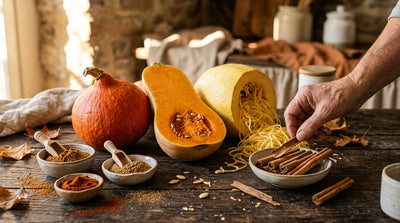
Pumpkin spice can be used far beyond the classic latte, from baked goods to savoury dishes. In cake batter, scones or biscotti, the blend usually replaces one to one the spices otherwise listed individually in the recipe. It also unfolds its aroma in porridge, pancake batter or over roasted pumpkin cubes. Related but distinct is chai masala, an international spice blend that usually contains cardamom and black pepper instead of allspice and is traditionally simmered in black tea - our recipe for an iced chai latte shows a cold version of it. An important note on the much-cited pumpkin spice latte: a sweetened drink of this kind quickly reaches around 400 kilocalories and 60 grams of sugar per large cup. The problem here is not the spice blend itself, but the amount of sugar and syrup in the finished drink. Anyone who mixes pumpkin spice at home and stirs it into unsweetened coffee or hot milk avoids this sugar content entirely and retains full control over the sweetness.

How long does homemade pumpkin spice keep?
With proper storage, home-mixed pumpkin spice stays aromatic for around 6 to 12 months; after that it increasingly loses intensity but does not spoil in the true sense. What matters is storing it airtight, dark and cool, ideally in a sealable screw-top jar away from the cooker and windowsill. Precise tips on the proper storage of different types of spice are collected in our guide to storing spices. Heat and light continuously break down the essential oils in the spices, so a dark kitchen cupboard is considerably better suited than an open spice rack right next to the oven. Whole spices such as cinnamon sticks or cloves that are ground only shortly before mixing release more aroma than ready-ground powder, much like freshly ground pepper compared with a pre-ground shaker. Making up small quantities is therefore doubly worthwhile: less loss of freshness and the option of slightly adjusting the ratio with each new batch.
Checklist for proper storage
Sealed airtight? A screw-top jar with a rubber seal keeps moisture and atmospheric oxygen out; both accelerate the loss of aroma.
Stored in the dark? Light breaks down essential oils; a closed kitchen cupboard is better than an open shelf.
Kept cool? Distance from the hob and oven prevents heat from letting the aroma evaporate prematurely.
Mixing small quantities? If you only make up two to three tablespoons at a time, you use up the blend before it loses its strength.
Is making your own pumpkin spice blend worth it?
Home-mixed pumpkin spice is worthwhile above all because of the control it offers over the type of cinnamon, coumarin content and freshness of the spices. Ceylon cinnamon instead of cassia keeps coumarin exposure well below the levels that Stiftung Warentest found critical in one in four samples tested in 2022. Ready-made blends often contain additional sugar or flavourings; a blend of your own made from five spices does without such additives. Direct import with traceable origin, as made possible by cooperatives in Sri Lanka, makes this transparency all the more tangible. Anyone who adds high-quality Ceylon cinnamon to their spice range already holds the greatest lever for quality in their hands. The effort for your own blend amounts to barely more than five minutes, and the result can be tailored precisely to your own taste. If you are mixing your own for the first time, you should make up no more than two to three tablespoons to start with and only adjust the quantity to your own preference with the second batch.