



The best spices for a refreshing summer punch are lemongrass, ginger, cardamom, Ceylon cinnamon and turmeric. They deliver citrus freshness, heat and a cooling note without a single drop of alcohol being needed. The key is managing aroma in the cold: because cold drinks release aroma compounds less readily, a spiced punch deliberately needs more spice than a warm drink (Kuo et al., 2025).
This is exactly where the difference lies between a bland lemonade and a punch with depth. At MrCOLOMBO we import Ceylon cinnamon, turmeric and lemongrass directly from smallholder farmers in Sri Lanka - and we know from this experience that the quality of the spices determines the flavour of an alcohol-free punch more than any juice blend does. In this article you get three complete recipes with exact quantities plus the aroma chemistry behind them.
Short answer
Which spices belong in an alcohol-free summer punch? The best choices are lemongrass (65-85 % citral), cardamom (up to 45 % cooling 1,8-cineole), fresh ginger (around 15 per cent gingerols by weight), Ceylon cinnamon and turmeric. They are extracted as a cold or short-simmered syrup and then topped up with sparkling mineral water, citrus juice and ice to make the punch (Bongoni et al., 2021; Ali et al., 2024).
At a glance
Why do spices belong in a summer punch at all?
Spiced drinks are not a passing fad but one of the oldest drink ideas there is. Persian sharbat made from rose water, cardamom and cinnamon has been documented since around 400 BC, and the first written mention of punch (Bowle) dates from the year 1417 and comes from the monastery library in Fulda (Wikipedia, 2024). The only new thing is that today's punch is conceived without alcohol. According to Mintel (2026), 61 % of Germans reach for low-alcohol or alcohol-free drinks, and 25 % abstain completely - three percentage points more than the previous year. The German Nutrition Society (DGE, 2024) states clearly in its position paper that there is "no risk-free amount" of alcohol. A punch that draws its character from spices rather than wine therefore hits the mood of the moment precisely.
The second reason is a matter of taste. Where classic punches rely on sugar and alcohol as flavour carriers, in a spiced punch essential oils take on that role. Ginger brings heat, cardamom a cooling freshness, lemongrass a clear citrus note and Ceylon cinnamon a warm sweetness without any added sugar at all. It is precisely this complexity that most German recipe sites lack, often naming only mint or lemon zest as the "spice". Anyone who has ever tasted a properly spiced punch notices the difference immediately. Our recipe for iced chai latte shows how spices can be used in a hot drink too.

How do spices release their aroma in cold drinks?
Cold drinks have a physical problem: the lower the temperature, the less readily aroma compounds evaporate and the more weakly we perceive them. A study in the Journal of Food Quality (Kuo et al., 2025) shows that the volatility of volatile aromas decreases markedly as the temperature falls - cold drinks therefore simply need more spice than warm ones. That is exactly why a good summer punch works with concentrated syrups rather than a pinch of powder. In the syrup, the essential oils are dissolved with brief heat and remain in the liquid even after cooling. That is how the glass gets a full aroma despite the ice cubes.
Which compound is responsible for which note can be named precisely. The oil of lemongrass (Cymbopogon citratus) contains 65-85 % citral, the carrier of the fresh citrus aroma (Ali et al., 2024). Green cardamom (Elettaria cardamomum) contains up to 45 % 1,8-cineole, which creates a menthol-like cooling effect in the mouth - ideal for hot days (Raut and Karuppayil, 2018; AOK, 2024). Ceylon cinnamon (Cinnamomum verum) owes its warm sweetness to (E)-cinnamaldehyde, which makes up around 78 % of the bark oil (Abdulkhaleq et al., 2024). Fresh ginger (Zingiber officinale), in turn, is rich in gingerols, which account for about 15 per cent of its phenols by weight (Mao et al., 2019).
Our approach at MrCOLOMBO
For cold drinks we deliberately reach for fresh or high-quality dried material from Sri Lanka. The reason: gingerols only convert into the hotter shogaols from around 40 °C (Mao et al., 2019). In a cold punch, fresh ginger therefore stays milder and more citrusy - exactly what you want in summer. We explain our origins in detail in the article Spices from Sri Lanka.
How do you make the lemongrass and ginger summer punch?
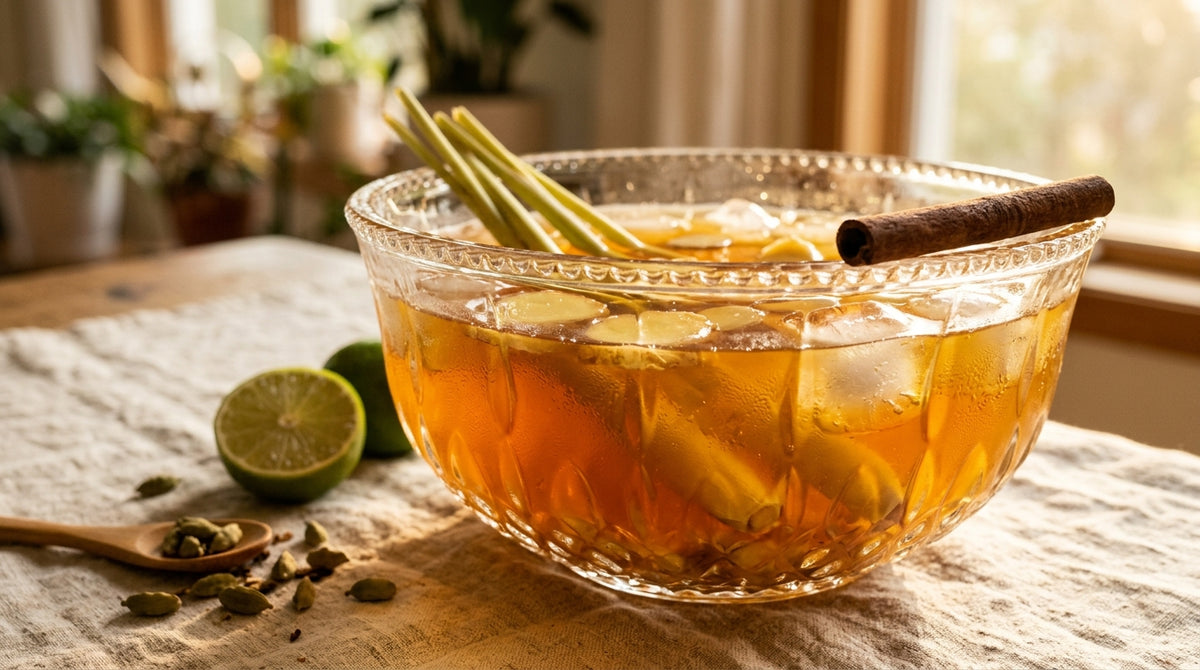
This punch is the all-rounder: sparkling, slightly hot and deeply lemony. Its heart is a short-simmered syrup in which lemongrass gives up its citral and ginger its gingerols. The method is established internationally, from Indian lemongrass-ginger lemonade to American lemongrass-ginger punch (Flavors of Mumbai, 2024). For 6 to 8 servings, allow for just under 1.5 litres of finished punch.
Ingredients for the syrup
5 stalks of fresh lemongrass (split lengthways and bruised), 50 g fresh ginger (in thin slices), 200 g raw cane sugar and 500 ml water. To top up: 1 litre sparkling mineral water, the juice of 2 limes, plenty of ice cubes and 1 Ceylon cinnamon stick as an aromatic stirrer.
Method
Put the lemongrass, ginger, sugar and water into a pan and bring to the boil once. Then simmer over a low heat for around 10 minutes so that the citral and gingerols pass into the syrup. Remove from the heat, leave to cool completely and strain through a sieve into a carafe. Only just before serving, top up with mineral water and lime juice, then add the ice and the Ceylon cinnamon stick. That way the fizz is preserved. If you want to prepare ahead: the syrup keeps for around a week in the fridge.
What makes the cardamom and lemon punch so special?
If you are looking for a punch with a delicate, almost perfumed freshness, there is no getting past cardamom. Its 1,8-cineole content of up to 45 % creates a cooling effect on the palate that is especially refreshing in summer heat (Raut and Karuppayil, 2018). Combined with lemon and honey, the result is an elegant, slightly floral punch. This combination too has historical roots: cardamom and citrus have been among the classic sharbat ingredients for centuries (Wikipedia, 2024). For 6 servings you will need about 2 litres of finished punch.
Ingredients for the syrup
8 green cardamom pods (bruised in a mortar so the seeds are released), the grated zest and juice of 4 unwaxed organic lemons, 150 g honey and 400 ml water. To top up: 1.6 litres mineral water, the juice of 1 lime, a few fresh mint leaves and ice cubes.
Method
Bring the cardamom, lemon zest, honey and water to the boil and simmer gently for about 8 minutes until the syrup is fragrant. Stir in the lemon juice only after simmering so that the aroma stays fresh. Leave the syrup to cool and strain. To serve, mix with mineral water at a ratio of roughly 1:4 and add the lime juice, mint and ice. A tip from experience: cardamom is intense, so it is better to start with fewer pods and adjust. Our recipe for golden milk shows how versatile this spice is in other ways.

How do you prepare a golden turmeric spiced punch?
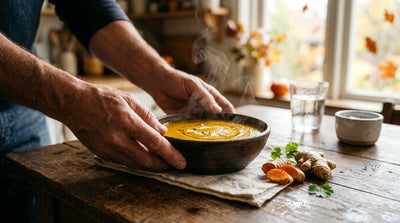
The third punch is a cold version of Ayurvedic golden milk - golden in colour, spicy in flavour. A chemical trick comes into play here: curcumin, the pigment in turmeric (Curcuma longa), is barely water-soluble at only about 11 ng/mL (PMC, 2020). Combined with the piperine from black pepper, however, uptake in the body rises 4.4-fold according to the available studies (Kumar et al., 2024), and the fat from coconut milk additionally helps to bind the fat-soluble pigment. For 4 to 6 servings, allow for around 1.5 litres.
Ingredients
For the base: 2 tsp turmeric powder, 1 tsp Ceylon cinnamon, 1 tsp freshly grated ginger, 1 pinch of freshly ground black pepper and 200 ml coconut milk. To top up: 600 ml orange juice, 600 ml mineral water, 1 tbsp honey to taste and ice cubes.
Method
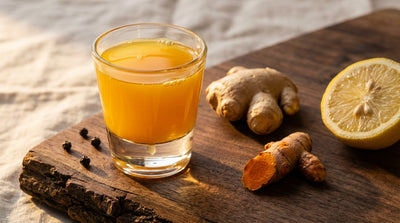
Briefly warm the turmeric, cinnamon, ginger, pepper and coconut milk and stir until smooth and the spices have dissolved - do not boil. Leave the mixture to cool completely. Stir together with the orange juice, mineral water and honey in a large carafe and serve with ice. Stir before pouring, as turmeric tends to settle. If you like the functional angle, you will find more on it in our recipe for a ginger-turmeric shot.
Important
This article is for information purposes and is no substitute for medical advice. Spices such as ginger and turmeric are being investigated in studies, but they are not a remedy. If you have health questions, or during pregnancy and breastfeeding, please consult your doctor or pharmacist.
What should you look for when buying spices for the punch?
If you drink a punch regularly over the summer, you should look closely at the cinnamon. According to Stiftung Warentest (2024), standard commercial cassia cinnamon contains between 2,300 and 3,500 mg of coumarin per kilogram, whereas Ceylon cinnamon contains under 20 mg/kg. The German Federal Institute for Risk Assessment (BfR, 2020) gives a maximum daily value of 0.1 mg of coumarin per kilogram of body weight - at 60 kg that is around 6 mg, which is already reached with about 2 g of cassia a day. For a drink you enjoy several times a week, Ceylon cinnamon is therefore the considerably safer choice, as we explain in detail in our comparison Ceylon cinnamon vs. cassia cinnamon.
| Criterion | Ceylon cinnamon | Cassia cinnamon |
|---|---|---|
| Coumarin content | under 20 mg/kg | 2,300-3,500 mg/kg |
| Suitable for daily drinks | Yes | No |
| Origin | Sri Lanka (GI-protected) | China, Indonesia, Vietnam |
| Flavour | delicate, mildly sweet | strong, harsh |
The subject of residues also needs to be on the table. A laboratory test by Foodwatch (2026) found pesticides banned in the EU in 43 of 64 products tested; among the German products, 13 of 19 were affected. Ökotest detected up to 15 pesticide active substances per product in conventional spices and clearly recommends organic goods. This is where direct import pays off: Ceylon cinnamon holds around 90 % of the world market share and comes from defined growing regions such as Galle, Matara and Negombo, where around 350,000 families make their living from cinnamon (DEA Sri Lanka, 2024). Since February 2022, Ceylon Cinnamon has also been geographically protected in the EU (EDB Sri Lanka, 2022). If you pay attention to organic quality and origin, you will find the right base in our organic spice range.

Checklist for buying spices
Ceylon or cassia? For regular drinks, always choose Ceylon cinnamon (Cinnamomum verum).
Organic seal present? Considerably reduces the risk of pesticide residues.
Origin stated? A clearly named region such as Sri Lanka speaks for traceability.
Fresh ginger to hand? For cold punches, use fresh ginger (gingerols) rather than powder.
Which spiced punch should you try first?
A good summer punch needs no alcohol, just real spices and a little knowledge about managing aroma in the cold. The lemongrass and ginger punch is the sparkling all-rounder, the cardamom and lemon punch the elegant cooling version and the turmeric spiced punch the golden eye-catcher with a functional character. If you choose Ceylon for the cinnamon and pay attention to organic quality, you can enjoy the punch all summer long. The easiest way in is the lemongrass and ginger version - and if you like warm spiced drinks, you will love our iced chai latte too. The right spices for it come to us directly from Sri Lanka.