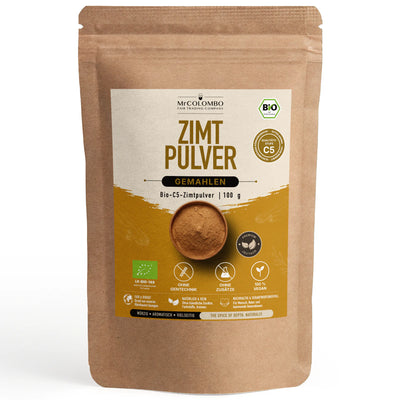
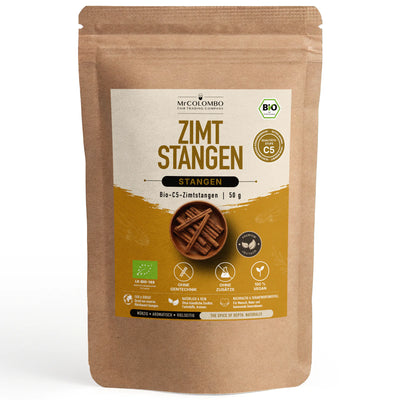
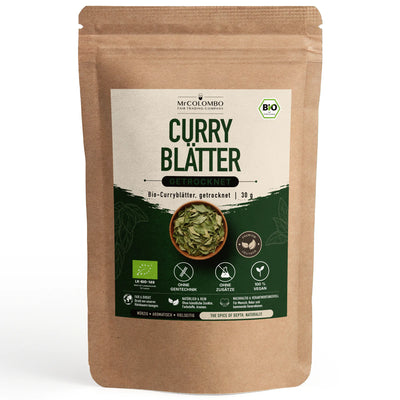
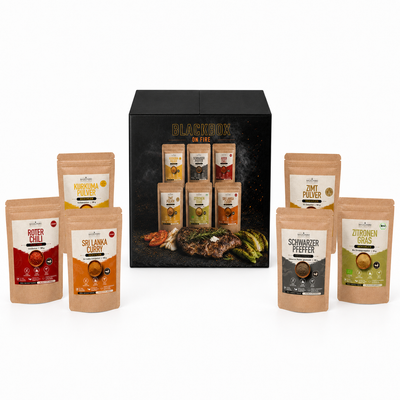
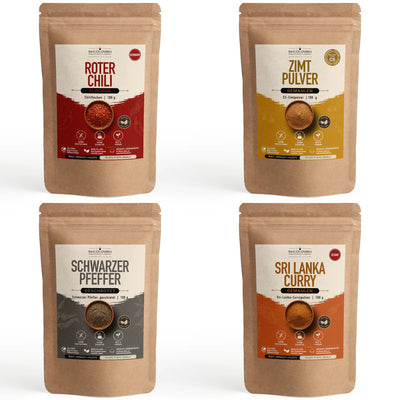
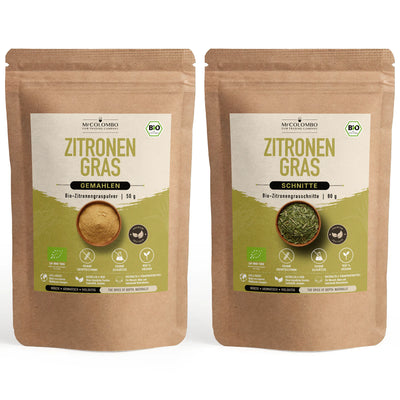
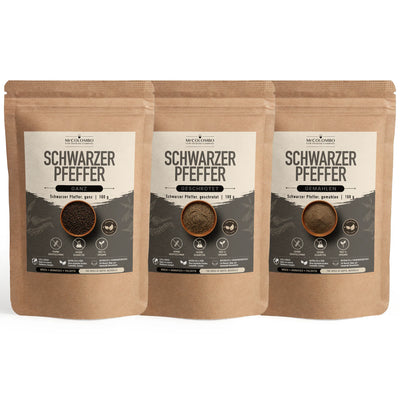




Whether spice blends or single spices are better depends on the type of blend: single spices you combine yourself beat most ready-made products because they are fresher and contain no hidden fillers.
At MrCOLOMBO we import single spices directly from smallholder farmers in Sri Lanka and know every stage of the supply chain personally. It is precisely this experience that has taught us: a spice blend is only as good as its ingredients and only as fresh as its most delicate component. This article sets out when blends make sense, when single spices clearly win and what you should look out for when buying.
Short answer
Spice blends or single spices: which is better? High-quality single spices, combined yourself shortly before use, are the better choice in most cases. They are fresher in aroma. Ready-made blends score only for traditional recipes and time savings, but according to consumer-protection tests they carry a higher risk of extenders, salt and residues.
At a glance
Why do spice blends lose their aroma more quickly?
Spice blends lose their aroma more quickly because every grinding and mixing step exposes the volatile essential oils, which then oxidise and evaporate. Conventional grinding at room temperature alone loses around 23 to 24 per cent of the volatile oils (Sharma et al., 2016). Ground blends also offer a surface area many times larger than whole spices for oxygen to attack. A whole spice such as a Ceylon cinnamon stick or a peppercorn, by contrast, protects its aromatic compounds beneath an intact shell and so remains stable for months. Anyone who buys blends therefore almost always gets a product whose most delicate components have already started the countdown on their shelf life.
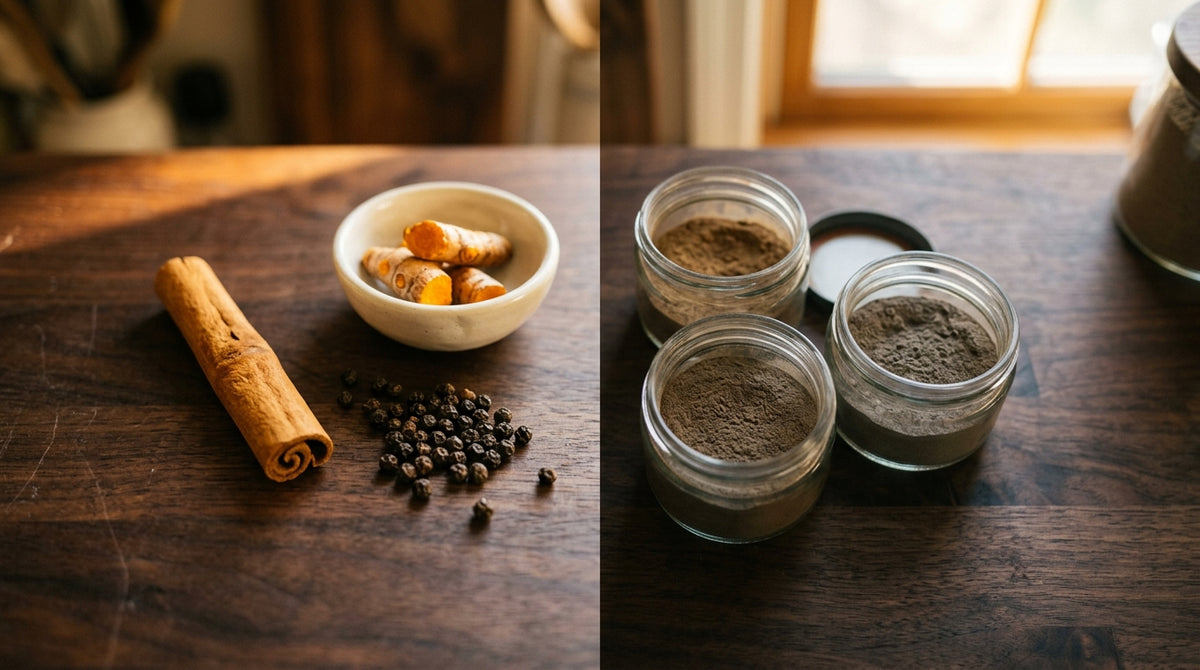
Then there is a problem of pace: in a ready-made blend, all ingredients age together even though they differ greatly in sensitivity. Ground coriander and cumin lose their aroma within a few months, while whole cloves or cardamom pods hold out considerably longer. Once they sit ground together in a jar, the weakest link dictates the quality. That is why at MrCOLOMBO we grind single spices only shortly before dispatch and supply many varieties as whole sticks, corns or pods. How much the grinding technique changes the result is something we show in detail in our article on cryogenic grinding of spices.

How can spices be combined in terms of flavour?
Spices can be combined deliberately in terms of flavour.
Beyond individual pairs of active compounds, the combination as a whole is also powerful. A randomised study had participants eat a meal with 14 g of spice blend and afterwards measured insulin levels 21 per cent lower and triglycerides 31 per cent lower than without spices (Skulas-Ray et al., 2011). A further investigation using 13 spices markedly lowered several inflammation markers (Oh et al., 2020). The German Nutrition Society stresses that secondary plant compounds have a more favourable effect in their natural combination than isolated single extracts (DGE, 2014).
What remains important: study results are not promises of healing.
Our approach at MrCOLOMBO
A pinch of freshly ground pepper complements turmeric dishes with heat. You will find a suitable drink idea in our golden milk recipe.
What is really in ready-made spice blends?
Cheap ready-made blends often contain more than is immediately visible on the label: salt, extenders and residues. Consumer watchdogs found tomato-mozzarella seasonings with a salt content of around 40 per cent, even though the term spice blend is legally reserved for pure spices (Lebensmittelklarheit.de, 2025). Extenders such as maize or cassava flour are also widespread; one review estimates that around 15 per cent of ground spices sold loose are adulterated (Moreda-Pineiro et al., 2023). Because blends come from many sources and the origin disappears in the powder, this is exactly where manipulation is easiest - a whole peppercorn can hardly be faked, a powder certainly can.
Then there are contaminants. A Foodwatch laboratory test in 2026 found banned pesticide residues in 67 per cent of 64 products tested, and one cumin sample exceeded a limit by a factor of 217 (Foodwatch, 2026). The German Federal Institute for Risk Assessment has been warning for years about elevated pyrrolizidine alkaloids, above all in dried herbs and blends of unknown origin (BfR, 2019). A recent analysis of 104 EU cinnamon samples found that 66.3 per cent did not meet quality criteria or were suspected of fraud (Ghidotti et al., 2025). Single spices with a clear declaration of origin regularly perform better in these tests than anonymous blends. More on how to separate the wheat from the chaff can be found in our article on the advantages of organic spices.
The legislator has responded to these risks. Since January 2023, stricter maximum levels for contaminants in spices have applied in the EU, for example a maximum of 15 micrograms of ochratoxin A per kilogram and no more than 2.0 milligrams of lead per kilogram for bark spices (Regulation (EU) 2023/915). The only problem is: a blend bundles the risk of many ingredients into one product. If even a single batch is contaminated, it drags the whole jar down with it, while the origin can no longer be traced in the powder. A single-variety spice with a clear supply chain, on the other hand, can be tested and traced back in a targeted way. That is exactly why we at MrCOLOMBO rely on direct import: we know which region and which partner farm every variety comes from - from the pepper highlands to the turmeric field near Jaffna.
Important
This article is for information purposes and is no substitute for medical advice. Cassia cinnamon can, when consumed in excess, be a burden due to its high coumarin content (BfR, ongoing). If you have health questions, please consult your doctor or pharmacist.

When is a spice blend the better choice?
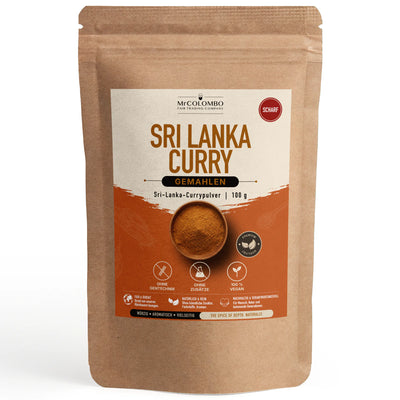
A spice blend is the better choice when it is based on a traditional recipe and consists of clean ingredients. Blends such as garam masala, ras el hanout or a roasted Sri Lanka curry powder are aroma compositions optimised over generations that nobody recreates on the spur of the moment. Garam masala literally means hot spice and comes from North Indian cuisine, where up to 20 spices are combined according to family-specific recipes (Azafran, n.d.). Authentic Jaffna curry powder is roasted before grinding and often contains roasted rice as a base, which gives it its dark brown colour and depth. Such blends are no compromise but cultural assets in their own right - provided the origin and processing are right.
The second good reason is simply time. Anyone cooking quickly on a weekday benefits more from a ready-made, high-quality blend than from ten separate jars. What matters is the quality of the base: a traditional blend of freshly roasted spices of assured origin delivers reproducibly good aroma, while a cheap blend padded with salt manages neither. Our recipe for a Sri Lanka curry shows how a good blend works in everyday cooking. So the rule of thumb is not blend versus single spice, but good origin versus anonymous mass-market goods.
How do you recognise good spice quality?
Good spice quality can be recognised by the declaration of origin, freshness and the purity of the ingredients list. The guidelines for spices, newly revised in 2025, define measurable characteristics, such as a maximum water content of around 12 per cent for dried spices, and require that blends be clearly declared as such (BMLEH, 2025). A reliable signal is a specific origin: if a growing region is stated on the packaging, quality can be traced. With cinnamon, the species determines safety - true Ceylon cinnamon contains only around 0.017 mg of coumarin per gram, whereas cassia contains up to 10 mg, that is up to 700 times more (BfR, ongoing). Anyone who wants to know looks at the botanical name rather than the word cinnamon alone.
Independent tests also help with the assessment. In Stiftung Warentest and ÖKO-TEST investigations, organic products almost always performed better than conventional ones, and single spices with a declaration of origin better than blends with an unclear supply chain (ÖKO-TEST, 2011; Stiftung Warentest, 2020). A short shopping checklist before the spice lands in your basket therefore makes sense. You will find the complete guide to this in our article Ceylon cinnamon versus cassia cinnamon.
Shopping checklist
Is the origin stated specifically? A growing region rather than just a country is a good quality signal.
Is the ingredients list pure? Salt, sugar and anti-caking agents have no place in a genuine spice blend.
Is the botanical name given? Cinnamomum verum rather than just cinnamon indicates true Ceylon cinnamon.
Is it whole rather than ground? Whole spices keep their aroma considerably longer and are harder to adulterate.
How do you combine single spices optimally?
Single spices are combined optimally by first dry-roasting them, then grinding them fresh and only then portioning them. Roasting in a dry pan awakens the aromatic compounds and is the key step in almost every traditional recipe, whether for garam masala or for roasted Jaffna curry powder. Ground afterwards, the spices unfold their full aroma - precisely those volatile oils that have long since evaporated in ready-ground blends (Sharma et al., 2016). Anyone who mixes small quantities and uses them up quickly will have consistently fresher results than with any jar kept in stock. This sequence - roast, grind, portion - is the real advantage of making it yourself.

Behind our single spices lies direct experience from Sri Lanka. We source pepper from the central highlands around Matale and Kandy, Ceylon cinnamon from the central region and turmeric from the north around Jaffna - regions we know personally. Sri Lanka is the sole origin of true Ceylon cinnamon, and five types of spice are protected under the geographical indication Ceylon Spices (Sri Lanka Export Development Board, 2024). Direct import without intermediaries keeps the supply chain traceable, and we can deliver freshly ground goods instead of blends stored for months. If you would like to read more about this background, you will find it in our article Spices from Sri Lanka.
| Criterion | Single spices mixed yourself | Cheap ready-made blend |
|---|---|---|
| Fresh aroma | Yes | No |
| Full control over ingredients | Yes | No |
| Speed in everyday cooking | lower | higher |
| Risk of salt and extenders | very low | elevated |
| Flexible combinations | Yes | depends on the recipe |
A spice blend is only as good as its ingredients - and only as fresh as its most delicate component.
MrCOLOMBO experience report
Spice blend or single spice - which is really worth it?
For everyday cooking the rule is: high-quality single spices, freshly and deliberately combined yourself, are the better choice in most cases. They stay more aromatic and spare you hidden fillers. Ready-made blends earn their place when they are based on a genuine tradition and consist of clean ingredients - then they are cultural assets, not a compromise. The real dividing line does not run between blend and single spice, but between clear origin and anonymous mass-market goods. You will find the right starting point in our range of single spices from Sri Lanka.