


M oringa oleifera, known in Sri Lanka for centuries as “Murunga”, is one of the most nutrient-rich plants of the tropics. With over 90 documented nutrients, including all eight essential amino acids, the tree from the Moringaceae family has attracted worldwide attention in recent years (Divya et al., 2024). The global moringa market reached a volume of 9.82 billion US dollars in 2025 (Mordor Intelligence, 2025) - yet in the EU there is not a single authorised health claim for moringa. Between the TikTok hype and scientific reality, current meta-analyses paint a nuanced picture: promising nutrient data, but limited clinical evidence (Parente et al., 2025).
As a direct importer from Sri Lanka, we know moringa not as a trendy product from the health-food shop, but as an everyday ingredient in Sri Lankan cooking. On our partners' plantations in the Central Province, moringa grows alongside turmeric and Ceylon cinnamon - a tree that, in a humid tropical climate at 25-35 °C, reaches up to four metres in height within a single year. Moringa is rooted in three traditional medical systems of Sri Lanka - Ayurveda, Unani and Deshiya Chikitsa - and has been used there for generations as an everyday vegetable, not as an exotic food supplement.
At a glance
What is moringa and where does the tropical tree come from?
Moringa oleifera belongs to the Moringaceae family and is the only economically significant genus of this plant family. The tree originally comes from the Himalayan region of north-western India and is now cultivated in over 80 tropical and subtropical countries (Harnisch, 2015). In Sanskrit, moringa bears the name “Shigru” - literally “the penetrating one” - and has been documented in Ayurvedic medicine for over 5,000 years. In the Charaka Samhita, one of the oldest medical texts of humankind, moringa is assigned to the Krimighna category.
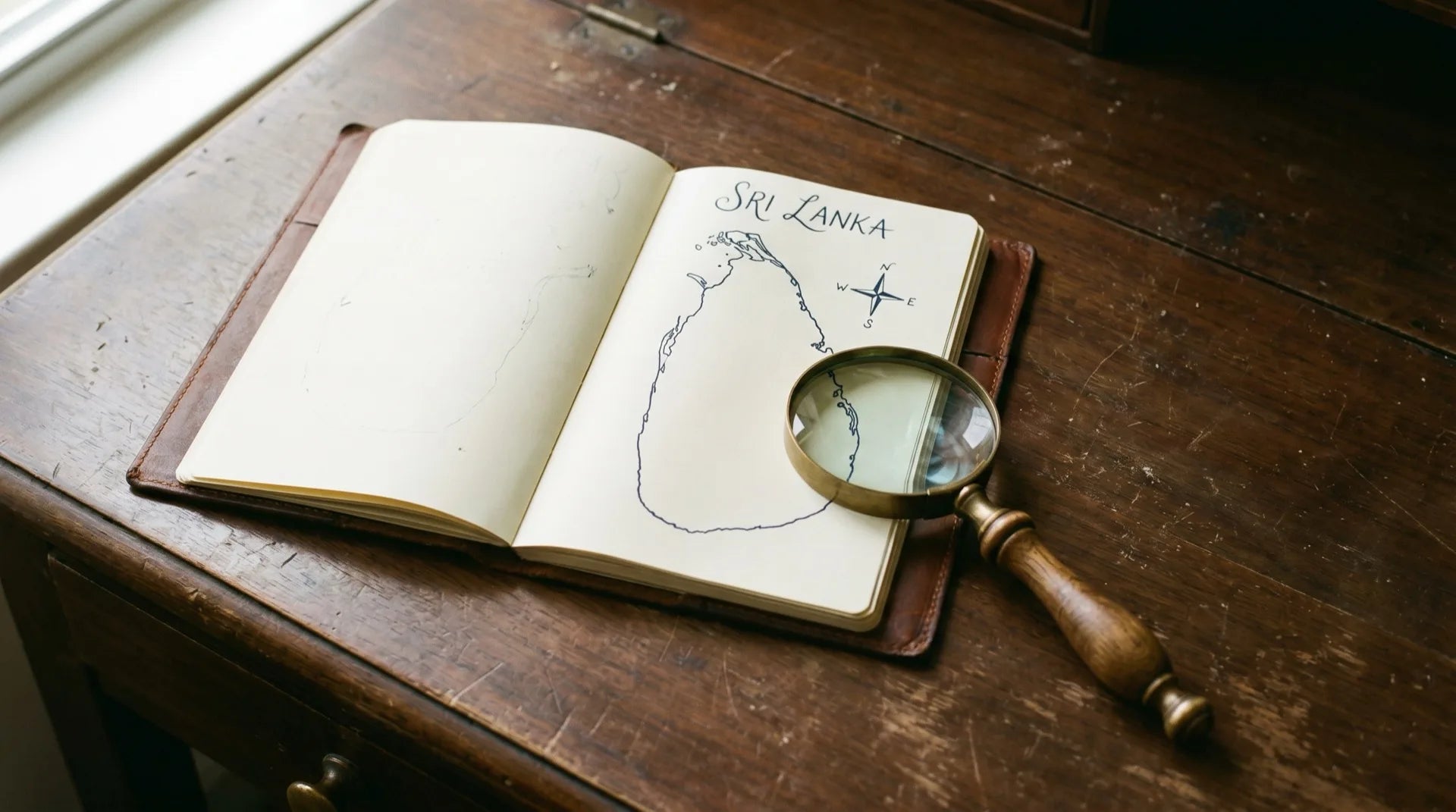
In Sri Lanka, moringa, known as “Murunga”, is a firm part of everyday cooking - not as an exotic food supplement, but as a perfectly ordinary vegetable. On the plantations of our partner farms in the Central Province around Matale and Kandy, moringa trees grow in the immediate vicinity of turmeric and Ceylon cinnamon. The humid tropical climate, with temperatures between 25 and 35 °C, and the nutrient-rich soils offer ideal growing conditions. According to DHL (2024), Sri Lanka is among the three largest moringa exporters worldwide - after India and China. Local use is rooted in three traditional medical systems: Ayurveda, Unani and Deshiya Chikitsa. Anyone wishing to learn more about the diversity of Sri Lanka's spices will find further insights in our detailed country portrait.
Which nutrients does moringa actually contain?
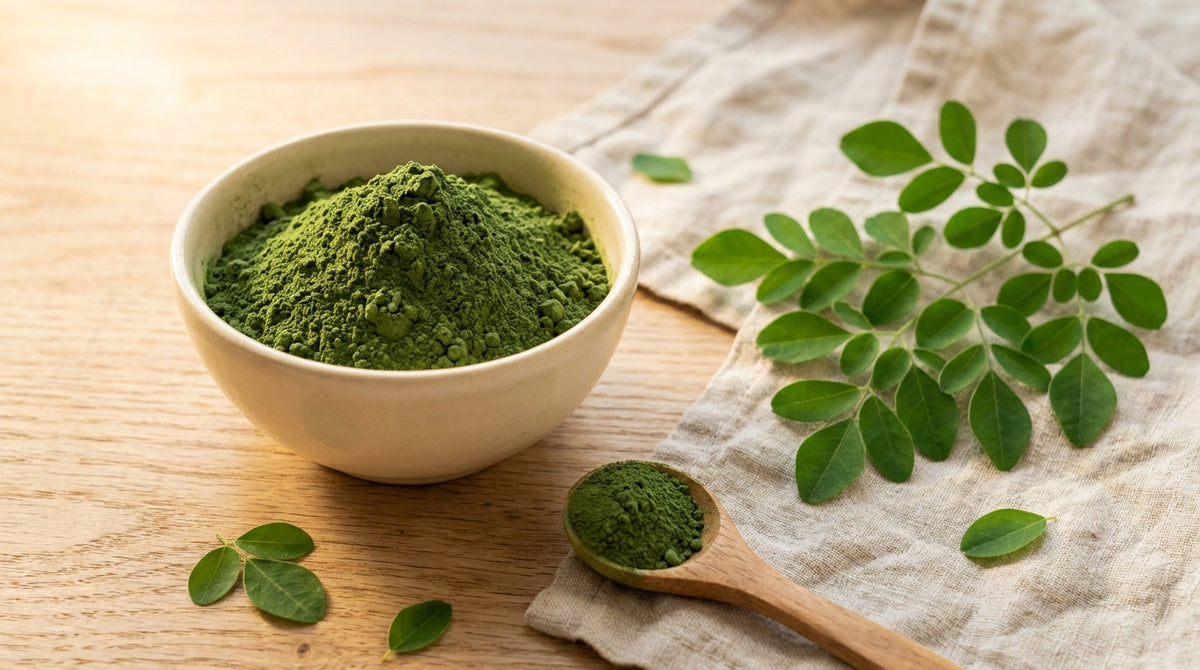
The nutrient density of moringa leaf powder is impressive - at least on paper. According to a comprehensive phytochemical analysis, dried moringa leaf powder contains around 25 % protein per 100 g, with 19 amino acids, including all eight essential ones (Divya et al., 2024). The Apotheken Umschau (2024) puts the vitamin C content at 220 mg per 100 g of leaf powder, the vitamin E content at 62 mg and the vitamin B2 content at 20.4 mg. Added to this are relevant amounts of calcium, iron and vitamin A.
The decisive question, however, is: how much of it do you actually consume? The recommended daily dose is 5 to 10 g of moringa powder - the equivalent of one to two teaspoons. With 10 g of powder, you therefore get around 2.5 g of protein, 22 mg of vitamin C and 6.2 mg of vitamin E. For comparison: one portion of broccoli (200 g) provides roughly 180 mg of vitamin C and 5.6 g of protein. The Verbraucherzentrale NRW (2024) therefore makes it clear: “In relation to the recommended daily dose, the nutrient content of moringa powder is no higher than that of fresh vegetables.” The frequently quoted comparisons - “7 times more vitamin C than oranges” - refer to 100 g of dried powder, not to realistic amounts of consumption.
Nutrient comparison: daily dose of moringa vs. fresh vegetables
| Nutrient | Moringa 10 g | Broccoli 200 g | Orange 150 g |
|---|---|---|---|
| Vitamin C | 22 mg | 180 mg | 75 mg |
| Protein | 2.5 g | 5.6 g | 1.4 g |
| Calcium | 200 mg | 94 mg | 60 mg |
| Iron | 2.8 mg | 1.4 mg | 0.2 mg |
| Vitamin E | 6.2 mg | 1.2 mg | 0.3 mg |
Sources: Apotheken Umschau (2024), Divya et al. (2024), USDA FoodData Central
The most important constituents at a glance
Alongside its nutrient profile, moringa contains bioactive plant compounds such as quercetin, kaempferol, chlorogenic acid and isothiocyanates (Abdelazim et al., 2024). These secondary plant compounds are being intensively researched in nutritional science. Quercetin, for instance, is also found in onions and apples, while chlorogenic acid is a main constituent of coffee. Moringa therefore offers an interesting combination of micronutrients and plant compounds - though in the amounts that are relevant at realistic levels of consumption, not in the superlative dimensions so often advertised.

What does current research say about moringa?
The scientific data on moringa has become considerably more substantial in recent years. An umbrella review by Parente et al. (2025), which summarises 26 systematic reviews, provides indications that moringa supplementation might influence various metabolic parameters. The authors, however, expressly emphasise the limited quality of many of the included studies and the need for further research - an important caveat that is frequently omitted in popular-science reporting.
A meta-analysis of randomised controlled trials by Crișan et al. (2025) observed that moringa supplementation over eight weeks was associated with a reduction in LDL cholesterol of 11 % on average and in total cholesterol of 9 %. Here too: these results come from controlled study settings and cannot be transferred directly to everyday life. In a further double-blind, placebo-controlled study, it was observed that moringa leaf extract influenced blood sugar control and altered inflammation markers in patients with metabolic syndrome (Rashidmayvan et al., 2026).
Important
This article is for information purposes and does not replace medical advice. For moringa, there are no authorised health-related statements (health claims) in the EU. If you have health-related questions or are taking medication, consult your doctor or pharmacist. The Memorial Sloan Kettering Cancer Center (2024) points to possible interactions with diabetes, blood-pressure and thyroid medication.
Safety and dosage
A comprehensive safety review by Stohs and Hartman (2015) found no reported side effects in the human studies conducted up to that point at doses of up to 50 g of leaf powder. In clinical studies, doses of between 1.5 and 10 g of moringa leaf powder per day were used (WebMD, 2024). For everyday use in the kitchen, nutritionists recommend one to two teaspoons (5-10 g) of powder daily. Root and bark extracts are advised against because of potentially neurotoxic alkaloids (Stohs & Hartman, 2015).
Is the moringa hype justified - or just marketing?
The global moringa market is estimated at 9.82 billion US dollars (2025) and is expected to grow to 15.41 billion by 2030 - an annual growth rate of 9.43 % (Mordor Intelligence, 2025). With 50 to 60 tonnes of imported moringa leaf powder per year, Germany is the largest EU market (CBI, 2024). The drivers are plant-based dietary trends, the increased interest in sustainable agriculture and - not least - social media. Naomi Campbell and Martha Stewart are among its prominent advocates, and Whole Foods lists moringa products in its food trends for 2026.
But the hype has a dark side too. In October 2025, ZDFheute reported on AI-generated deepfake videos on TikTok in which well-known German doctors such as Christian Drosten and Johannes Wimmer supposedly advertise moringa products - with impermissible healing promises. In the same report, nutritionist Isabel Kreuznacht warned: “Moringa products carry a multitude of statements that are not permitted at all.” Dr. Michael Greger of NutritionFacts.org sums it up: “The evidence is not sufficient to buy something special online when you can get healthy vegetables like broccoli at your local market.” Only a few hundred human studies exist on moringa - compared with over 10,000 on green tea.
The honest assessment: moringa is a nutrient-rich food with a fascinating botanical and cultural history. But it is not a miracle remedy, and the nutrient values per realistic daily dose put the spectacular comparison figures firmly into perspective. Anyone who uses moringa as a complement to a varied diet and pays attention to quality when buying is making an informed decision - beyond hype and scaremongering. Our article on Ceylon cinnamon vs. cassia cinnamon offers a similarly nuanced look at differences in quality.

How do you use moringa properly in the kitchen?
In Sri Lanka and southern India, moringa is not a food supplement but an everyday vegetable with over 14 traditional ways of preparation (Saffron Trail, 2024). Fresh moringa leaves are used there like spinach in curries, dals and stir-fries. The pods - known locally as “drumsticks” - are a popular ingredient in sambar, the classic South Asian lentil dish. On the plantations of our partner farms in Sri Lanka, we see how naturally moringa leaves go straight into the field kitchen at harvest time - moringa belongs in the kitchen, not in the pharmacy.
For European cooking, moringa leaf powder is the most suitable option. It has a slightly peppery, rocket-like flavour and can be used in many ways. The easiest way to start is a moringa and mango smoothie: one teaspoon of moringa powder, one ripe mango, half a banana and 200 ml of coconut water - and you have a nutrient-rich breakfast drink with an intense green colour. If you prefer savoury, stir moringa powder into a basil pesto or whisk it into salad dressings. A moringa morning latte - moringa with frothed almond drink, vanilla and a touch of maple syrup - is an interesting alternative to coffee. You will find detailed instructions in our five best moringa leaf powder recipes.
Practical tip
Do not cook moringa powder with the food; stir it in only after cooking or into cold dishes. Heat above 70 °C can reduce sensitive nutrients such as vitamin C. Start with half a teaspoon a day and slowly increase to one to two teaspoons.
Sri Lankan-style moringa dal
An authentic recipe that shows moringa as what it is in its homeland - a perfectly ordinary ingredient: cook red lentils with turmeric, cumin, fresh or dried moringa leaves and a pinch of black pepper until the lentils are soft. Finish with coconut milk and serve over rice. In Sri Lanka, this dish, known as “Murunga Kola Malluma”, is an everyday meal - simple, nourishing and a long way from the Western image of a food supplement. The UN has included moringa in its “Million Moringa Project” as a solution to malnutrition (UN SDGs, 2020). Anyone wishing to dive even deeper into Sri Lankan cooking will find inspiration in our authentic Sri Lanka curry recipe.
What should you look for when buying moringa?
The differences in quality between moringa products are considerable - and the contamination risks are real. In 2020, the Chemisches und Veterinäruntersuchungsamt Stuttgart (CVUA) examined a total of 13 moringa samples from German retail: 69 % exceeded the maximum pesticide levels, 85 % were contaminated with perchlorate, and three samples contained polycyclic aromatic hydrocarbons above 50 µg/kg (CVUA Stuttgart, 2020). Even more serious: in March 2026, a well-known organic manufacturer had to recall its moringa capsules because of salmonella findings - sold at dm, in pharmacies and online.
These findings show how important the choice of source is. A recent study by Lekgau et al. (2026) also confirms that moringa can accumulate heavy metals such as lead, arsenic and cadmium from contaminated soil - organic moringa from certified cultivation contained significantly lower levels of contamination. When buying, you should look for the following quality features:
Five quality criteria for good moringa powder
- Organic certification: demonstrably reduces pesticide and heavy-metal contamination. The EU organic label as the minimum standard.
- Colour: a deep green powder indicates gentle drying. Brownish-yellow powder is oxidised and lower in nutrients.
- Origin: Sri Lanka and India offer traditional cultivation expertise. Transparent supply chains from the field to the end product.
- Drying method: air drying at low temperatures preserves nutrients better than industrial rapid drying.
We at MrCOLOMBO know every stage of the supply chain personally - from the moringa field in Sri Lanka's Central Province to dispatch in Germany.

What is the verdict - is moringa really worth it?
Moringa oleifera is a fascinating tropical tree with an impressive nutrient profile and a cultural history going back thousands of years. Current research offers interesting leads - but at a level of evidence that does not justify health-related promises. In the EU there is not a single authorised health claim for moringa. What moringa deserves is neither the uncritical hype of the social-media world nor the blanket rejection by some consumer advocates, but a nuanced assessment: as a nutrient-rich food with an exciting history that, when of good quality, can be a sensible complement to a varied diet.
Anyone who takes the quality of their moringa powder seriously and looks for organic certification, transparency of origin and laboratory analyses is on the right track. In our article on the perfect golden milk, we show how moringa combines wonderfully with turmeric and Ceylon cinnamon.