



Plant-based cooking works reliably when spices take on exactly the job that meat, butter and long roasting times do in classic cooking: depth, roasted aroma and savoury richness. Seven techniques and eight basic spices are enough for that, and none of them needs special equipment.
The foundation is an umami source such as soy sauce, miso or dried mushrooms, plus a small basic kit of eight spices that are briefly fried in hot fat. The spice profile depends on the protein source, the quality on variety and origin: with cinnamon, Cinnamomum verum versus cassia decides the coumarin content, with cumin (Cuminum cyminum) the degree of roasting decides the depth. According to the Nutrition Report of the Federal Ministry of Food and Agriculture (BMEL, 2024), 10 per cent of people in Germany now reach for plant-based alternatives every day, twice as many as in 2020. We at MrCOLOMBO import the spices for precisely this kind of cooking directly from Sri Lanka, buy without intermediaries from smallholder families in the Central Province and around Matale, and know every stage of the supply chain personally.
Short answer
Which spices does plant-based cooking really need? Eight spices cover everyday cooking: cumin, coriander seed, turmeric, black pepper, chilli, mustard seed, Ceylon cinnamon and a curry blend. What matters is not the quantity but the technique: fry the spices in hot fat for 30 to 60 seconds, and only then add the main ingredient. A review on plant-forward cuisine describes two levers: fermentation unlocks the plant's own umami potential, while umami-rich seasonings bring it in from outside and at the same time mask bitter notes (Ono & Mouritsen, 2025).
At a glance
How do you get umami flavour without meat?
Umami is the fifth basic taste alongside sweet, sour, salty and bitter, and it arises from free glutamic acid as well as from nucleotides such as guanylate. Both groups of compounds are found in abundance in plant-based ingredients: in soy sauce, miso, tomato purée, nutritional yeast flakes, roasted nuts, dried shiitake mushrooms and in the seaweed kombu. A review in the International Journal of Gastronomy and Food Science describes this deliberate umamification of plant-forward cuisine and names two routes to it: fermentation unlocks the umami potential of the plant itself, and umami-rich seasonings bring it in from outside while also masking bitter notes (Ono & Mouritsen, 2025). Combining two sources is particularly effective: kombu supplies glutamate, dried mushrooms supply guanylate, and together the effect is amplified far more strongly than the sum of the individual parts. In practical terms this means: a teaspoon of miso and a handful of soaked shiitake give any vegetable broth a depth that otherwise only a stock provides.

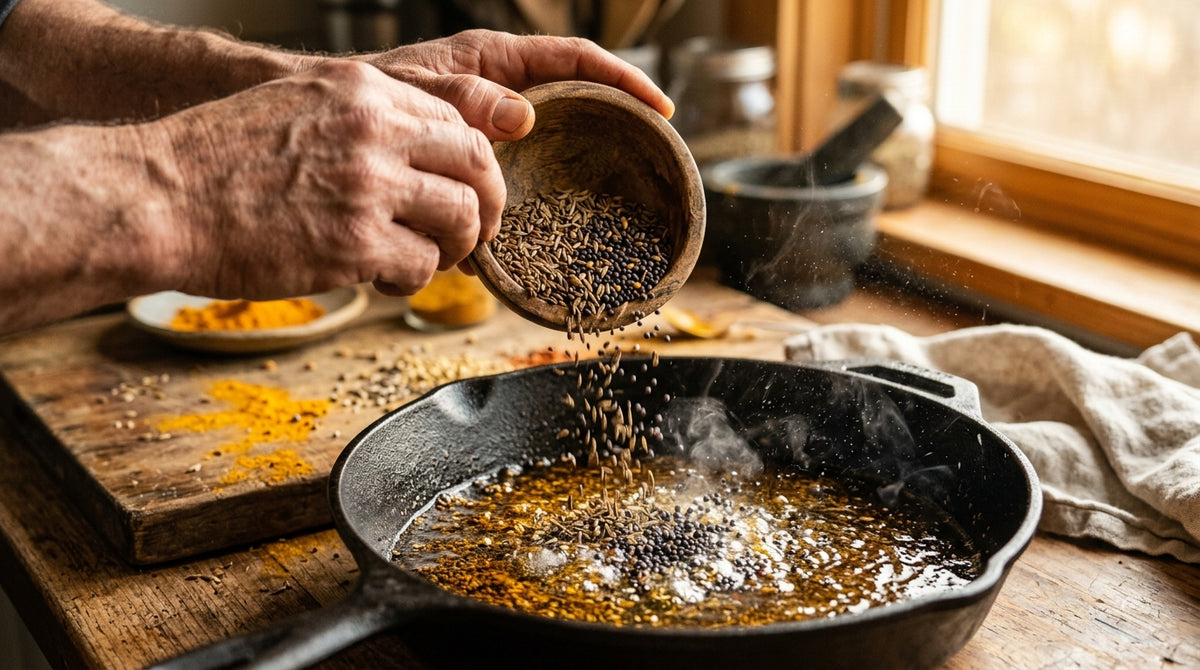
The second lever for umami in plant-based cooking is heat. In South Asian cooking the technique is called tadka: whole seed spices are fried in hot fat at around 160 to 180 degrees for 30 to 60 seconds, until mustard seeds pop and cumin turns darker. Ground spices, chilli flakes and curry leaves, by contrast, need only 10 to 30 seconds, and ghee tolerates the necessary heat far better than virgin olive oil. In the process the essential oils dissolve into the fat and later spread evenly through the whole dish instead of remaining as powder on the surface. Roasted aromas additionally arise through the Maillard reaction when onions, tomato purée or curry powder are briefly roasted along with them. It is precisely these seconds that decide whether a lentil dal tastes flat or full-bodied. The order matters: first mustard and cumin seeds, then ginger and garlic, and last the powdered spices such as turmeric, which turn bitter if heated too long. Deglazing the pan afterwards with coconut milk or tomatoes preserves the aroma in the dish.
Tadka in five steps
Heat the fat. Bring oil or ghee in the pan to around 160 to 180 degrees, until the surface shimmers slightly.
Add the whole spices. Fry mustard seed and cumin for 30 to 60 seconds, until the mustard seeds pop and the cumin turns darker.
Add the aromatics. Briefly roast ginger and garlic along with them while the pan is still hot but no longer at full blast.
Powdered spices last. Roast turmeric and other ground spices along for only 10 to 30 seconds, otherwise they turn bitter.
Deglaze. Deglaze with coconut milk, tomatoes or broth so that the released aroma stays in the dish.
A dal without tadka is boiled lentils. A dal with tadka is a dish.
MrCOLOMBO field report from the kitchen of our partner family in Jaffna
Which spices does plant-based cooking really need?
For almost any everyday plant-based dish, eight spices are enough: cumin, coriander seed, turmeric, black pepper, chilli, mustard seed, Ceylon cinnamon and a ready-made curry blend as a shortcut. This selection covers the South Asian, the Middle Eastern and the Mediterranean directions, because the profiles can be shifted through dosing. A review in the Journal of Functional Foods summarises that spices such as oregano, ginger, garlic, black pepper, cinnamon and cumin show antimicrobial and antioxidant properties and are being studied as natural preservatives in foods (Al-Habsi et al., 2025). An analysis of 3,139 foods also found that spices achieve the highest readings in the FRAP laboratory test: clove reached 277.3 mmol per 100 grams, allspice 100.4, cinnamon 77.0 and oregano, for comparison, 63.2 (Carlsen et al., 2010). The FRAP test measures reducing capacity in a test tube and not any effect in the body, and nobody eats 100 grams of clove anyway. In practice, the figure is therefore relevant less as a health argument than as an indication of aroma density.
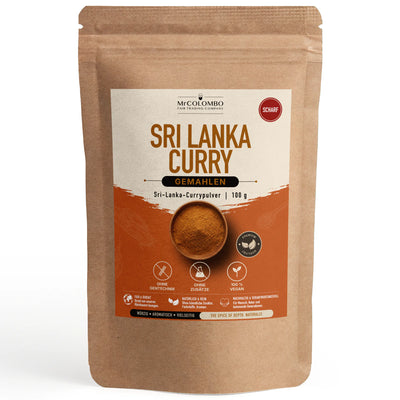
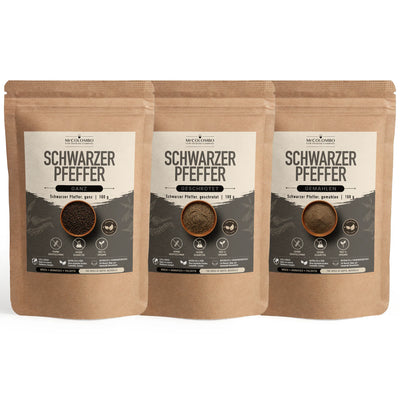
When buying, it pays to look at the form. Whole seeds and kernels keep for two to three years if stored cool, dark and airtight, whereas ground spices already lose their aroma noticeably after six to twelve months, because the essential oils evaporate faster from the larger surface area. Anyone who buys cumin, coriander and mustard whole and processes them fresh in a mortar or in the pan therefore gets more aroma per gram. Coriander seed, for example, needs around 60 to 90 seconds in a dry pan over medium heat until it smells nutty and can easily be crushed in a mortar. For turmeric, chilli and pepper, ground product is more practical in everyday use; here the freshness of the batch counts above all. Our Sri Lanka curry blend is dark-roasted to a family recipe, which gives it the typical roasted note of Ceylon curry, and it replaces three to four individual spices in many dishes. How strongly grind and processing affect the aroma is shown by the comparison of black pepper and its quality grades.
Why do turmeric and black pepper belong together?
Curcumin, the yellow pigment in the rhizome of the turmeric plant (Curcuma longa, a ginger plant from the family Zingiberaceae), is only poorly absorbed in the gut and quickly excreted again. A classic study in Planta Medica therefore investigated the combination with piperine, the pungent compound in black pepper: in ten volunteers, the bioavailability of 2 grams of curcumin rose by 2,000 per cent with the addition of 20 milligrams of piperine, and in rats by 154 per cent, in each case relative to one kilogram of body weight (Shoba et al., 1998). The study is small and has never been independently replicated. In two further small investigations, as little as 5 milligrams of piperine increased the absorption of fat-soluble substances, by around 60 per cent for beta-carotene (Badmaev et al., 1999) and by around 30 per cent for coenzyme Q10 (Badmaev et al., 2000); both come from the circle of a piperine manufacturer.
In the kitchen, the combination of turmeric, pepper and fat looks like this: half a teaspoon of turmeric, a generous pinch of pepper and a tablespoon of oil or coconut milk per portion, briefly heated together rather than sprinkled over the finished dish at the end. The reason is simple: curcumin is fat-soluble and migrates into the oil when heated, whereas powder sprinkled on dry stays lying gritty on the surface. This works in lentil soup just as it does in golden milk made to the original recipe or in a tofu bowl. It is important to distinguish this from food supplements: the German Federal Institute for Risk Assessment points out that with high-dose curcumin preparations the acceptable daily intake considered safe for health can be exceeded, whereas the usual use of turmeric as a kitchen spice is considered safe (BfR, Opinion No. 040/2021). More background on this can be found in our overview of the state of research on turmeric.

Which spices go with tofu, tempeh and seitan?
Plant-based protein sources differ greatly in their own flavour, which is why a universal spice rarely works. Tofu is neutral and highly absorbent, so it takes salty and acid-led marinades with ginger, soy sauce, sesame and turmeric and needs at least 30 minutes of contact time. Tempeh brings a nutty, slightly bitter note from fermentation, which sweet-and-spicy profiles of chilli, cinnamon and date syrup balance well. Seitan has a dense, meat-like structure and takes robust roasting spices such as cumin, mustard seed, fenugreek and garam masala, because its neutral wheat-protein core brings little aroma of its own. Pulses, in turn, need above all warmth and fat as aroma carriers, classically via the tadka technique, and can take twice the amount of spice of a comparable vegetable stir-fry. The market for these ingredients keeps growing: plant-based foods generated around 1.71 billion euros in sales in German food retail in 2025, up 3.1 per cent, with volume growth of 6.2 per cent on the previous year (Good Food Institute Europe, 2026).
| Protein source | Suitable spice profile | Technique |
|---|---|---|
| Tofu | Turmeric, ginger, black pepper, sesame, soy sauce | Marinate for at least 30 minutes, then sear |
| Tempeh | Chilli, Ceylon cinnamon, coriander seed, a little sweetness | Steam briefly, then glaze sweet and spicy |
| Seitan | Cumin, mustard seed, fenugreek, curry blend | Dry-roast the spices, then fry in oil |
| Pulses | Cumin, turmeric, chilli, mustard seeds | Tadka in hot fat, stir in at the end |
| Nut butters and cashew creams | Turmeric, pepper, smoked paprika | Stir in cold, leave to stand for at least an hour |
In its position paper, the German Nutrition Society considers a vegan diet possible for healthy adults on condition that a vitamin B12 supplement is taken, but expressly does not issue a recommendation for it; among the critical nutrients it names iodine, iron, zinc, calcium, vitamin D and long-chain omega-3 fatty acids (DGE, 2024). Spices do not replace these nutrients; they solve a different problem: acceptance. Anyone who finds plant-based dishes boring does not cook them twice. This is exactly where spice work comes in, because it turns the same basic ingredients into three completely different dishes. A lentil with cumin and coconut milk tastes South Asian, the same lentil with smoked paprika and oregano Mediterranean, with cinnamon and coriander Middle Eastern. Three dishes from 250 grams of the same red lentils, distinguished solely by two to three teaspoons of spice. A practical template for the first variant is our curry recipe from Sri Lanka, which can be prepared entirely plant-based.
What does research say about cinnamon, cumin and cardamom?
Many promises circulate around spices; the evidence is considerably less consistent than the advertising. For cinnamon in type 2 diabetes, Allen and colleagues evaluated ten randomised controlled trials with 543 participants: changes were observed in fasting blood glucose and blood lipid values, but no significant difference in the long-term marker HbA1c. The authors themselves point to the great heterogeneity of the individual studies, whose doses ranged between 120 milligrams and 6 grams per day (Allen et al., 2013). An older meta-analysis with five studies and 282 participants had previously found no effect at all (Baker et al., 2008). A randomised crossover study with 18 adults with obesity and prediabetes tested 4 grams of cinnamon daily for four weeks at a time and observed lower daily glucose curves by continuous glucose monitoring; the cinnamon used was cassia cinnamon from Indonesia (Zelicha et al., 2024). After more than twenty years of research the picture thus remains inconsistent, and not for lack of studies but because of their very different doses, cinnamon varieties and study durations.
For cumin and cardamom the data are even thinner than for cinnamon. For cumin, a study with 88 overweight women over three months with 3 grams of cumin powder daily observed changes in blood lipid values and body measurements (Zare et al., 2014); the sample is small, the duration short, and diet and exercise can only be controlled to a limited extent in such investigations. A meta-analysis of eight studies on cardamom reported changes in diastolic blood pressure and in inflammation markers, but on average below one millimetre of mercury and thus without practical significance (Heydarian et al., 2024). The inflammation markers used were CRP and interleukin-6, and eight individual studies are a narrow basis for a robust meta-analysis. What is tested in such studies, moreover, are measured amounts of powder over weeks, not the everyday pinch in a curry. So anyone who uses spices for their flavour will not be disappointed; anyone who expects an effect should keep that expectation small.
Important
This article is for information purposes and does not replace medical advice. Individual studies cannot be applied to everyone, and spices are foods, not a therapy. If you have health questions, please consult your doctor or pharmacist.
Spices are flavour providers and not medicine; that is the practical conclusion from the evidence. What remains interesting, though, is the quantity with which research is done at all. The 3 grams of cumin from the study by Zare et al. (2014) correspond to roughly a heaped teaspoon, the 4 grams of cinnamon to around one and a half teaspoons, both amounts that can certainly come together in a spice-led dish. Anyone who cooks with cinnamon daily should know the variety, because the European Food Safety Authority has set a tolerable daily intake for coumarin of 0.1 milligrams per kilogram of body weight (EFSA, 2004). According to measurements by the German Federal Institute for Risk Assessment, cassia cinnamon contains on average around 3,000 milligrams of coumarin per kilogram, whereas true Ceylon cinnamon contains at most 297 milligrams and often less than the detection limit (BfR, 2012). In practical terms: with around 2 grams of cassia cinnamon per day, an adult weighing 60 kilograms already uses up the guideline value, and a child weighing 15 kilograms with just half a gram. The details are in the comparison Ceylon cinnamon versus cassia cinnamon.
How do you recognise good spice quality?
With spices, origin is not a marketing detail but the most important quality lever. According to the Sri Lanka Export Development Board, around 90 per cent of the true cinnamon (Cinnamomum verum) traded worldwide comes from Sri Lanka; the island also supplies pepper, cloves, nutmeg and cardamom. The difference is apparent as soon as you open the bag: true Ceylon cinnamon smells mild, floral and slightly citrusy, cassia by contrast sharp and woody. Chiefly responsible for this is the proportion of cinnamaldehyde, the essential oil behind the typical cinnamon smell, which is present in far higher concentration in cassia. With pepper, the growing altitude determines the pungency; with turmeric, the curcumin content determines the depth of colour. This concentration on a single island has grown historically: first Portuguese, then Dutch and from 1796 British colonial administrations controlled Ceylon's cinnamon trade for around three centuries, and some of today's growing areas still date back to that period.
Sri Lanka offers unusually good growing conditions for spices: a humid tropical climate with two monsoon seasons, high humidity all year round and deep, iron-rich laterite soils. The cinnamon bark is cut twice a year, preferably in the drier weeks, because the inner bast then comes away from the stem most easily. It is scraped off by hand, divided into thin strips and dried in the shade over several days until it curls up into the typical feather-light quills. It is precisely this manual work that distinguishes true Ceylon cinnamon from mechanically processed cassia bark, and it is the reason why it costs more to buy. We buy directly from smallholder families in the Central Province, in Matale and around Jaffna, without intermediaries, and know the drying yards and milling operations personally. According to the forecast model of Statista Market Insights (2025), the German market for spices and herbs stood at around 447 million euros in 2025, with growth expected to around 551 million euros by 2030.
Checklist for buying spices
Is the region stated on the packaging? A specific growing region is a quality signal; a mere country of origin or no information at all is not.
Is the variety named? With cinnamon, Cinnamomum verum versus cassia is decisive; with chilli, the variety decides pungency and roasted note.
How does the spice smell? Freshly ground product is fragrant the moment you open it. If you smell nothing, you are holding old powder.
Is there a packing date? A best-before date far in the future says less than the date of milling.
Is the batch tested? Laboratory analyses for pesticides and mineral oil are a real difference with imported goods, not a bonus.
How necessary such tests are is shown by the German consumer tests of recent years. In 2022, Öko-Test examined a total of 19 turmeric powders and faulted 16 of them; mineral oil components were detected in all samples, in 16 products in markedly elevated amounts (Öko-Test, 2022). Stiftung Warentest tested 34 herb seasonings, 21 oregano and 13 marjoram products, and awarded a rating of good or very good to only around every third oregano; the main problem was pyrrolizidine alkaloids from wild herbs harvested along with the crop (Stiftung Warentest, 2020). These substances come from weeds that get picked up during mechanical harvesting, and they can neither be washed off nor cooked away. What is decisive is therefore how cleanly harvesting and sorting are done in the field in the first place. That is exactly why the supply chain, and not the price on the label, determines the quality in the jar. If you want to know how direct import specifically affects freshness and residue profile, you will find the assessment in our article on the advantages of organic spices. Our entire Ceylon cinnamon range comes from the central region of Sri Lanka.
Our way at MrCOLOMBO
We do not buy through exchanges but directly from family farms in Sri Lanka. That means longer routes in planning, but short routes in traceability: every batch of turmeric comes with a known place of cultivation instead of an anonymous bulk lot.
How do you store spices properly and what should you look out for?
Spices lose aroma through light, heat, oxygen and moisture, in that order. The worst place in any kitchen is therefore the open shelf directly above the hob, where heat and steam come together. Better are airtight, opaque containers in a cupboard at a room temperature that is as constant as possible, below 20 degrees. Anyone who always measures from the storage jar with a dry spoon and never sprinkles directly over the steaming pot prevents clumping and mould. Stored this way, whole spices keep for two to three years, ground ones for six to twelve months. Whether the stock is still any good is settled by a simple test: rub a pinch between your palms and smell it. If there is no distinct scent, the spice is spent as a flavour provider, even if the best-before date is still running. For turmeric there is an additional point: the pigment fades in sunlight, and a faded yellow is a reliable sign of lost aroma. Detailed guidance on this is in our guide to storing spices properly.

Residues are the second safety aspect when buying spices. In its 2017 monitoring, the Federal Office of Consumer Protection and Food Safety found multiple pesticide residues in 70 per cent of the 23 chilli samples examined, and for paprika powder the rate of limit exceedances was 13 per cent, although the authority expressly ruled out a health risk because of the small quantities consumed (BVL, 2020). For shopping this means: organic goods and tested batches are a more sensible investment for chilli and paprika than for salt or sugar. If you season with heat, you should also mind the order, because chilli unfolds its heat in fat and is more intense there than in water. The reason is chemical: capsaicin, the pungent compound in chilli, is fat-soluble and spreads evenly in oil, whereas it barely dissolves in a watery broth. A pinch more can always be added, but it cannot be taken back. That is why our chilli range from Sri Lanka comes roasted and unroasted, because the two variants are dosed differently.
What really makes plant-based cooking better with spices?
Plant-based cooking rarely fails because of the ingredients and almost always because of the seasoning technique. The seven levers are quickly summarised: plan an umami source, fry spices in hot fat, work with eight basic spices, always combine turmeric with pepper and fat, match the profile to the protein source, pay attention to variety and origin, and store properly. None of these steps costs time; they only shift the order in the pan. The rest is practice with the same eight jars. The need for it is growing measurably: according to the Nutrition Report of the Federal Ministry of Food and Agriculture (BMEL, 2024), 10 per cent of people in Germany reach for plant-based alternatives every day, twice as many as four years earlier. For this kind of cooking, the seasoning technique decides whether a dish passes as a side or convinces as a main course. If you are looking for a way in, start with a lentil dal with tadka and a tofu bowl with turmeric and pepper, because both dishes make the technique tangible in twenty minutes. Our complete spice range from Sri Lanka is put together for precisely this kind of cooking.